

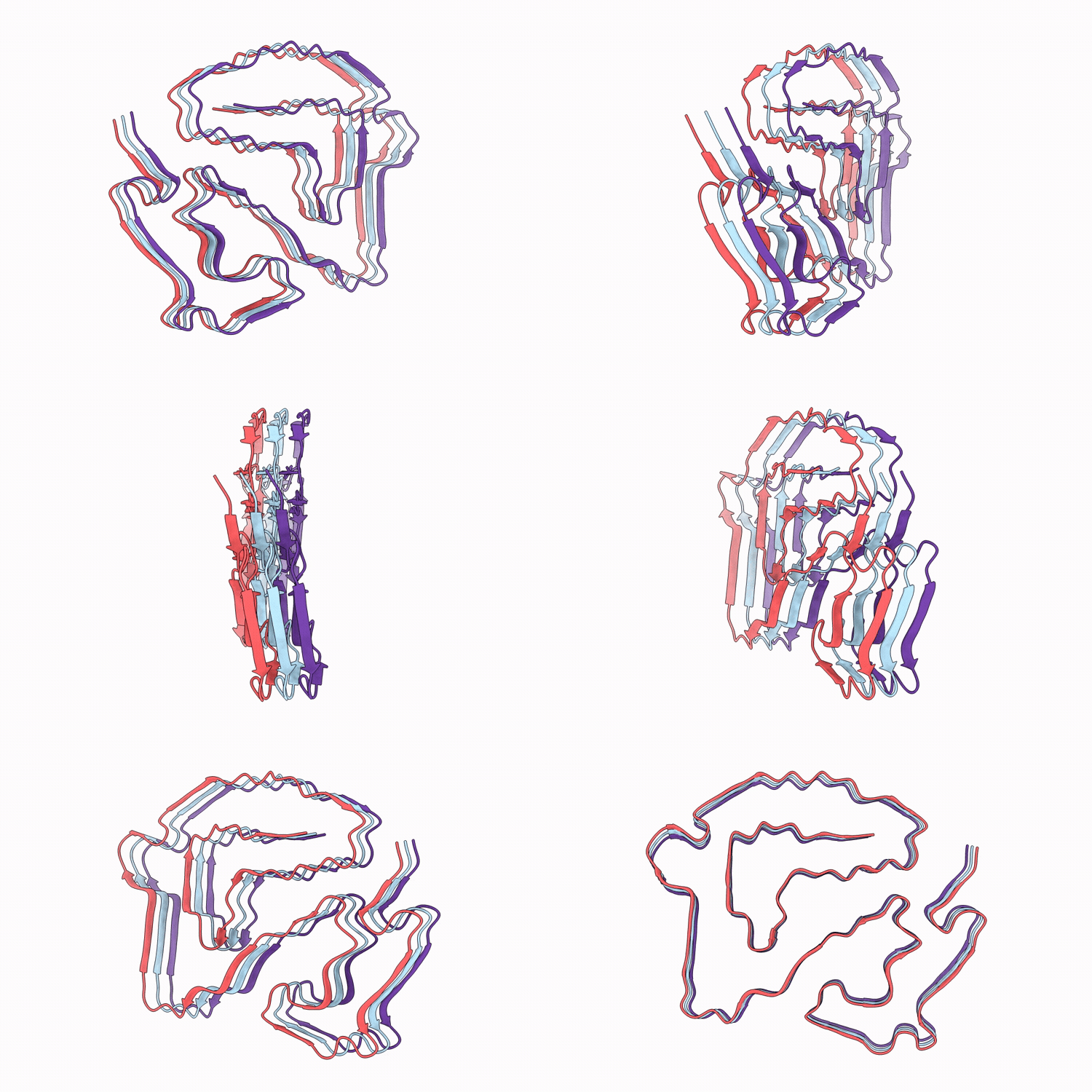
9WL5 image
Deposition Date 2025-09-02
Release Date 2026-06-03
Last Version Date 2026-06-03
Entry Detail
PDB ID:
9WL5
Keywords:
Title:
ALECT2 type Ia filament from renal biopsy tissue of an individual with ALECT2 amyloidosis
Biological Source:
Source Organism(s):
Homo sapiens (Taxon ID: 9606)
Method Details:
Experimental Method:
Resolution:
1.96 Å
Aggregation State:
FILAMENT
Reconstruction Method:
HELICAL
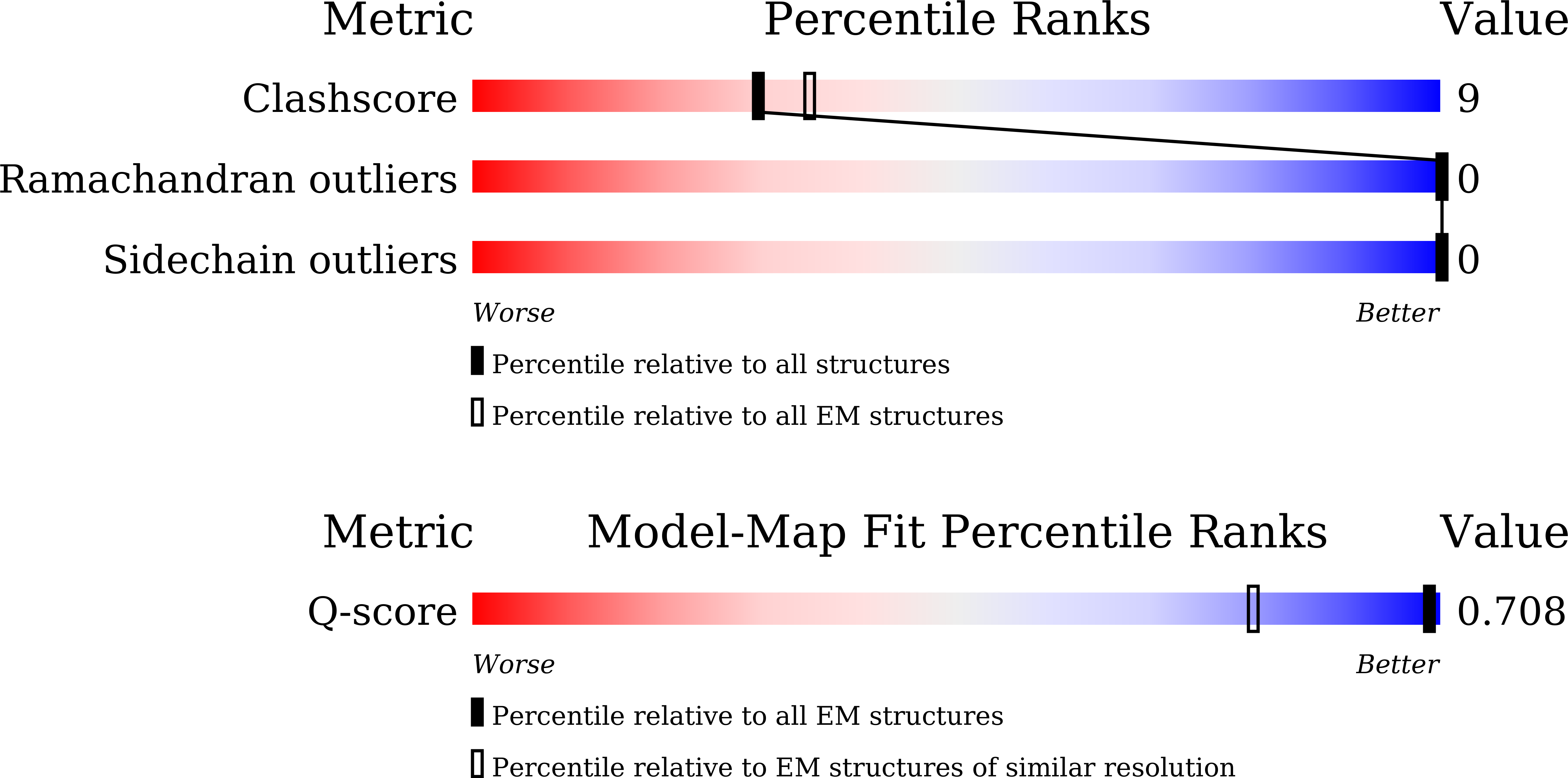
Macromolecular Entities
Structures with similar UniProt ID
Protein Blast
Polymer Type:polypeptide(L)
Molecule:Leukocyte cell-derived chemot
Gene (Uniprot):LECT2
Chain IDs:A, B, C
Chain Length:133
Number of Molecules:3
Biological Source:Homo sapiens
Ligand Molecules
Primary Citation
Cryo-EM structures of ALECT2 filaments from human renal biopsies.
Nat Commun ? ? ? (2026)
PMID: 42173881 DOI: 10.1038/s41467-026-73602-2

Abstact

Leukocyte chemotactic factor 2 is a recently identified amyloidogenic protein, whose abnormal aggregation defines a systemic amyloidosis termed ALECT2 amyloidosis. Due to the lack of reliable biomarkers, diagnosis relies primarily on histological demonstration and typing of amyloid deposits in renal biopsies. However, immunohistochemical detection of ALECT2 is often inconsistent, leading to diagnostic uncertainty. The underlying basis remains poorly understood, reflecting our limited knowledge of ALECT2 deposits. Here, using cryo-electron microscopy (cryo-EM), we determined the structures of ALECT2 filaments from renal biopsies of five living patients. Unlike filaments assembled from recombinant proteins in vitro, all 133 residues of mature LECT2 are incorporated into the filament cores, with native disulfide linkages preserved. The filaments consistently adopt the shared six-layered folds in all five patients, indicating a common mechanism of amyloidogenesis. Because all residues are incorporated into the fibril core, epitope accessibility is limited. This can explain variability in immunohistochemical detection and thus highlights the need for conformation-specific antibodies and antibody-independent detection strategies for improving diagnostic accuracy. This biopsy-based workflow not only expands the availability of patient-derived tissue for cryo-EM studies but also demonstrates the potential of cryo-EM as a tool for precise diagnosis of systemic amyloidosis.

Legend

Protein

Chemical

Disease

Primary Citation of related structures
Feedback Form
Name
Email
Institute
Feedback