

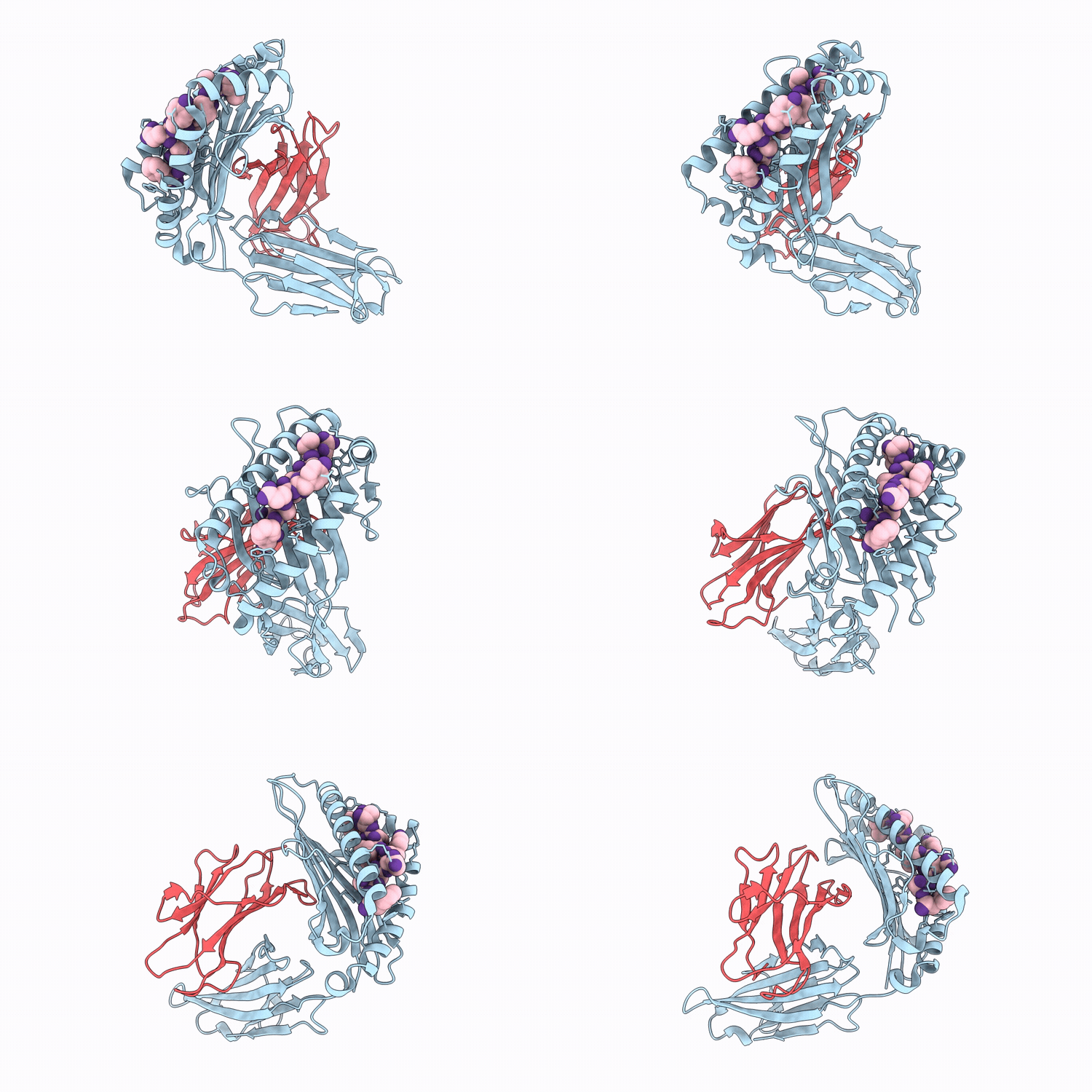
9WK0 image
Deposition Date 2025-08-31
Release Date 2026-06-17
Last Version Date 2026-06-17
Entry Detail
PDB ID:
9WK0
Keywords:
Title:
Neoantigen Rac1P29S-HLA-A2
Biological Source:
Source Organism(s):
Homo sapiens (Taxon ID: 9606)
Expression System(s):
Method Details:
Experimental Method:
Resolution:
1.80 Å
R-Value Free:
0.21
R-Value Work:
0.16
R-Value Observed:
0.17
Space Group:
P 1 21 1
Macromolecular Entities
Polymer Type:polypeptide(L)
Molecule:MHC class I antigen
Gene (Uniprot):HLA-A
Chain IDs:A
Chain Length:276
Number of Molecules:1
Biological Source:Homo sapiens
Polymer Type:polypeptide(L)
Molecule:Beta-2-microglobulin
Gene (Uniprot):B2M
Chain IDs:B
Chain Length:100
Number of Molecules:1
Biological Source:Homo sapiens
Structural Superimposition Protein Blast
Polymer Type:polypeptide(L)
Molecule:PHE-SER-GLY-GLU-TYR-ILE-PRO-T
Chain IDs:C
Chain Length:9
Number of Molecules:1
Biological Source:Homo sapiens
Primary Citation
Structural basis for TCR recognition of a Rac1 neoantigen arising from anchor residue mutation.
J.Struct.Biol. 218 108329 108329 (2026)
PMID: 42190883 DOI: 10.1016/j.jsb.2026.108329

Abstact

T cell receptor (TCR)-based immunotherapy can drive cancer regression by targeting neoantigens derived from mutations in self-proteins. Most neoantigens result from mutations in solvent-exposed residues creating neoepitopes that allow highly specific TCR recognition. Here, we describe a melanoma neoantigen (Rac1(P29S)) caused by a mutation at a primary anchor residue. Unlike typical cases, the immunogenicity of Rac1(P29S) stems from this anchor mutation, which permits MHC presentation of the mutant peptide but not the wild-type counterpart. We determined the structures of both the mutant Rac1(P29S)-HLA-A2 complex and its complex with the tumor-specific TCR 5934. These structures show how the P29S mutation makes a Rac1 self- peptide visible to T cells. Notably, TCR 5934 primarily engages the C-terminal, non-mutated P8 threonine residue of Rac1(P29S) -far from the N-terminal mutated P2 serine. This contrasts with most neoantigen-specific TCRs, which typically focus on the mutated residue to distinguish mutant from wild-type peptides. Together, these findings provide a structural framework to guide the development of TCR-based cancer immunotherapies.

Legend

Protein

Chemical

Disease

Primary Citation of related structures
Feedback Form
Name
Email
Institute
Feedback