

9WGW image
Deposition Date 2025-08-25
Release Date 2026-04-01
Last Version Date 2026-04-01
Entry Detail
PDB ID:
9WGW
Keywords:
Title:
Crystal structure of human Haspin with ATP-mimicking inhibitor LJ-4827
Biological Source:
Source Organism(s):
Homo sapiens (Taxon ID: 9606)
Expression System(s):
Method Details:
Experimental Method:
Resolution:
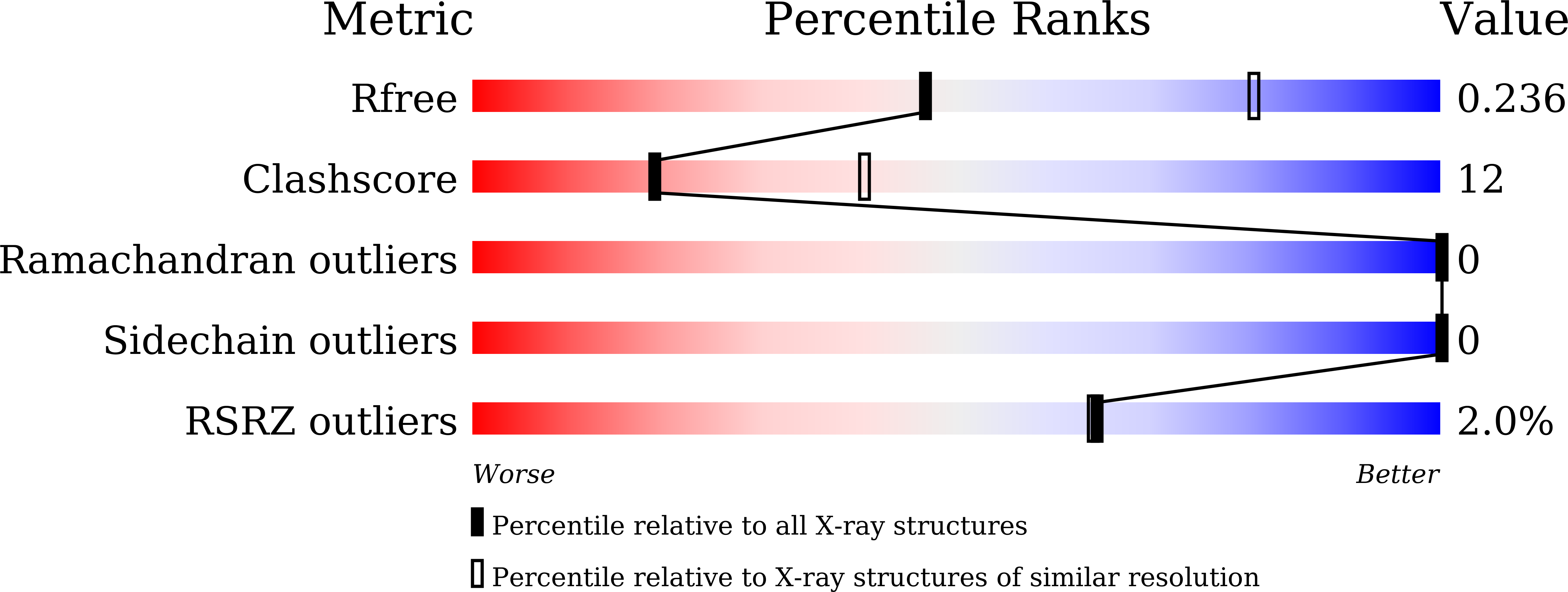
2.70 Å
R-Value Free:
0.23
R-Value Work:
0.20
R-Value Observed:
0.20
Space Group:
P 21 21 21
Macromolecular Entities
Structures with similar UniProt ID
Protein Blast
Polymer Type:polypeptide(L)
Molecule:Serine/threonine-protein kina
Gene (Uniprot):HASPIN
Chain IDs:A
Chain Length:798
Number of Molecules:1
Biological Source:Homo sapiens
Ligand Molecules
Primary Citation
In Silico Discovery of 5'-Modified 7-Deoxy-7-ethynyl-4'-thioadenosine as a HASPIN Inhibitor and Its Synergistic Anticancer Effect with the PLK1 Inhibitor.
Acs Cent.Sci. 9 1140 1149 (2023)
PMID: 37396870 DOI: 10.1021/acscentsci.3c00332

Abstact

Despite genetic perturbations resulting in embryo lethality for most mitotic kinases, loss of the histone H3 mitotic kinase HASPIN reveals no adverse effect in mice models, establishing HASPIN as a promising target for anticancer therapy. However, developing a HASPIN inhibitor from conventional pharmacophores poses a technical challenge as this atypical kinase shares slight similarities with eukaryotic protein kinases. Chemically modifying a cytotoxic 4'-thioadenosine analogue through high genotoxicity yielded several novel nongenotoxic kinase inhibitors. In silico apporoaches utilizing transcriptomic and chemical similarities with known compounds and KINOMEscan profiles unveiled the HASPIN inhibitor LJ4827. LJ4827's specificity and potency as a HASPIN inhibitor were verified through in vitro kinase assay and X-ray crystallography. HASPIN inhibition by LJ4827 reduced histone H3 phosphorylation and impeded Aurora B recruitment in cancer cell centromeres but not in noncancer cells. Through transcriptome analysis of lung cancer patients, PLK1 was determined as a druggable synergistic partner to complement HASPIN inhibition. Chemical or genetic PLK1 perturbation with LJ4827 effectuated pronounced lung cancer cytotoxicity in vitro and in vivo. Therefore, LJ4827 is a novel anticancer therapeutic for selectively impeding cancer mitosis through potent HASPIN inhibition, and simultaneous HASPIN and PLK1 interference is a promising therapeutic strategy for lung cancer.

Legend

Protein

Chemical

Disease

Primary Citation of related structures
Feedback Form
Name
Email
Institute
Feedback