

9WDD image
Deposition Date 2025-08-19
Release Date 2026-07-29
Last Version Date 2026-08-19
Entry Detail
PDB ID:
9WDD
Keywords:
Title:
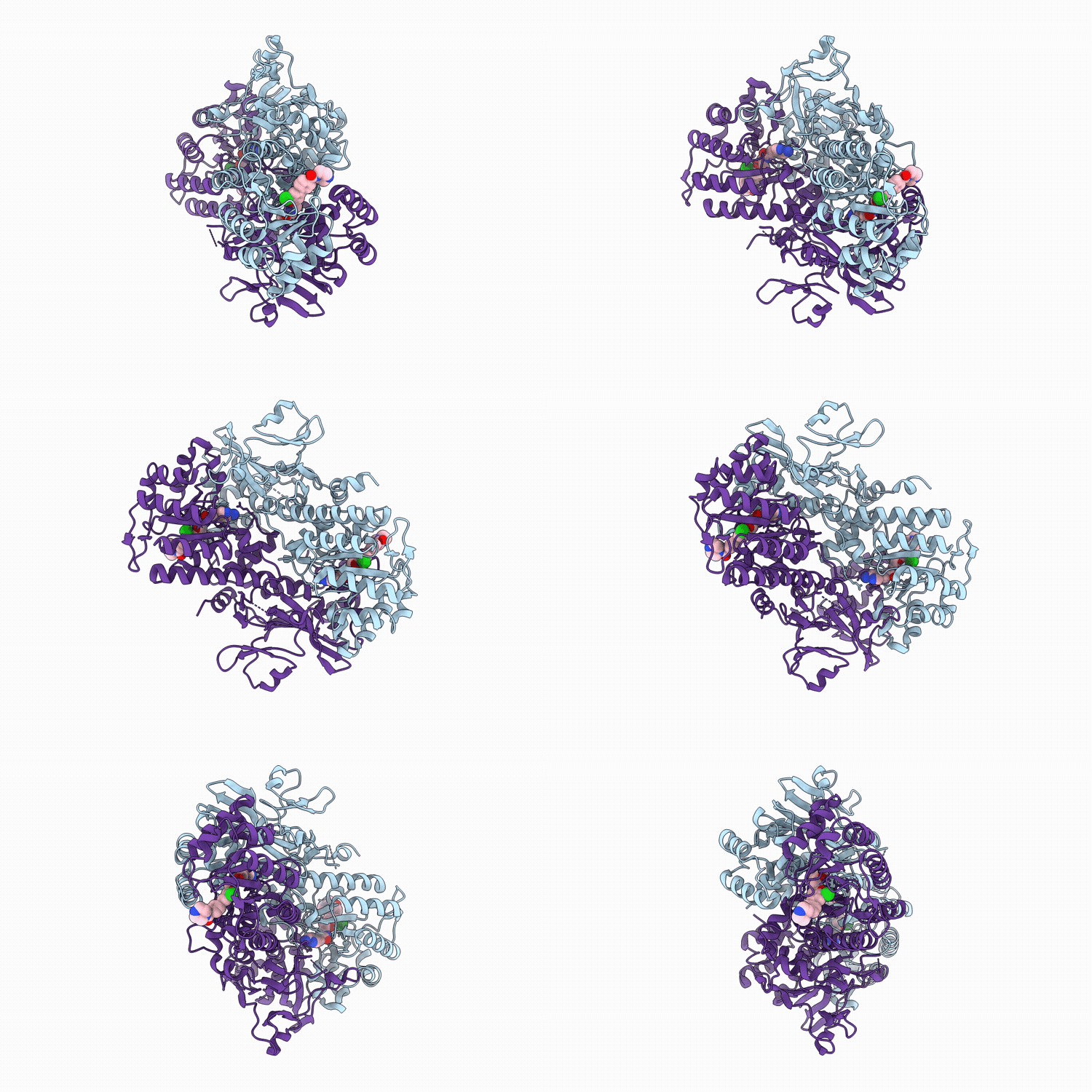
Crystal structure of NAMPT-KPT-7523 complex
Biological Source:
Source Organism(s):
Homo sapiens (Taxon ID: 9606)
Expression System(s):
Method Details:
Experimental Method:
Resolution:
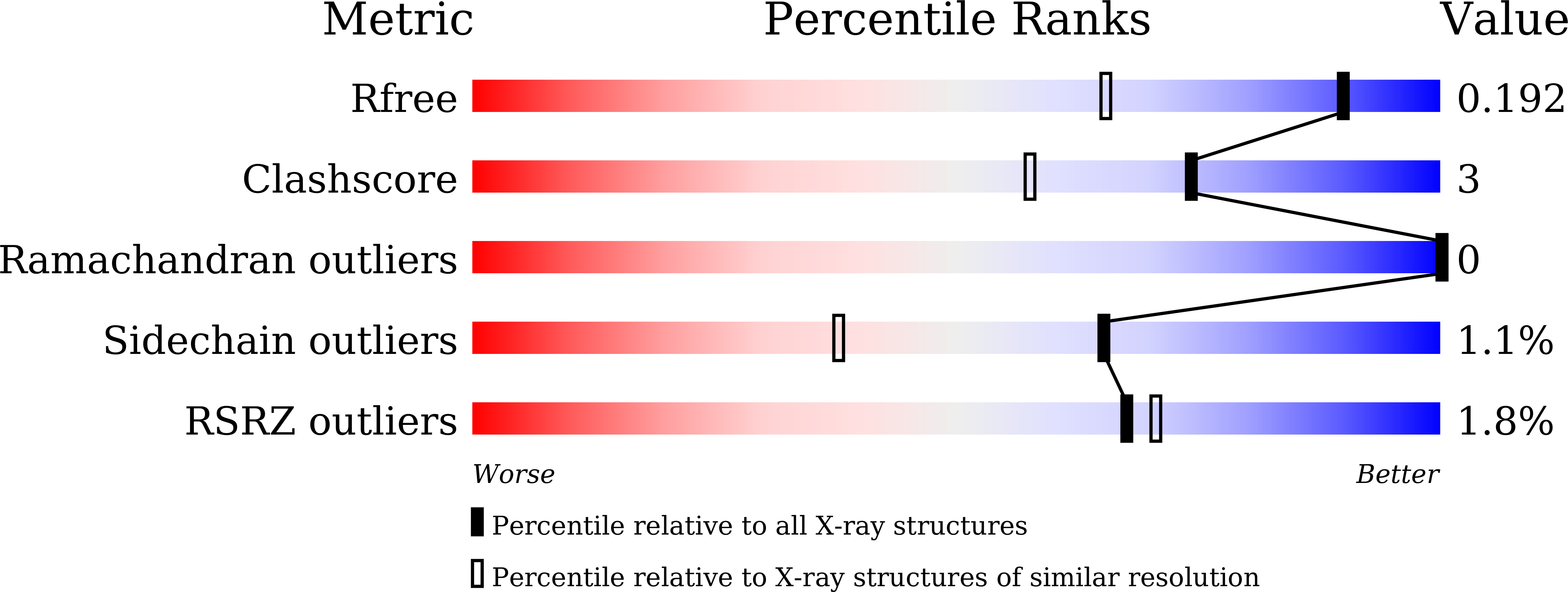
1.45 Å
R-Value Free:
0.19
R-Value Work:
0.18
R-Value Observed:
0.18
Space Group:
P 1 21 1
Macromolecular Entities
Polymer Type:polypeptide(L)
Molecule:Nicotinamide phosphoribosyltr
Gene (Uniprot):NAMPT
Chain IDs:A, B
Chain Length:491
Number of Molecules:2
Biological Source:Homo sapiens
Ligand Molecules
Primary Citation
Structural basis for a p21-activated kinase 4 and nicotinamide phosphoribosyltransferase dual inhibitor.
Acta Crystallogr D Struct Biol 82 972 981 (2026)
PMID: 42473948 DOI: 10.1107/S2059798326006145

Abstact

Simultaneous inhibition of oncogenic signaling and metabolic pathways represents a promising approach for cancer therapy. KPT-9274, a clinical stage compound, has been reported as a dual inhibitor of p21-activated kinase 4 (PAK4) and nicotinamide phosphoribosyltransferase (NAMPT), but its structural basis has remained undefined. Here, we present high-resolution crystal structures of PAK4 and NAMPT in complex with KPT-7523, an analog of KPT-9274, determined at 2.20 and 1.45 A resolution, respectively. In PAK4, the 2-aminopyridine moiety of KPT-7523 enables dual binding, occupying the adenine-binding site for ATP and simultaneously engaging the substrate-binding cleft in the C-lobe, thereby interfering with both catalytic and regulatory functions. In NAMPT, the same scaffold inserts into the NAD(+) active site in an extended conformation that preserves critical interactions. Biophysical assays revealed distinct affinities across the two targets. These findings highlight the 2-aminopyridine moiety as a versatile pharmacophore that is adaptable to structurally unrelated proteins and provide a framework for designing next-generation dual inhibitors in cancer therapy.

Legend

Protein

Chemical

Disease

Primary Citation of related structures
Feedback Form
Name
Email
Institute
Feedback