

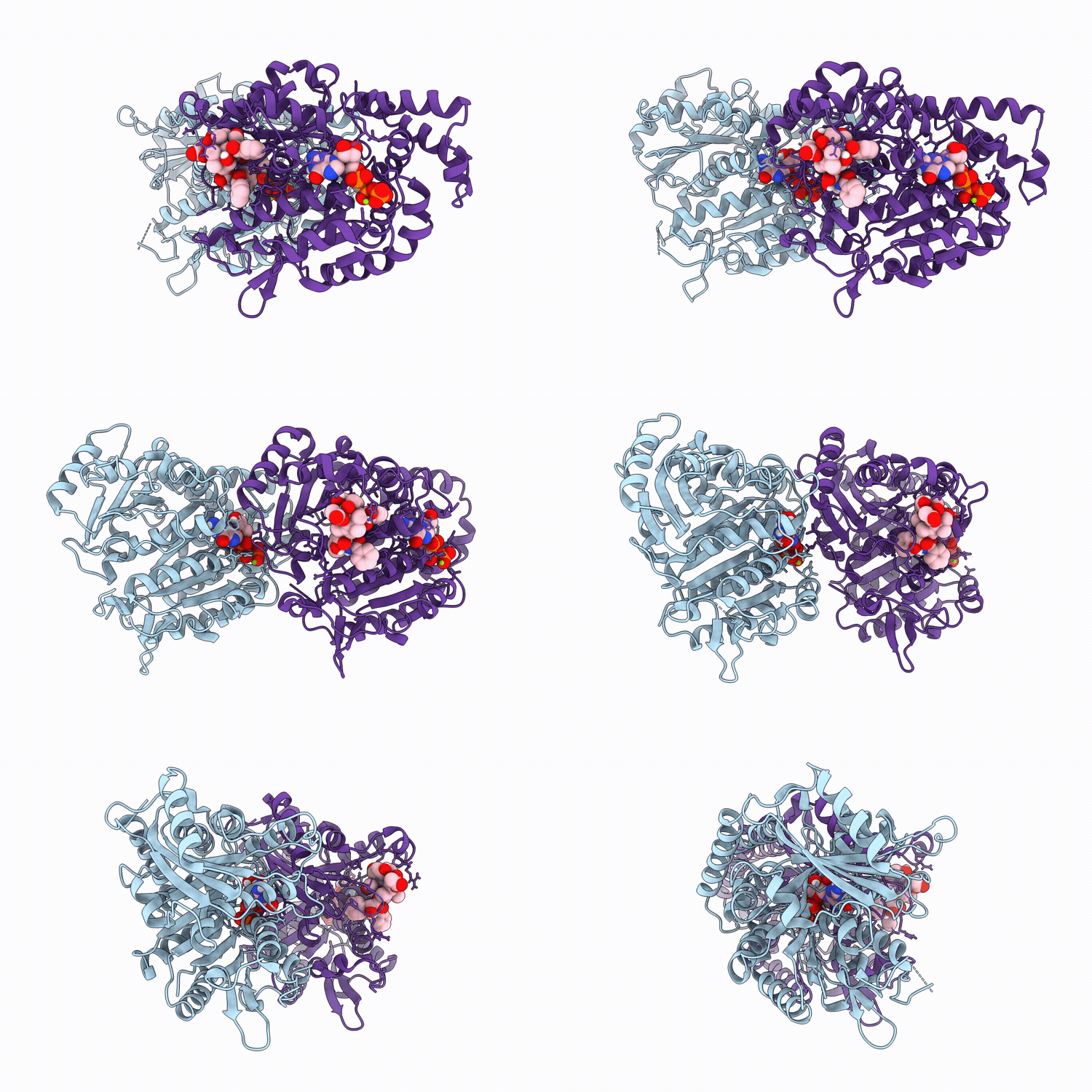
9WDA image
Deposition Date 2025-08-18
Release Date 2026-04-01
Last Version Date 2026-04-29
Entry Detail
PDB ID:
9WDA
Title:
Paclitaxel/GMPCPP-stabilized human alpha1A/beta3 microtubule
Biological Source:
Source Organism(s):
Homo sapiens (Taxon ID: 9606)
Expression System(s):
Method Details:
Experimental Method:
Resolution:
2.35 Å
Aggregation State:
HELICAL ARRAY
Reconstruction Method:
SINGLE PARTICLE

Macromolecular Entities
Structures with similar UniProt ID
Protein Blast
Polymer Type:polypeptide(L)
Molecule:Tubulin alpha-1A chain
Gene (Uniprot):TUBA1A
Chain IDs:A (auth: a)
Chain Length:451
Number of Molecules:1
Biological Source:Homo sapiens
Structures with similar UniProt ID
Protein Blast
Polymer Type:polypeptide(L)
Molecule:Tubulin beta-3 chain
Gene (Uniprot):TUBB3
Chain IDs:B (auth: b)
Chain Length:450
Number of Molecules:1
Biological Source:Homo sapiens
Primary Citation
An evolution-conserved allosteric network in human tubulin governs paclitaxel efficacy.
Nat.Chem.Biol. ? ? ? (2026)
PMID: 41986561 DOI: 10.1038/s41589-026-02204-2

Abstact

Tubulin-targeting agents such as paclitaxel have been a cornerstone of cancer treatment. However, the molecular basis by which prognosis-associated tubulin isotypes and mutations (that is, variants) affect drug efficacy remains unclear. Here we reveal that evolutionarily conserved tubulin residues modulate the allosteric network to determine paclitaxel efficacy. The paclitaxel resistance of human beta3-tubulin depends on a residue distant from the taxane-binding pocket. The ~2.3 A-resolution cryo-EM microtubule reconstructions demonstrate that the paclitaxel-sensitizing tubulin mutation induces allostery at the paclitaxel-binding site, intertubulin interactions and nucleotide-binding pockets. In particular, the reoriented guanine triphosphate (GTP)-hydrolyzing catalytic alpha-tubulin E254 residue enhances the GTP cap, reducing the catastrophe frequency of dynamic microtubules. Examining genome-edited cancer cells with the paclitaxel-sensitized mutant beta3-tubulin indicates that the affinities of tubulin variants for paclitaxel determine drug efficacy. Our findings provide mechanistic insights into the development of new tubulin-targeting therapeutics not only for cancer but also for tubulinopathies associated with mutations in specific tubulin isotypes.

Legend

Protein

Chemical

Disease

Primary Citation of related structures
Feedback Form
Name
Email
Institute
Feedback