

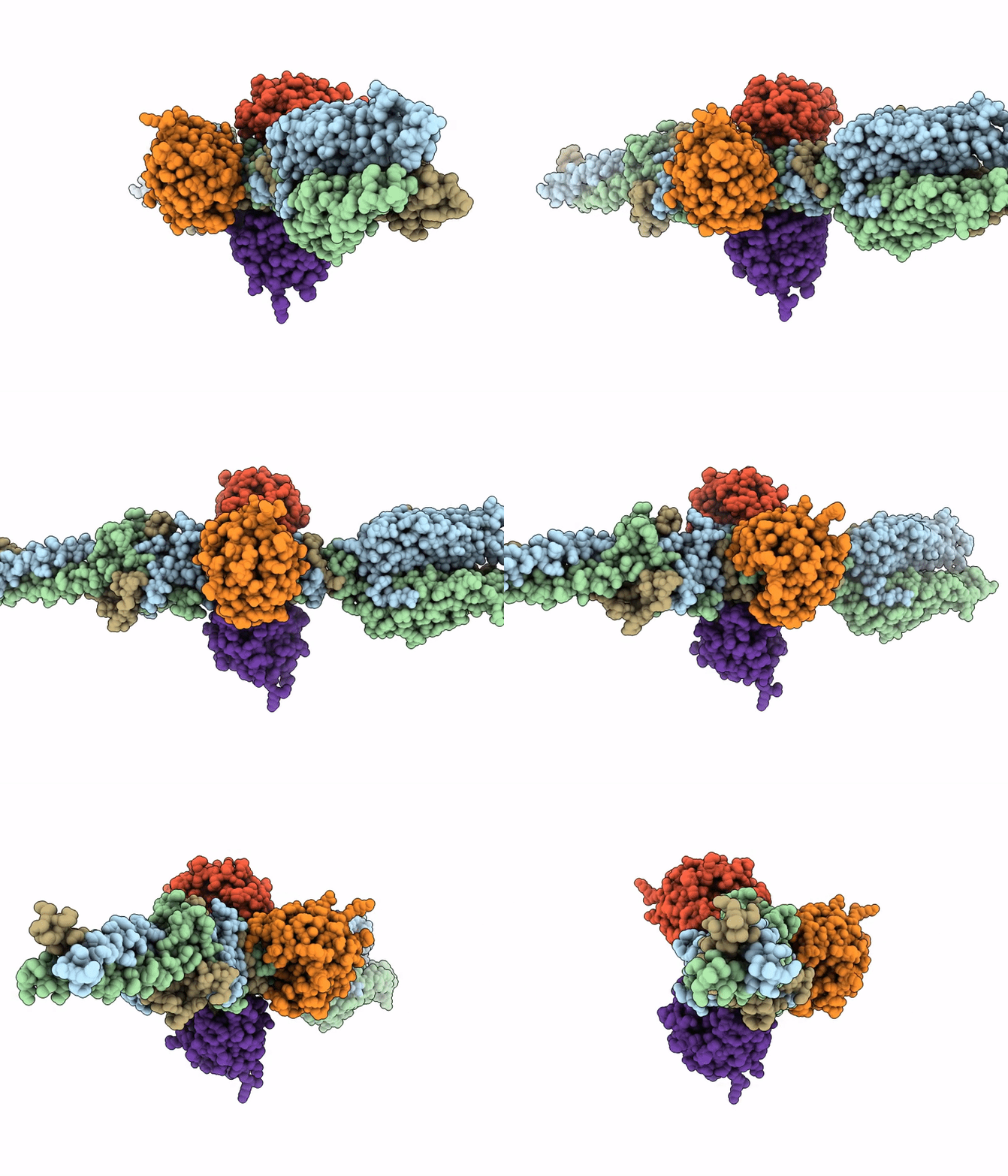
9WCA image
Deposition Date 2025-08-16
Release Date 2026-01-28
Last Version Date 2026-03-18
Entry Detail
PDB ID:
9WCA
Keywords:
Title:
Closed state of A8 gpJ 713 central tail fiber
Biological Source:
Expression System(s):
Method Details:
Experimental Method:
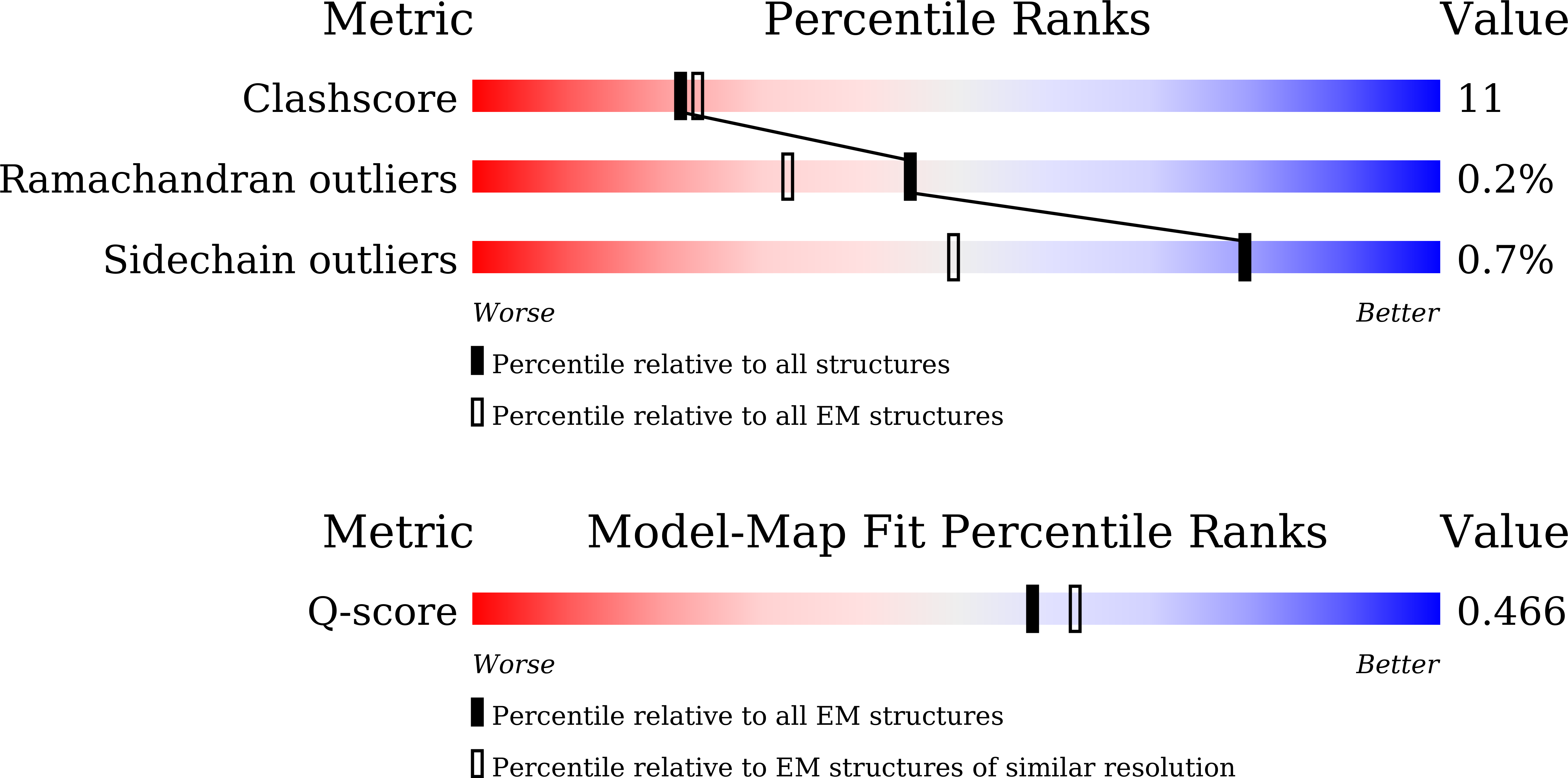
Resolution:
3.49 Å
Aggregation State:
PARTICLE
Reconstruction Method:
SINGLE PARTICLE
Macromolecular Entities
Protein Blast
Polymer Type:polypeptide(L)
Molecule:A8 gpJ 713
Chain IDs:A (auth: J), C (auth: Z), E (auth: F)
Chain Length:428
Number of Molecules:3
Biological Source:Escherichia phage Lambda
Structures with similar UniProt ID
Protein Blast
Polymer Type:polypeptide(L)
Molecule:Peptidyl-prolyl cis-trans iso
Gene (Uniprot):ppiA
Chain IDs:B (auth: j), D (auth: z), F (auth: f)
Chain Length:428
Number of Molecules:3
Biological Source:Escherichia coli O157:H7 str. EDL933
Ligand Molecules
Primary Citation
Structures of lambda-like phage A8 tail tip bound to OmpC provide insight into receptor recognition.
Structure ? ? ? (2026)
PMID: 41763202 DOI: 10.1016/j.str.2026.02.002

Abstact

Bacteriophage infection begins with the specific recognition of bacterial surface receptors by tail tip proteins, a decisive event that determines host specificity and triggers genome delivery. However, the structural principles underlying this process remain poorly understood. Here, we determined high-resolution cryo-electron microscopy (cryo-EM) structures of the engineered lambda-like bacteriophage A8 gpJ713 in the unbound form and bound to the outer membrane porin OmpC. Comparisons with our previously determined structures of wild-type lambda gpJ alone and bound to LamB reveal conserved receptor binding-induced conformational transitions across lambda-like siphoviruses, defining a general mechanistic framework for tail-tip recognition. Guided by this framework, we restored stable binding to the previously incompatible OmpC G40 variant and converted OmpF into a functional receptor through a minimal loop deletion. These proof-of-concept receptor reprogramming experiments demonstrate the predictive power of our structural model and illustrate how targeted receptor engineering can complement directed evolution in developing therapeutic phages.

Legend

Protein

Chemical

Disease

Primary Citation of related structures
Feedback Form
Name
Email
Institute
Feedback