

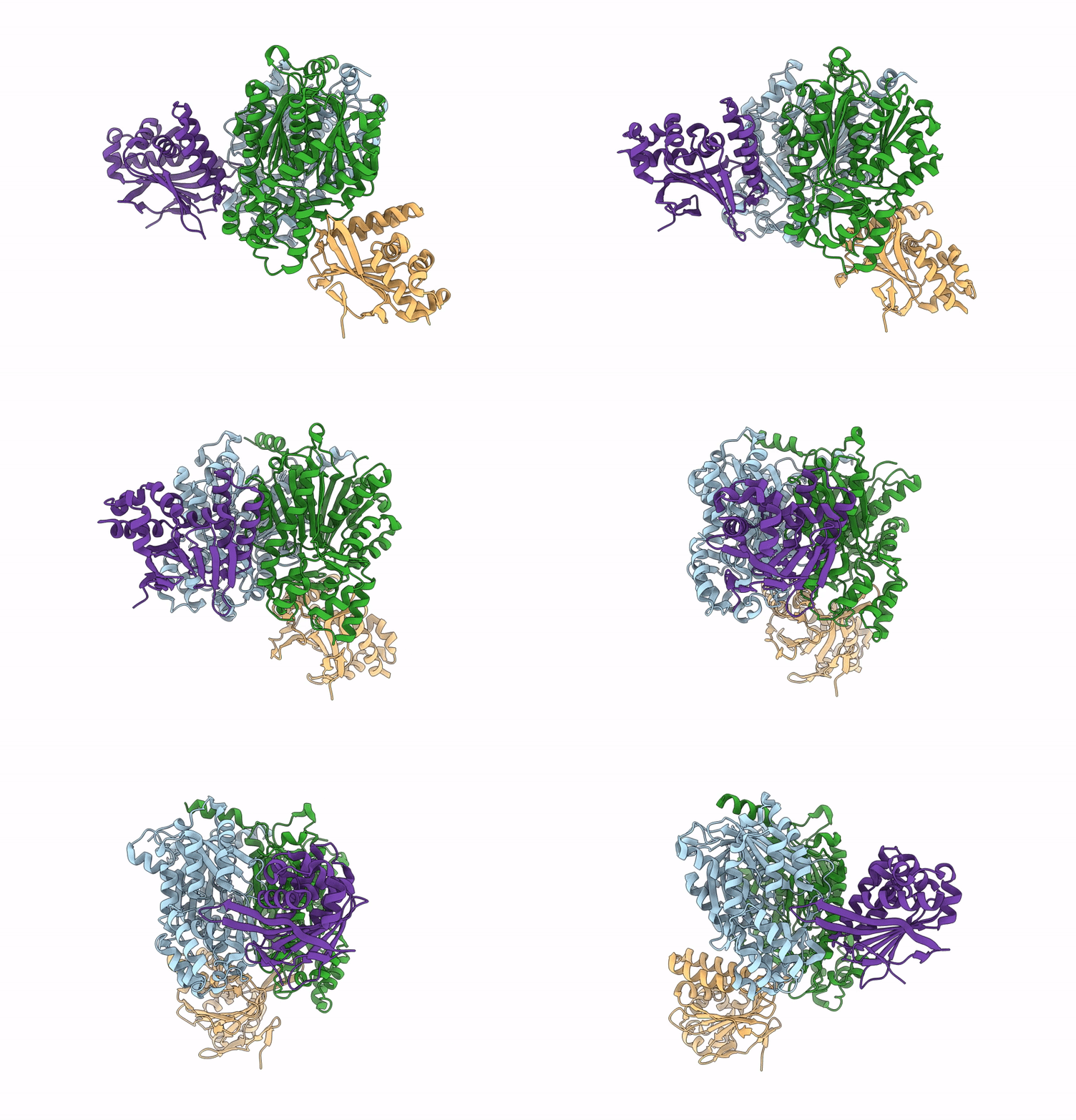
9WBE image
Deposition Date 2025-08-13
Release Date 2026-03-04
Last Version Date 2026-05-20
Entry Detail
PDB ID:
9WBE
Keywords:
Title:
Crystal structure of the CHS-CHIL complex
Biological Source:
Source Organism(s):
Expression System(s):
Method Details:
Experimental Method:
Resolution:
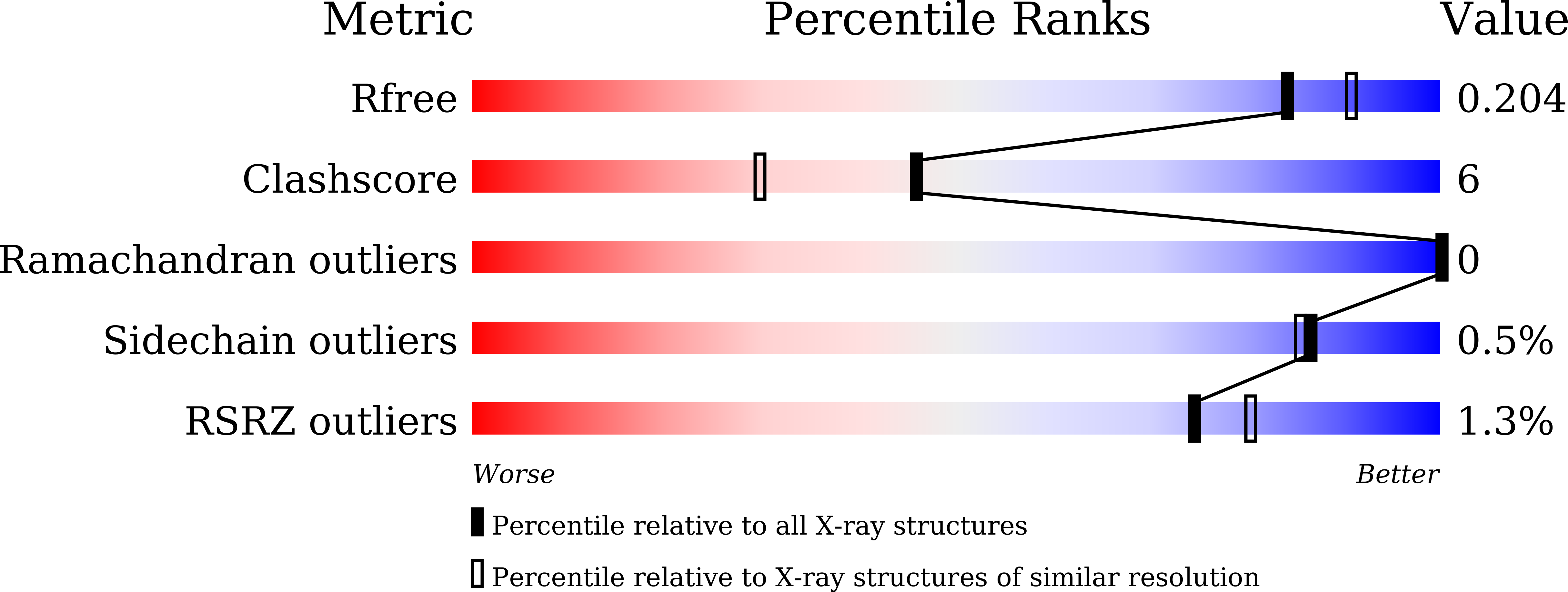
1.91 Å
R-Value Free:
0.20
R-Value Work:
0.16
R-Value Observed:
0.17
Space Group:
P 21 21 21
Macromolecular Entities
Structures with similar UniProt ID
Protein Blast
Polymer Type:polypeptide(L)
Molecule:Chalcone synthase
Gene (Uniprot):CHS
Chain IDs:A, B
Chain Length:395
Number of Molecules:2
Biological Source:Arabidopsis thaliana
Structures with similar UniProt ID
Protein Blast
Polymer Type:polypeptide(L)
Molecule:Probable chalcone--flavanone
Gene (Uniprot):CHI3
Chain IDs:C, D
Chain Length:209
Number of Molecules:2
Biological Source:Arabidopsis thaliana
Modified Residue
Compound ID Chain ID Parent Comp ID Details 2D Image
CSD A CYS modified residue
Primary Citation
Molecular mechanism underlying regulation of chalcone synthase by chalcone isomerase-like protein.
Nat Commun 17 ? ? (2026)
PMID: 41832168 DOI: 10.1038/s41467-026-70563-4

Abstact

Flavonoids are essential for plant growth and environmental adaptation. Chalcone synthase (CHS) directs metabolic flux into flavonoid biosynthesis, but its catalytic promiscuity limits the biosynthetic efficiency. Although the chalcone isomerase-like protein (CHIL) has been characterized as physically interacting with and regulating CHS, the underlying mechanism remains elusive. Here, we report the crystal structure of the CHS-CHIL complex, revealing that CHIL modulates CHS function by gating the substrate-binding pocket entrance through its beta-hairpin region. Molecular dynamics simulations indicate that regulation occurs early in the catalytic cycle, affecting substrate binding or early intermediate formation. CHIL enhances CHS activity and product specificity by promoting CoA release and stabilizing key amino acid residues. His36 within the beta-hairpin is functionally critical; its substitution with leucine in Arabidopsis and other plant species markedly improves CHS catalytic efficiency and specificity. This regulatory mechanism is evolutionarily conserved across land plants, from bryophytes to angiosperms. Guided by evolutionary analysis, we engineer a CHIL variant (H36E/F37T) that significantly enhances CHS activity. Collectively, our findings establish a conserved binding-conformational regulation paradigm that governs metabolic flux into the flavonoid biosynthetic pathway and provides practical strategies for enhancing flavonoid production and composition in crops.

Legend

Protein

Chemical

Disease

Primary Citation of related structures
Feedback Form
Name
Email
Institute
Feedback