

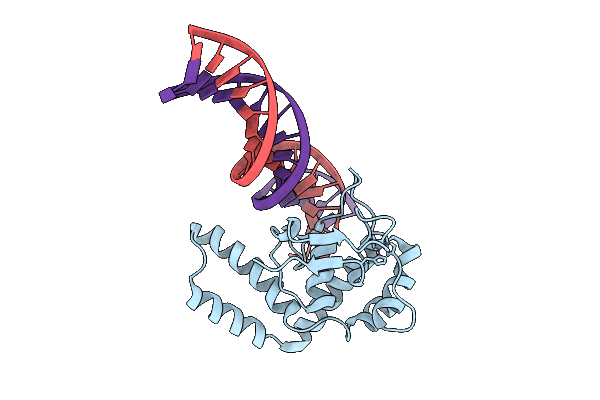
9WA7 image
Deposition Date 2025-08-11
Release Date 2026-03-11
Last Version Date 2026-03-11
Entry Detail
PDB ID:
9WA7
Title:
Crystal Structure of Human NFIX in Complex with TGGCA(N3)TGCCA Palindromic DNA
Biological Source:
Source Organism(s):
Expression System(s):
Method Details:
Experimental Method:
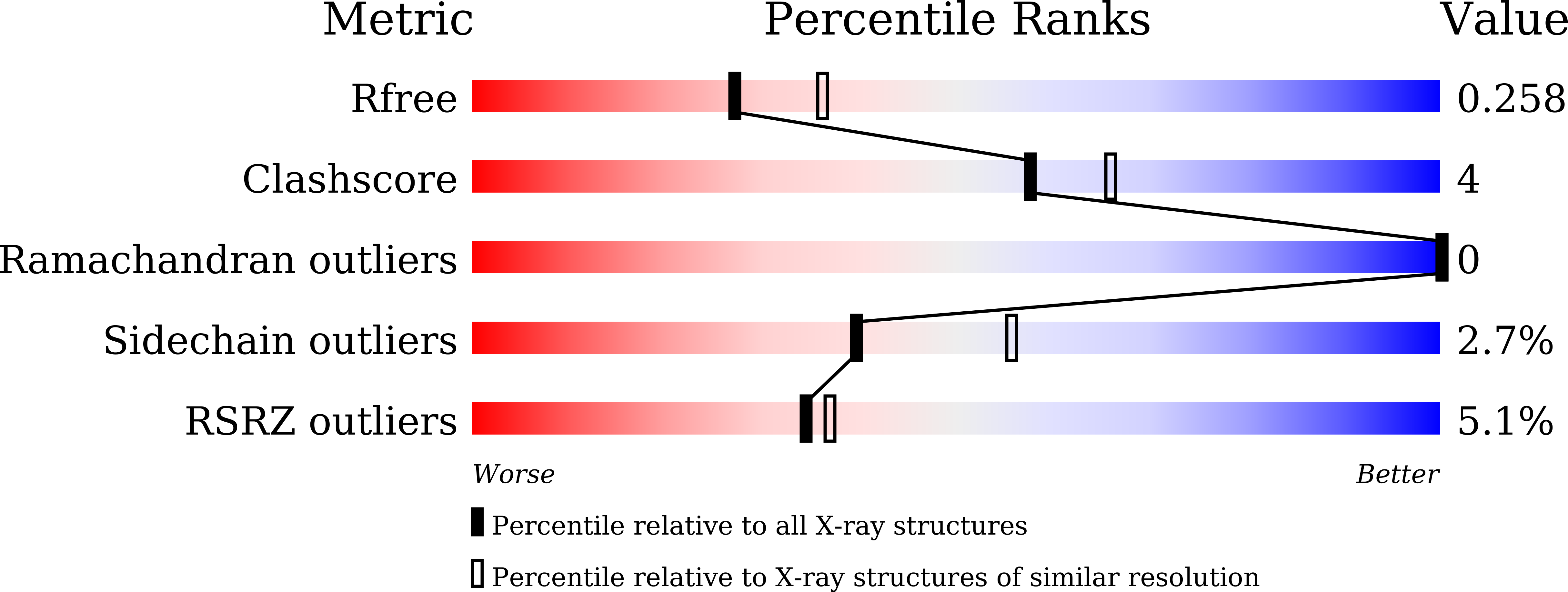
Resolution:
2.31 Å
R-Value Free:
0.25
R-Value Work:
0.22
R-Value Observed:
0.22
Space Group:
P 21 21 2
Macromolecular Entities
Structures with similar UniProt ID
Protein Blast
Polymer Type:polypeptide(L)
Molecule:Nuclear factor 1 X-type
Gene (Uniprot):NFIX
Chain IDs:A
Chain Length:163
Number of Molecules:1
Biological Source:Homo sapiens
Polymer Type:polydeoxyribonucleotide
Molecule:DNA (5'-D(*AP*GP*TP*TP*GP*GP*
Chain IDs:B
Chain Length:18
Number of Molecules:1
Biological Source:synthetic construct
Polymer Type:polydeoxyribonucleotide
Molecule:DNA (5'-D(*GP*AP*TP*GP*GP*CP*
Chain IDs:C
Chain Length:18
Number of Molecules:1
Biological Source:synthetic construct
Ligand Molecules
Primary Citation
Mechanistic Insights Into NFIX-Mediated DNA Recognition and Transcriptional Regulation in Skeletal Muscle.
Smart Med 5 e70027 e70027 (2026)
PMID: 41623611 DOI: 10.1002/smmd.70027

Abstact

Skeletal muscle is essential for voluntary movement and exhibits a remarkable capacity for regeneration following injury. NFIX, a member of the Nuclear Factor I (NFI) family of transcription factors, plays a critical role in both skeletal muscle development and regeneration. Despite its emerging importance, the molecular basis of NFIX-mediated DNA recognition and transcriptional regulation in skeletal muscle remains poorly defined. Here, we demonstrate that NFIX promotes key cellular processes in skeletal muscle cells, as siRNA-mediated knockdown of NFIX significantly reduces cell proliferation, increases apoptosis, and impairs differentiation. Transcriptomic analysis revealed that NFIX regulates a network of genes involved in muscle metabolism, stress responses, and immune inflammatory responses. Biophysical characterization showed that NFIX exists as a monomer in solution and binds palindromic DNA with a 1:1 stoichiometry. A high-resolution crystal structure of the NFIX(DBD) bound to palindromic DNA reveals a monomeric binding mode driven by base-specific recognition of the TGGCA motif. Mutations that disrupt key DNA-contacting residues abolished both DNA binding and transcriptional activation in luciferase reporter assays. Together, these findings define the molecular mechanism of NFIX-dependent gene regulation in skeletal muscle and establish a structural framework for its function, providing new insights into the potential therapeutic targeting of NFIX in muscle diseases.

Legend

Protein

Chemical

Disease

Primary Citation of related structures
Feedback Form
Name
Email
Institute
Feedback