

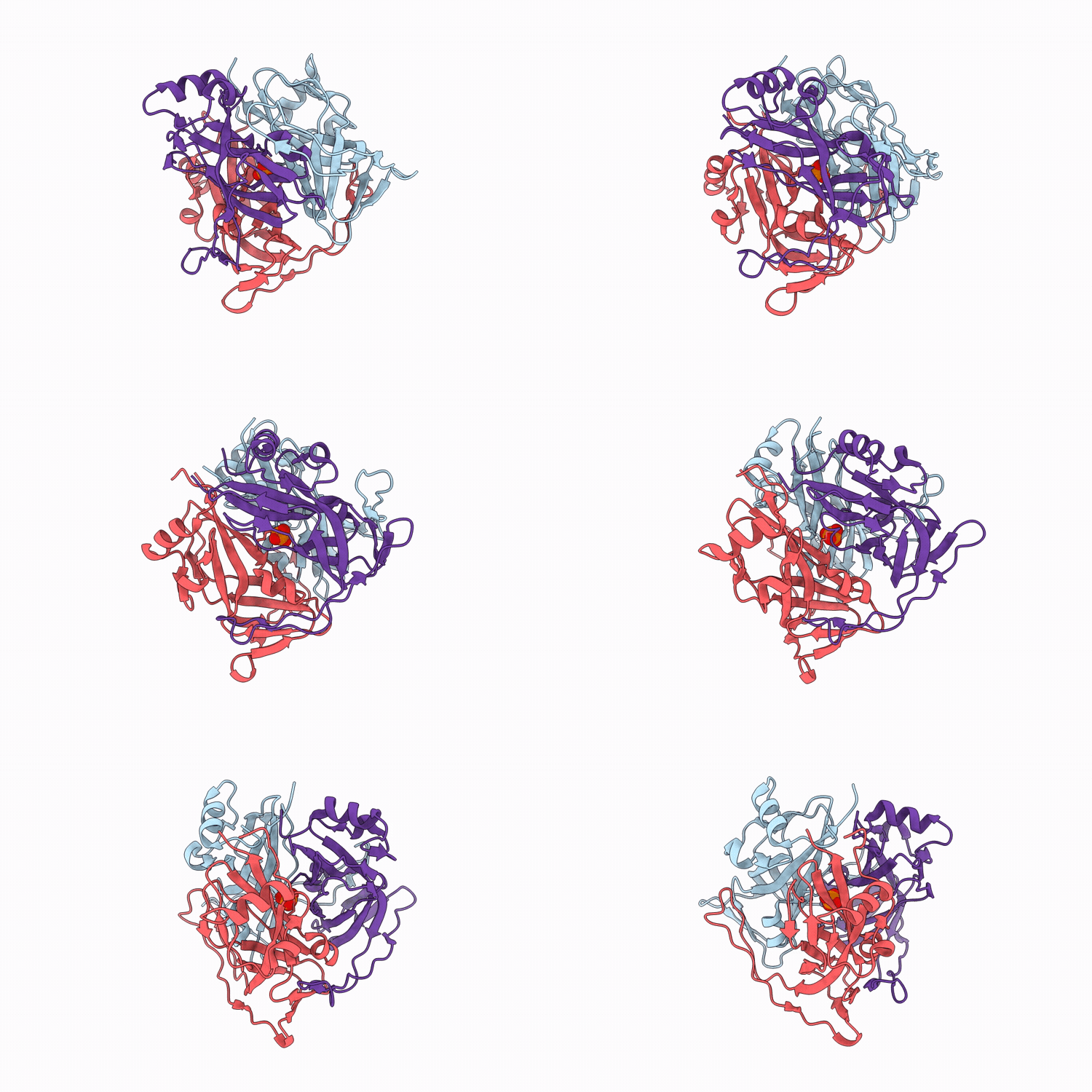
9W59 image
Deposition Date 2025-08-01
Release Date 2026-04-29
Last Version Date 2026-04-29
Entry Detail
PDB ID:
9W59
Keywords:
Title:
The structure of dUTPase from Methanosarcina mazei
Biological Source:
Source Organism(s):
Expression System(s):
Method Details:
Experimental Method:
Resolution:
1.45 Å
R-Value Free:
0.20
R-Value Work:
0.18
R-Value Observed:
0.18
Space Group:
P 43

Macromolecular Entities
Structures with similar UniProt ID
Protein Blast
Polymer Type:polypeptide(L)
Molecule:Probable deoxyuridine 5'-trip
Gene (Uniprot):dut
Chain IDs:A, B, C
Chain Length:183
Number of Molecules:3
Biological Source:Methanosarcina mazei
Ligand Molecules
Primary Citation
Structural and functional insights into an archaeal dUTPase reveal a subdomain-mediated mechanism for substrate recognition and evolutionary adaptation.
Int.J.Biol.Macromol. 335 149194 149194 (2026)
PMID: 41308777 DOI: 10.1016/j.ijbiomac.2025.149194

Abstact

Archaeal dUTPases remain poorly understood despite their critical role in nucleotide metabolism. Here, we report the crystal structures of a trimeric dUTPase from Methanosarcina mazei in apo and dUTP-bound forms at 1.45 A and 1.53 A resolution, respectively. Unlike canonical dUTPases that utilize conserved motif V for active-site formation, this enzyme employs a unique structural insertion (subdomain I) to coordinate the gamma-phosphate of dUTP and stabilize the trimer interface. Site-directed mutagenesis (N55A and R58A) confirmed the catalytic relevance of subdomain I. Molecular dynamics simulations revealed ligand-induced stabilization of the otherwise flexible C-terminal region. Comparative structural and phylogenetic analyses placed this archaeal enzyme within the Type II dUTPase clade but highlighted its distinctive mechanism of substrate recognition. These findings uncover an alternative structural strategy for maintaining enzymatic activity in the absence of motif V, expanding our understanding of dUTPase diversity and offering a potential framework for engineering robust nucleotide-processing enzymes.

Legend

Protein

Chemical

Disease

Primary Citation of related structures
Feedback Form
Name
Email
Institute
Feedback