

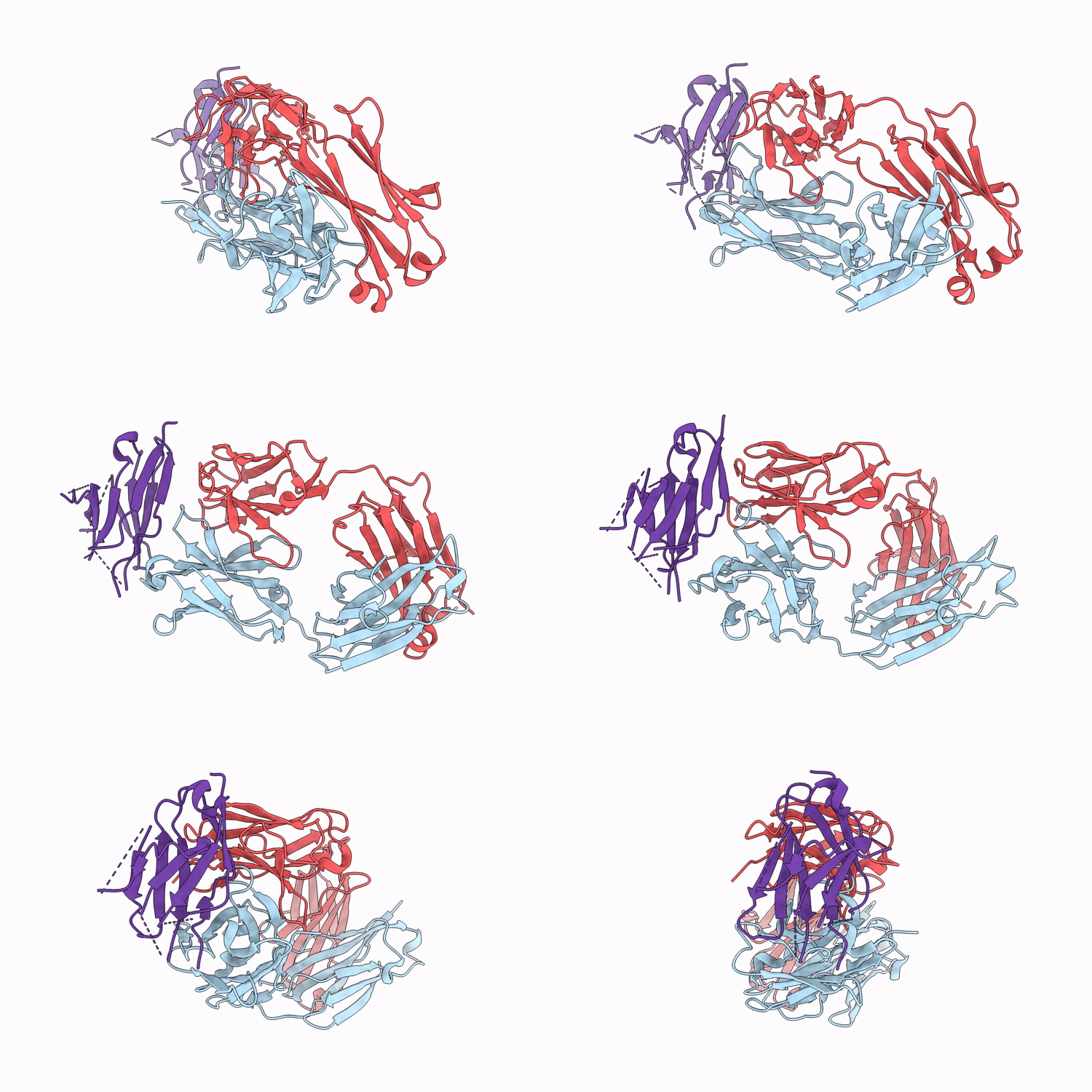
9W43 image
Deposition Date 2025-07-30
Release Date 2026-07-01
Last Version Date 2026-07-01
Entry Detail
PDB ID:
9W43
Keywords:
Title:
Structure of the complex of human PD-1 and a PD-1-directed antibody
Biological Source:
Source Organism(s):
Homo sapiens (Taxon ID: 9606)
Expression System(s):
Method Details:
Experimental Method:
Resolution:
2.96 Å
Aggregation State:
PARTICLE
Reconstruction Method:
SINGLE PARTICLE
Macromolecular Entities
Protein Blast
Polymer Type:polypeptide(L)
Molecule:Heavy chain of 1C4 Fab fragme
Chain IDs:A
Chain Length:213
Number of Molecules:1
Biological Source:Homo sapiens
Protein Blast
Polymer Type:polypeptide(L)
Molecule:Light chain of 1C4 Fab fragme
Chain IDs:B
Chain Length:211
Number of Molecules:1
Biological Source:Homo sapiens
Structures with similar UniProt ID
Protein Blast
Polymer Type:polypeptide(L)
Molecule:Programmed cell death protein
Gene (Uniprot):PDCD1
Chain IDs:C
Chain Length:115
Number of Molecules:1
Biological Source:Homo sapiens
Ligand Molecules
Primary Citation
Dual agonism and selective T-cell depletion activity of a PD-1-directed antibody for treating autoimmune diseases.
Mabs 18 2624881 2624881 (2026)
PMID: 41640111 DOI: 10.1080/19420862.2026.2624881

Abstact

Precise inhibition of autoreactivity without concomitant induction of general immunosuppression is an overarching goal that remains elusive for the treatment of autoimmune diseases. PD-1 is preferentially expressed on activated T cells that drive autoimmunity. These PD-1(+) T cells could serve as a target for therapeutic intervention. Here, we report the discovery of a unique PD-1 agonist antibody, GenSci120, that exhibited potent and selective T-cell inhibition in vitro and T-cell depletion activity both in vitro and in vivo. Target engagement by GenSci120 directly promoted SHP2 recruitment into the PD-1 signaling pathway but also enhanced the binding of PD-1 to its natural ligands and augmented PD-L1-induced PD-1 signaling. Moreover, GenSci120 exhibited robust efficacy in several animal models of human autoimmune disease. Thus, GenSci120, by selectively depleting PD-1(+) T cells and by directly (via PD-1 binding and SHP2 recruitment) or indirectly (via enhancing PD-1 and ligand interaction) stimulating PD-1 signaling, has the capability to restore immune balance in autoimmunity. In a first-in-human study in healthy adults (NCT06827457), GenSci120 demonstrated favorable safety/tolerability and pharmacokinetic profiles as well as robust pharmacodynamic effect. Together, these findings suggest the potential of GenSci120 as an innovative precision medicine for treating autoimmune diseases and support further evaluation of this investigational new drug in future clinical trials.

Legend

Protein

Chemical

Disease

Primary Citation of related structures
Feedback Form
Name
Email
Institute
Feedback