

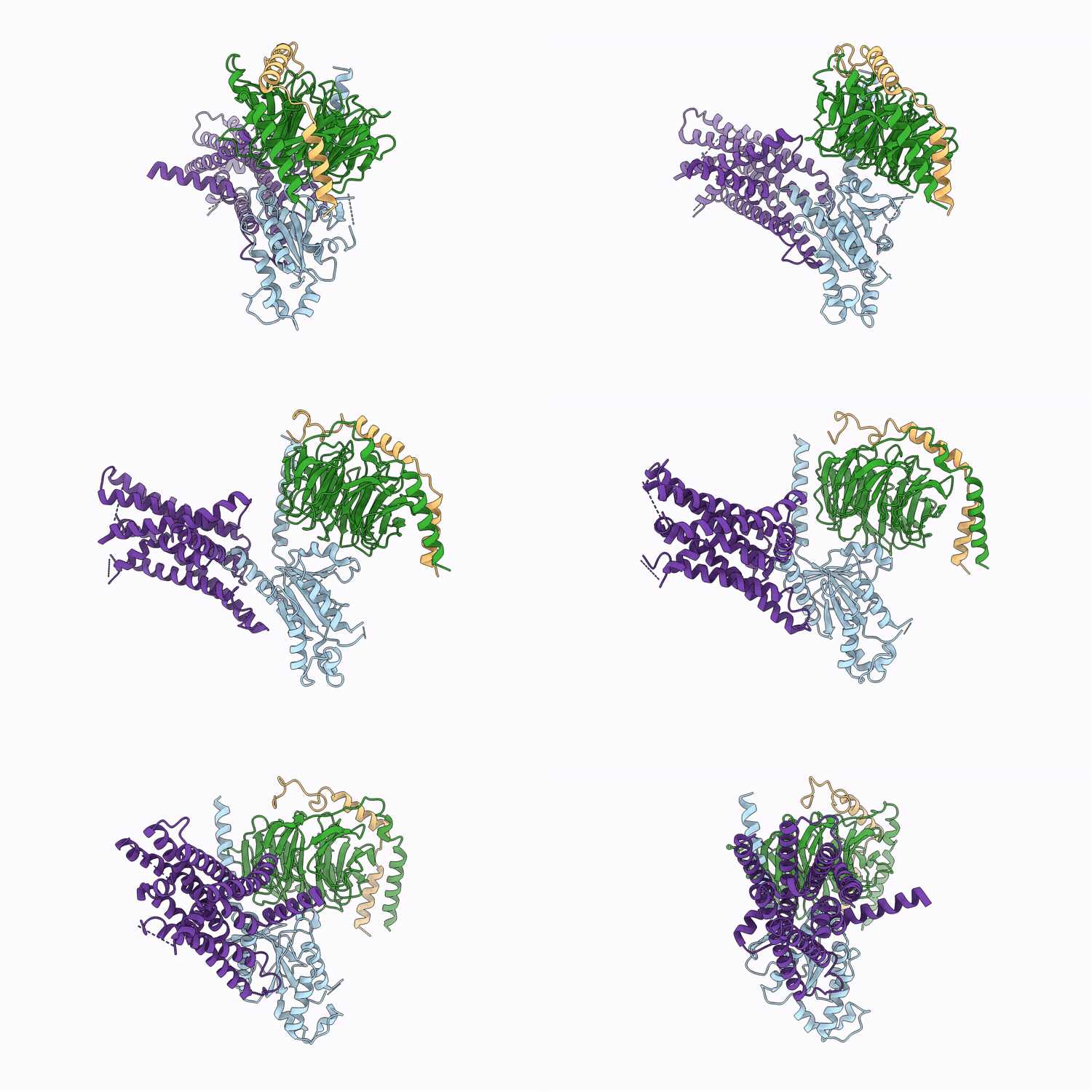
9W0R image
Deposition Date 2025-07-24
Release Date 2026-04-22
Last Version Date 2026-05-06
Entry Detail
PDB ID:
9W0R
Title:
Cryo-EM structure of apo-T2R46 in complex with heterotrimeric G protein
Biological Source:
Source Organism(s):
Homo sapiens (Taxon ID: 9606)
Expression System(s):
Method Details:
Experimental Method:
Resolution:
2.70 Å
Aggregation State:
PARTICLE
Reconstruction Method:
SINGLE PARTICLE
Macromolecular Entities
Structures with similar UniProt ID
Protein Blast
Polymer Type:polypeptide(L)
Molecule:Guanine nucleotide-binding pr
Gene (Uniprot):GNAI1
Mutagens:S47N,G202T,G203A,E245A,A326S
Chain IDs:B (auth: A)
Chain Length:354
Number of Molecules:1
Biological Source:Homo sapiens
Structures with similar UniProt ID
Protein Blast
Polymer Type:polypeptide(L)
Molecule:Guanine nucleotide-binding pr
Gene (Uniprot):GNB1
Chain IDs:C (auth: B)
Chain Length:351
Number of Molecules:1
Biological Source:Homo sapiens
Structures with similar UniProt ID
Protein Blast
Polymer Type:polypeptide(L)
Molecule:Guanine nucleotide-binding pr
Gene (Uniprot):GNG2
Chain IDs:D (auth: C)
Chain Length:71
Number of Molecules:1
Biological Source:Homo sapiens
Structures with similar UniProt ID
Protein Blast
Polymer Type:polypeptide(L)
Molecule:Taste receptor type 2 member
Gene (Uniprot):TAS2R46
Chain IDs:A (auth: R)
Chain Length:363
Number of Molecules:1
Biological Source:Homo sapiens
Ligand Molecules
Primary Citation
Ligand binding modes of the bitter taste receptor T2R14 and T2R46.
Nat.Struct.Mol.Biol. 33 691 700 (2026)
PMID: 42009775 DOI: 10.1038/s41594-026-01786-8

Abstact

Bitter taste receptors (T2Rs) are considered attractive drug targets. However, the ligand recognition and selectivity of these receptors remain elusive, hampering their drug development. Here we present seven structures of human T2R14 and T2R46 in apo or ligand-bound state. Combined with molecular docking and mutagenesis data, the structures reveal an extracellular ligand-binding site in T2R14 for most of its ligands, which is different from the intracellular binding site reported recently. In contrast, T2R46 exhibits a conserved binding pocket that accommodates various ligands with distinct interaction patterns. Furthermore, the second extracellular loop in T2R14 and T2R46 acts as a tethered agonist to potentially facilitate agonist response of these two receptors to the weak tastant agonists. These findings could accelerate drug discovery targeting T2Rs.

Legend

Protein

Chemical

Disease

Primary Citation of related structures
Feedback Form
Name
Email
Institute
Feedback