

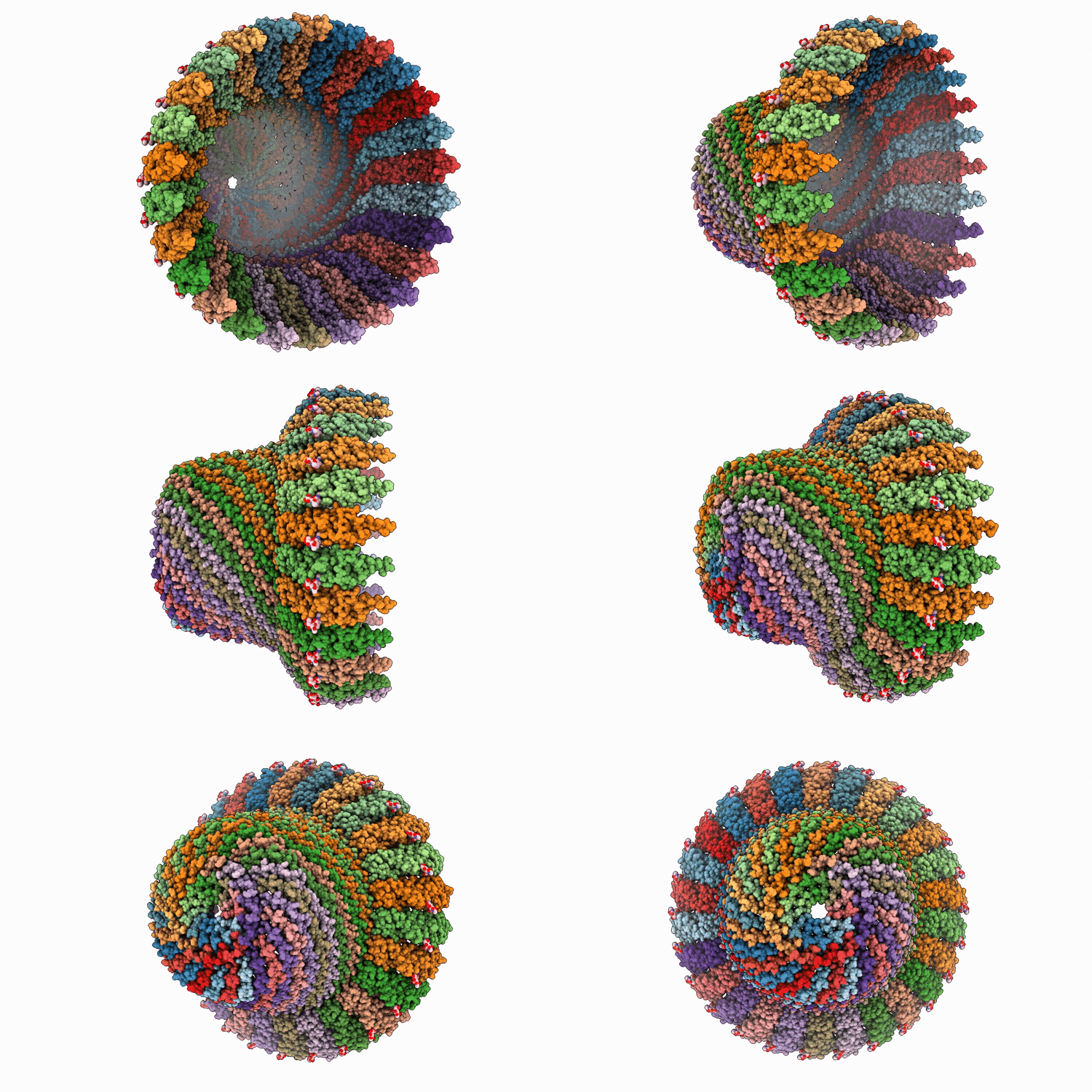
9VVG image
Deposition Date 2025-07-15
Release Date 2026-03-25
Last Version Date 2026-04-22
Entry Detail
PDB ID:
9VVG
Title:
Cryo-EM structure of the erlin1/2 complex purified using GDN and CHS
Biological Source:
Source Organism(s):
Homo sapiens (Taxon ID: 9606)
Expression System(s):
Method Details:
Experimental Method:
Resolution:
2.70 Å
Aggregation State:
PARTICLE
Reconstruction Method:
SINGLE PARTICLE
Macromolecular Entities
Structures with similar UniProt ID
Protein Blast
Polymer Type:polypeptide(L)
Molecule:Erlin-1
Gene (Uniprot):ERLIN1
Chain IDs:A, C (auth: M), E (auth: L), F (auth: K), I (auth: J), J (auth: I), L (auth: H), M (auth: G), Q (auth: C), R (auth: B), U (auth: F), W (auth: E), X (auth: D)
Chain Length:299
Number of Molecules:13
Biological Source:Homo sapiens
Structures with similar UniProt ID
Protein Blast
Polymer Type:polypeptide(L)
Molecule:Erlin-2
Gene (Uniprot):ERLIN2
Chain IDs:B (auth: a), D (auth: m), G (auth: k), H (auth: l), K (auth: i), N (auth: g), O (auth: h), P (auth: j), S (auth: b), T (auth: c), V (auth: f), Y (auth: d), Z (auth: e)
Chain Length:299
Number of Molecules:13
Biological Source:Homo sapiens
Ligand Molecules
Primary Citation
The Erlin1/2 complex is a dynamic scaffold for membrane microdomain assembly on the endoplasmic reticulum.
Mol. Cell 86 1362 1376.e5 (2026)
PMID: 41887216 DOI: 10.1016/j.molcel.2026.03.001

Abstact

The SPFH (stomatin, prohibitin, flotillin, and HflK/C) family proteins are proposed scaffolds for organizing functional membrane microdomains (FMMs) on various cellular membranes. Erlin1 and Erlin2, two endoplasmic reticulum (ER)-residing SPFH members, as heteromeric complexes, participate in ER-associated protein degradation (ERAD). However, the mechanisms underlying Erlin-mediated FMM organization and ERAD regulation remain poorly understood. Here, through cryoelectron microscopy (cryo-EM), we find that the human Erlin1/2 complex forms a 26-mer cage assembly, defining a nanometer-sized microdomain on the luminal leaflet. The intramembrane region of each subunit constitutes a specific phosphatidylinositol-binding pocket. ER proteins can be recruited to both the interior and exterior of these cages. By caging cargoes, the Erlin1/2 complex physically secludes them from their substrates or binding partners, conferring another layer of regulation on their functions. Moreover, individual cages can cluster to organize FMMs of different sizes. These dynamic properties underscore a general regulatory role of Erlin1/2 in various ER-related biological processes, including coronaviral replication.

Legend

Protein

Chemical

Disease

Primary Citation of related structures
Feedback Form
Name
Email
Institute
Feedback