

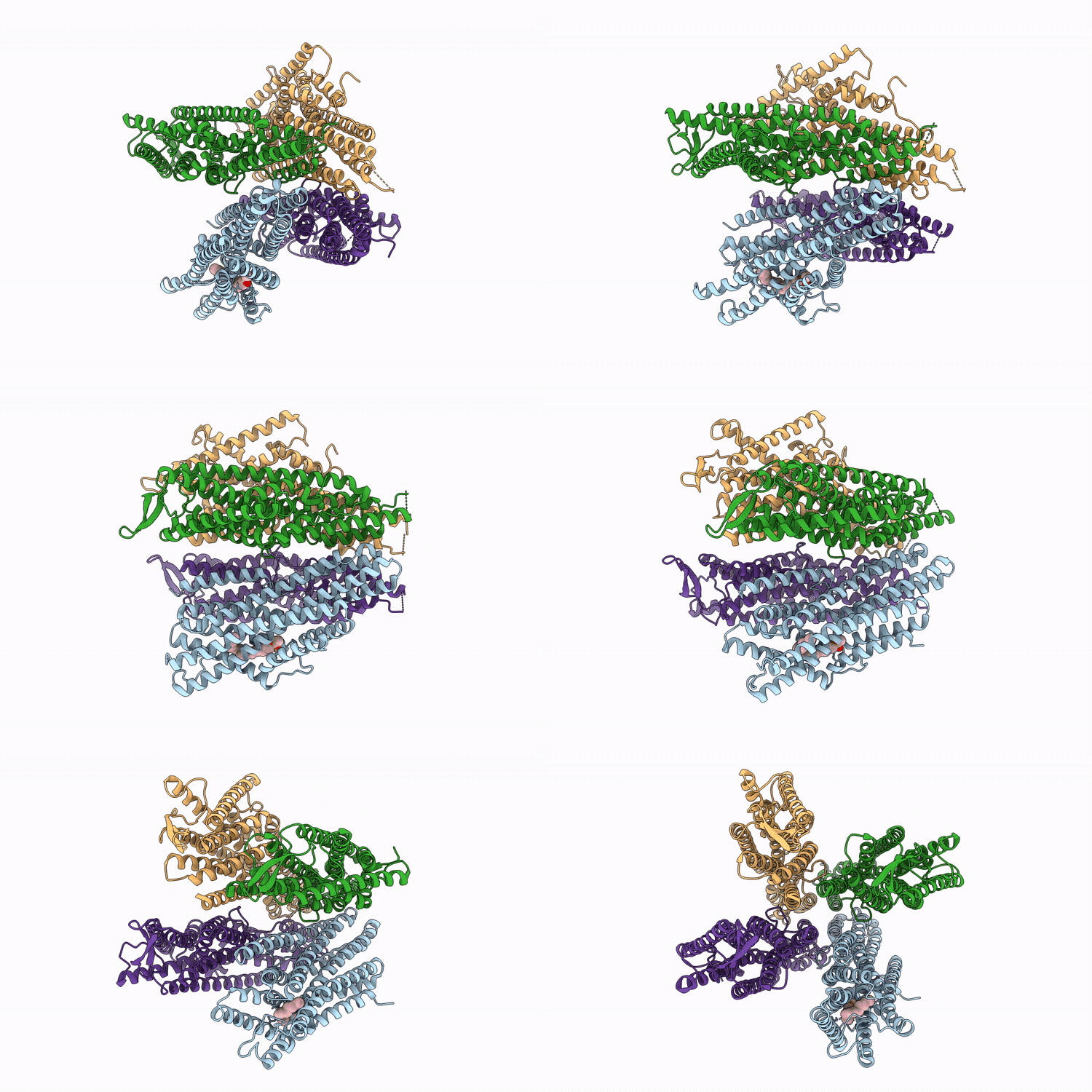
9VQT image
Deposition Date 2025-07-05
Release Date 2026-07-01
Last Version Date 2026-07-01
Entry Detail
PDB ID:
9VQT
Title:
The structure of DbOR67d-DbOrco in the cVA-bound state
Biological Source:
Source Organism(s):
Expression System(s):
Method Details:
Experimental Method:
Resolution:
3.30 Å
Aggregation State:
PARTICLE
Reconstruction Method:
SINGLE PARTICLE
Macromolecular Entities
Protein Blast
Polymer Type:polypeptide(L)
Molecule:odorant receptor 67d-like in
Chain IDs:A
Chain Length:395
Number of Molecules:1
Biological Source:Drosophila bipectinata
Protein Blast
Polymer Type:polypeptide(L)
Molecule:odorant receptor coreceptor i
Chain IDs:B, C, D
Chain Length:482
Number of Molecules:3
Biological Source:Drosophila bipectinata
Ligand Molecules
Primary Citation
Cryo-EM structures of Drosophila OR67d-Orco complexes reveal insect pheromone sensing mechanism.
Cell Res. ? ? ? (2026)
PMID: 42270979 DOI: 10.1038/s41422-026-01264-2

Abstact

Pheromones mediate intraspecific communication to regulate the physiology and behavior of animals, particularly insects. The detection of pheromones is initiated by the binding of pheromone molecules, e.g., 11-cis-vaccenyl acetate (cVA) in Drosophila, to specific receptor proteins in chemosensory neurons, but the underlying molecular mechanisms remain unclear. Here, we report structures of Drosophila pheromone receptor OR67d-Orco complexes in apo closed, pheromone-bound open, and synthetic agonist VUAA1-bound open conformations. OR67d and Orco assemble into a hetero-tetrameric channel with a 1:3 stoichiometry. In OR67d, the inverted L-shaped cVA or its analog binds into a deep and bent hydrophobic pocket, inducing both local and global conformational changes that lead to an asymmetrical opening of the channel gate. By comparison, VUAA1 binds to Orco instead of OR67d to cause a similar asymmetrical opening. Together, our studies reveal the structural basis for pheromone activation of hetero-tetrameric pheromone receptors.

Legend

Protein

Chemical

Disease

Primary Citation of related structures
Feedback Form
Name
Email
Institute
Feedback