

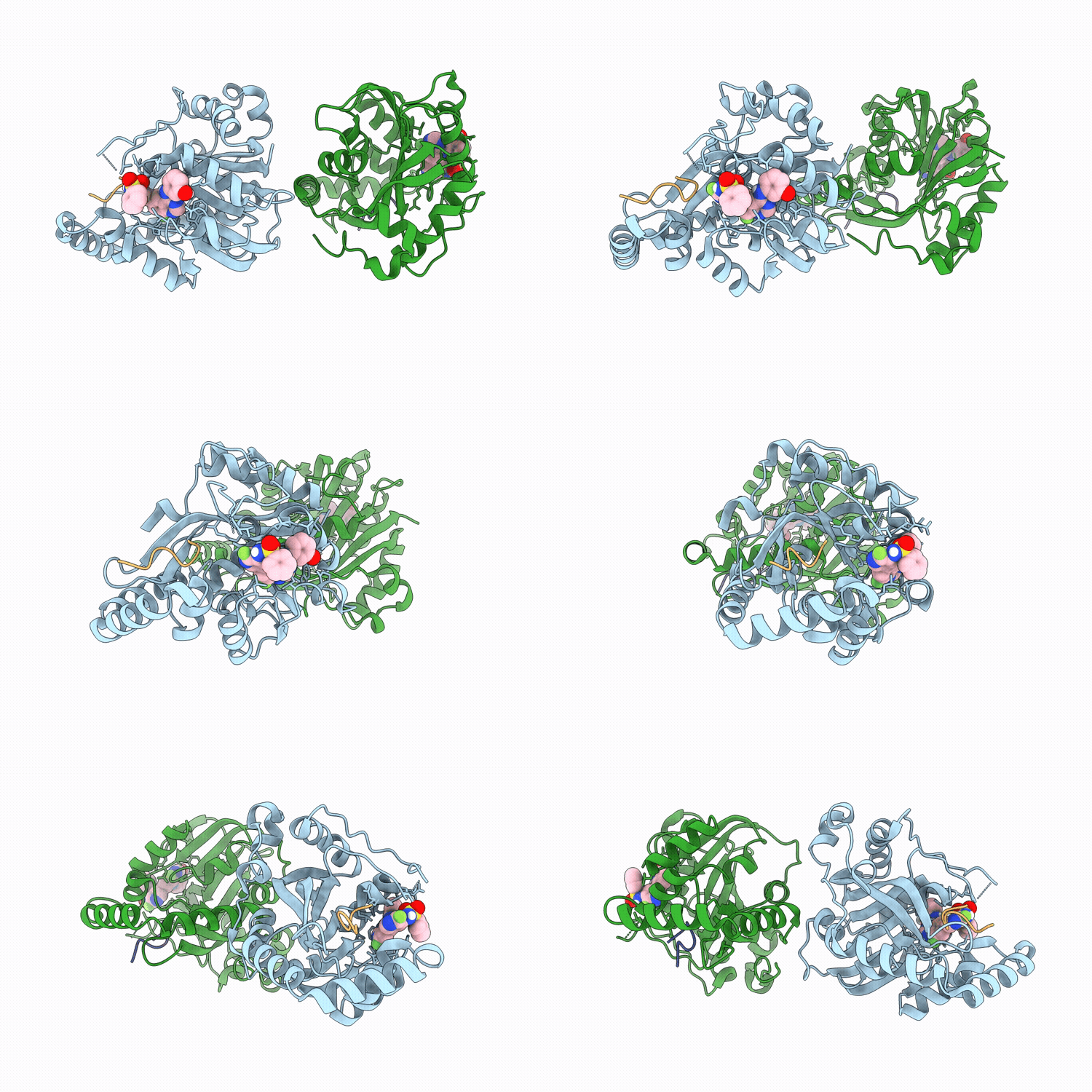
9VPQ image
Deposition Date 2025-07-03
Release Date 2026-04-22
Last Version Date 2026-05-13
Entry Detail
PDB ID:
9VPQ
Keywords:
Title:
Crystal structure of METTL9 in complex with compound 15k
Biological Source:
Source Organism(s):
Homo sapiens (Taxon ID: 9606)
Expression System(s):
Method Details:
Experimental Method:
Resolution:
2.28 Å
R-Value Free:
0.27
R-Value Work:
0.21
R-Value Observed:
0.22
Space Group:
C 1 2 1

Macromolecular Entities
Structures with similar UniProt ID
Protein Blast
Polymer Type:polypeptide(L)
Molecule:Protein-L-histidine N-pros-me
Gene (Uniprot):METTL9
Mutagens:L95A, F96A, L99A, F103A, V107A, F111A
Chain IDs:A, C (auth: B)
Chain Length:274
Number of Molecules:2
Biological Source:Homo sapiens
Structures with similar UniProt ID
Protein Blast
Polymer Type:polypeptide(L)
Molecule:Zinc transporter ZIP5
Gene (Uniprot):SLC39A5
Chain IDs:B (auth: C), D
Chain Length:12
Number of Molecules:2
Biological Source:Homo sapiens
Ligand Molecules
Primary Citation
Discovery of a Potent and Selective Cell-Active Inhibitor of Histidine-N1 Methyltransferase METTL9.
Angew.Chem.Int.Ed.Engl. 65 ? ? (2026)
PMID: 41870122 DOI: 10.1002/anie.3642560

Abstact

Protein histidine N1-methylation (1-methylhistidine, 1-MH) is a prevalent yet underexplored post-translational modification in mammals. The methyltransferase METTL9 acts as an important enzyme catalyzing 1-MH of histidine in diverse protein substrates, with mounting evidence suggesting its involvement in tumor progression. Despite its potential significance, no inhibitors targeting METTL9 have been previously identified. Here, we introduce compound METTL9i as a first-in-class, highly potent, and selective METTL9 inhibitor. METTL9i inhibits METTL9 with a half-maximum inhibitory concentration (IC(50)) of 0.067 +/- 0.009 microM and exhibits selectivity over other methyltransferases. Structural analysis via crystallography reveals that METTL9i binds within the S-adenosylmethionine (SAM) binding pocket. In cells, METTL9i engages METTL9 and leads to a reduction in global 1-MH levels. These results support METTL9i as a useful tool compound for investigating METTL9 biology and the functions of histidine 1-MH, while also serving as a promising lead compound for drug discovery targeting METTL9.

Legend

Protein

Chemical

Disease

Primary Citation of related structures
Feedback Form
Name
Email
Institute
Feedback