

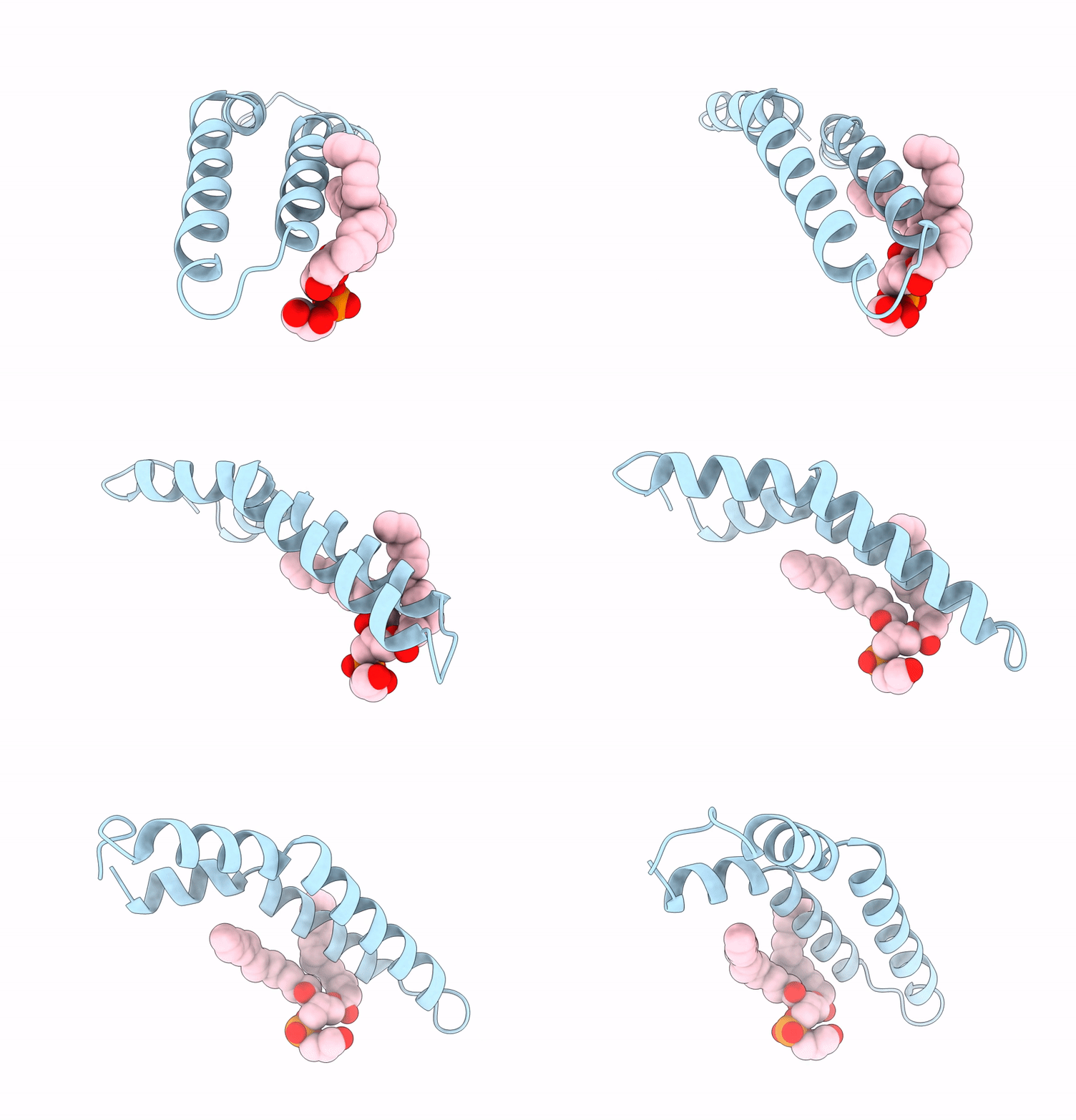
9VP3 image
Deposition Date 2025-07-02
Release Date 2025-12-24
Last Version Date 2026-04-08
Entry Detail
PDB ID:
9VP3
Keywords:
Title:
CryoEM structure of cyclised H-pilus (D69N)
Biological Source:
Expression System(s):
Method Details:
Experimental Method:
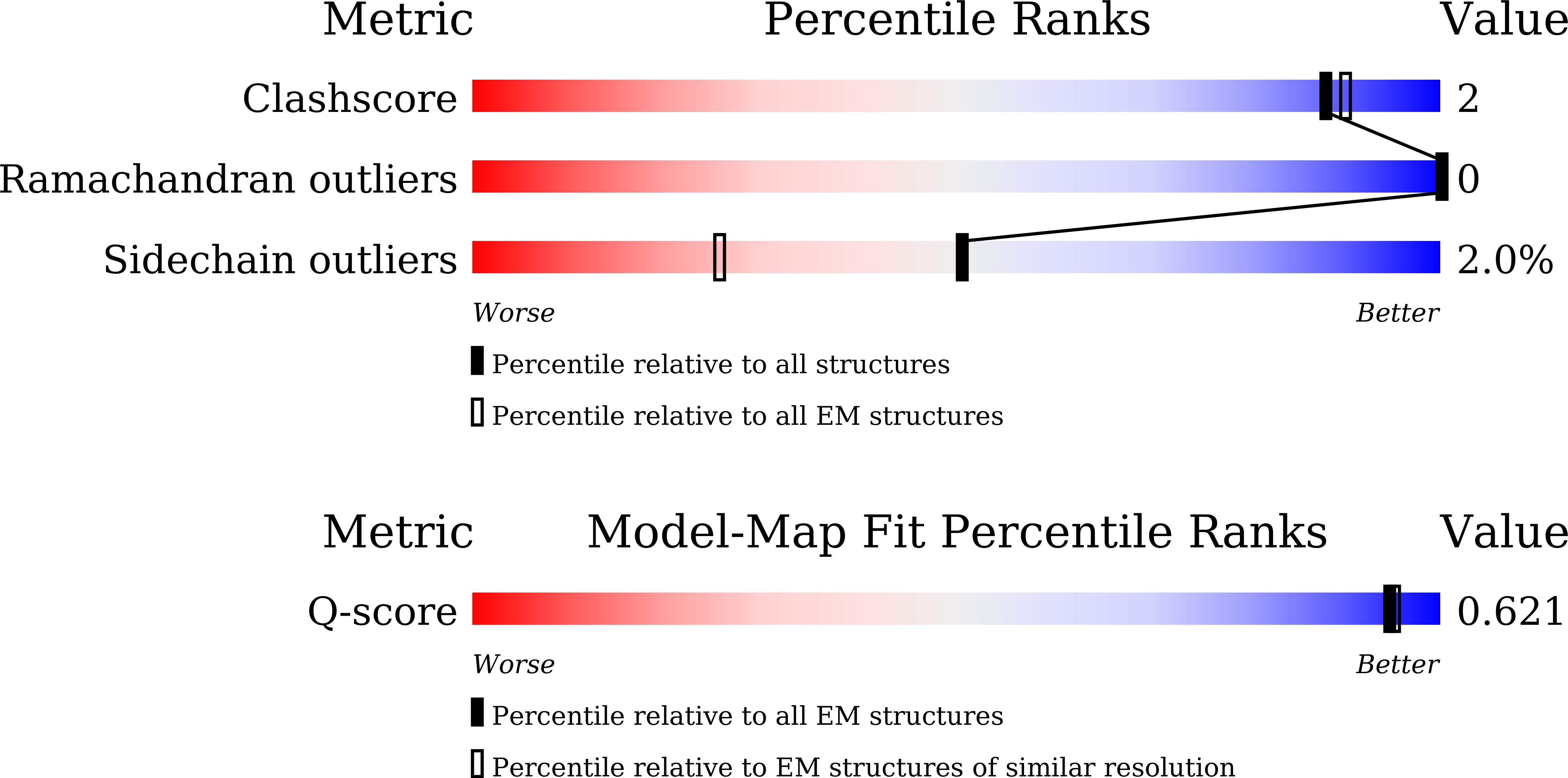
Resolution:
2.88 Å
Aggregation State:
FILAMENT
Reconstruction Method:
HELICAL
Macromolecular Entities
Structures with similar UniProt ID
Protein Blast
Polymer Type:polypeptide(L)
Molecule:Pilin
Gene (Uniprot):trhA
Mutagens:D69N
Chain IDs:A
Chain Length:74
Number of Molecules:1
Biological Source:Salmonella enterica subsp. enterica serovar Typhi
Ligand Molecules
Primary Citation
H pilin cyclisation and pilus biogenesis are promiscuous but electrostatic perturbations impair conjugation efficiency.
Nat Commun 17 ? ? (2026)
PMID: 41708604 DOI: 10.1038/s41467-026-69599-3

Abstact

During conjugation, plasmid DNA is transferred from donor to recipient bacteria via the plasmid-encoded mating pilus, formed as thin helical assemblies of polymerised pilin subunits. In the IncHI1 R27 plasmid-encoded pilus, the TrhA pilin undergoes cyclisation (via a peptide bond between Gly1 and Asp69), essential for conjugation. Gly1 and Asp69 are exposed on the pilus surface and conserved in all TrhA pilins in the Plascad database. Substituting Asp69 with Asn, Ala, Gly, or Arg does not prevent cyclisation or pilus formation, which remains structurally indistinguishable from the wild type. Conjugation efficiency of the Asp69 substitutions across multiple recipient species correlates with side chain size, in the order Asp69Asn > Asp69Ala > Asp69Gly. However, Asp69Arg, as well as Asp69Lys and Gly1Lys substitutions abolish conjugation, likely due to the positively charged pilus surface (opposite to the wild-type negative charge) forming unfavourable electrostatic interactions with the recipient outer membrane's inner leaflet, composed solely of zwitterionic phosphatidylethanolamine (PE). Consistently, conjugation is rescued in recipients lacking PE. These findings indicate strong selective pressure to maintain Gly1 and Asp69, as efficient DNA transfer depends on precise electrostatic and steric constraints of the pilus surface.

Legend

Protein

Chemical

Disease

Primary Citation of related structures
Feedback Form
Name
Email
Institute
Feedback