

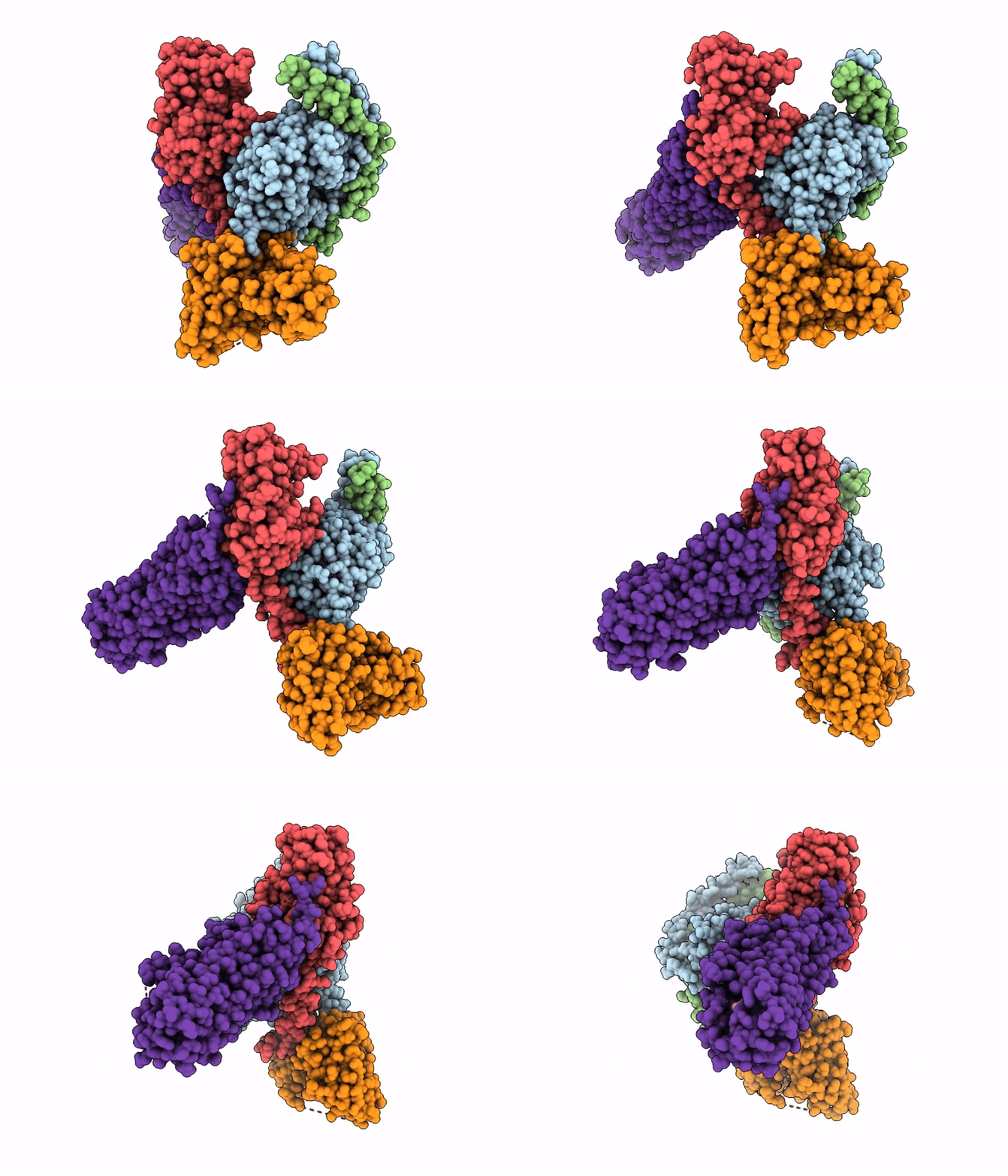
9VNY image
Deposition Date 2025-07-01
Release Date 2026-01-28
Last Version Date 2026-08-12
Entry Detail
PDB ID:
9VNY
Title:
Cryo-EM structure of Gi coupled Sphingosine 1-phosphate receptor bound with CYM5442
Biological Source:
Source Organism(s):
Homo sapiens (Taxon ID: 9606)
Mus musculus (Taxon ID: 10090)
Escherichia coli (Taxon ID: 562)
Expression System(s):
Method Details:
Experimental Method:
Resolution:
3.69 Å
Aggregation State:
PARTICLE
Reconstruction Method:
SINGLE PARTICLE
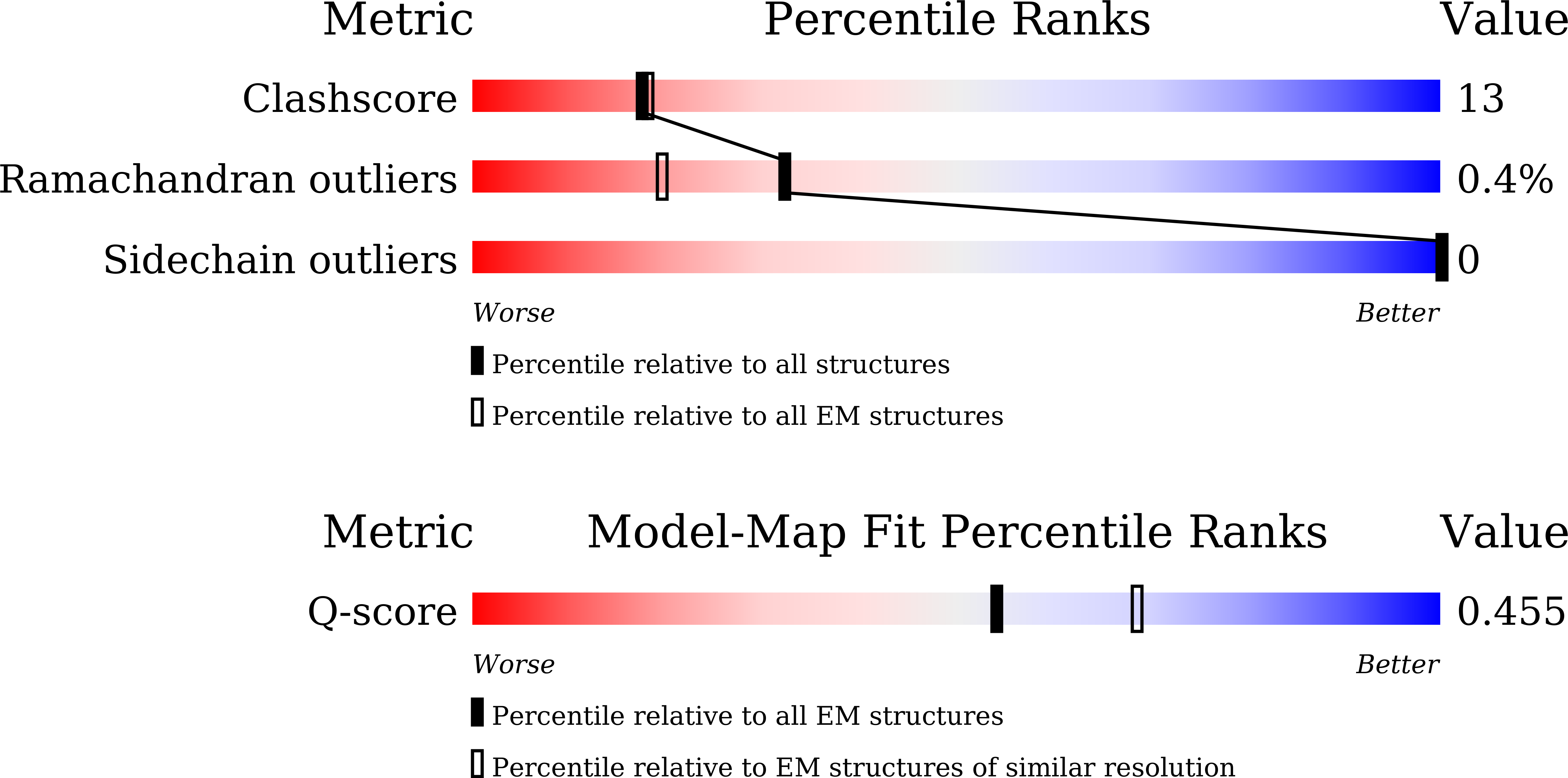
Macromolecular Entities
Polymer Type:polypeptide(L)
Molecule:Guanine nucleotide-binding pr
Gene (Uniprot):GNB1
Chain IDs:A
Chain Length:357
Number of Molecules:1
Biological Source:Homo sapiens
Polymer Type:polypeptide(L)
Molecule:Guanine nucleotide-binding pr
Gene (Uniprot):GNG2
Chain IDs:B (auth: C)
Chain Length:71
Number of Molecules:1
Biological Source:Homo sapiens
Polymer Type:polypeptide(L)
Molecule:Guanine nucleotide-binding pr
Gene (Uniprot):GNAI1
Chain IDs:C (auth: D)
Chain Length:354
Number of Molecules:1
Biological Source:Homo sapiens
Polymer Type:polypeptide(L)
Molecule:scFv16
Chain IDs:D (auth: E)
Chain Length:251
Number of Molecules:1
Biological Source:Mus musculus
Structural Superimposition Protein Blast
Polymer Type:polypeptide(L)
Molecule:Soluble cytochrome b562,Sphin
Gene (Uniprot):cybC, S1PR1
Chain IDs:E (auth: F)
Chain Length:534
Number of Molecules:1
Biological Source:Escherichia coli, Homo sapiens
Ligand Molecules
Primary Citation
Structural insights into subtype-specific agonist recognition by sphingosine-1-phosphate receptors.
Plos Biol. 24 e3003381 e3003381 (2026)
PMID: 41961881 DOI: 10.1371/journal.pbio.3003381

Abstact

Sphingosine-1-phosphate (S1P), a key metabolite of sphingolipids, plays crucial roles in a wide range of physiological and pathological processes. S1P primarily exerts its functions by binding to G protein-coupled sphingosine-1-phosphate receptors (S1PRs), which comprise five subtypes (S1PR1-5) in humans, thereby activating these receptors and their downstream signaling pathways. Understanding the molecular determinants that govern agonist selectivity among different S1PR subtypes is vital for the rational and precise development of targeted therapeutic agents. Here, four cryo-electron microscopy structures of agonist-bound S1PR1-Gi1 complexes are reported. Through an integrated approach combining structural analysis, molecular dynamics simulations, and pharmacological assays, the molecular basis for the selectivity of CYM5442, HY-X-1011, Ponesimod, and SAR247799 toward S1PR1 over S1PR2-S1PR5 is uncovered. Nonconserved residues within the ligand-binding pocket and at the Gi1-protein interface contribute to S1PR1 selectivity by these agonists. A distinct agonist binding orientation toward transmembrane helices 5-7, combined with branched substituents that increase the agonist's molecular width, results in steric clashes with residues in S1PR3. Additionally, branched moieties located at the tail portions of the agonist restrict its deep insertion into the binding pocket of both S1PR3 and S1PR5. These structural features collectively enhance its selectivity for S1PR1 over S1PR3 and S1PR5. Furthermore, polar interactions with conserved polar residues in the top region of the binding pocket also influence agonist selectivity. Besides, the relatively broad molecular width of the agonist sterically hinders its binding into S1PR2 and S1PR4 pocket by nonconserved residue pairs bearing bulky side chains. These findings establish a structural framework for the rational design of next-generation S1PR1 highly selective agonists with improved therapeutic potential.

Legend

Protein

Chemical

Disease

Primary Citation of related structures
Feedback Form
Name
Email
Institute
Feedback