

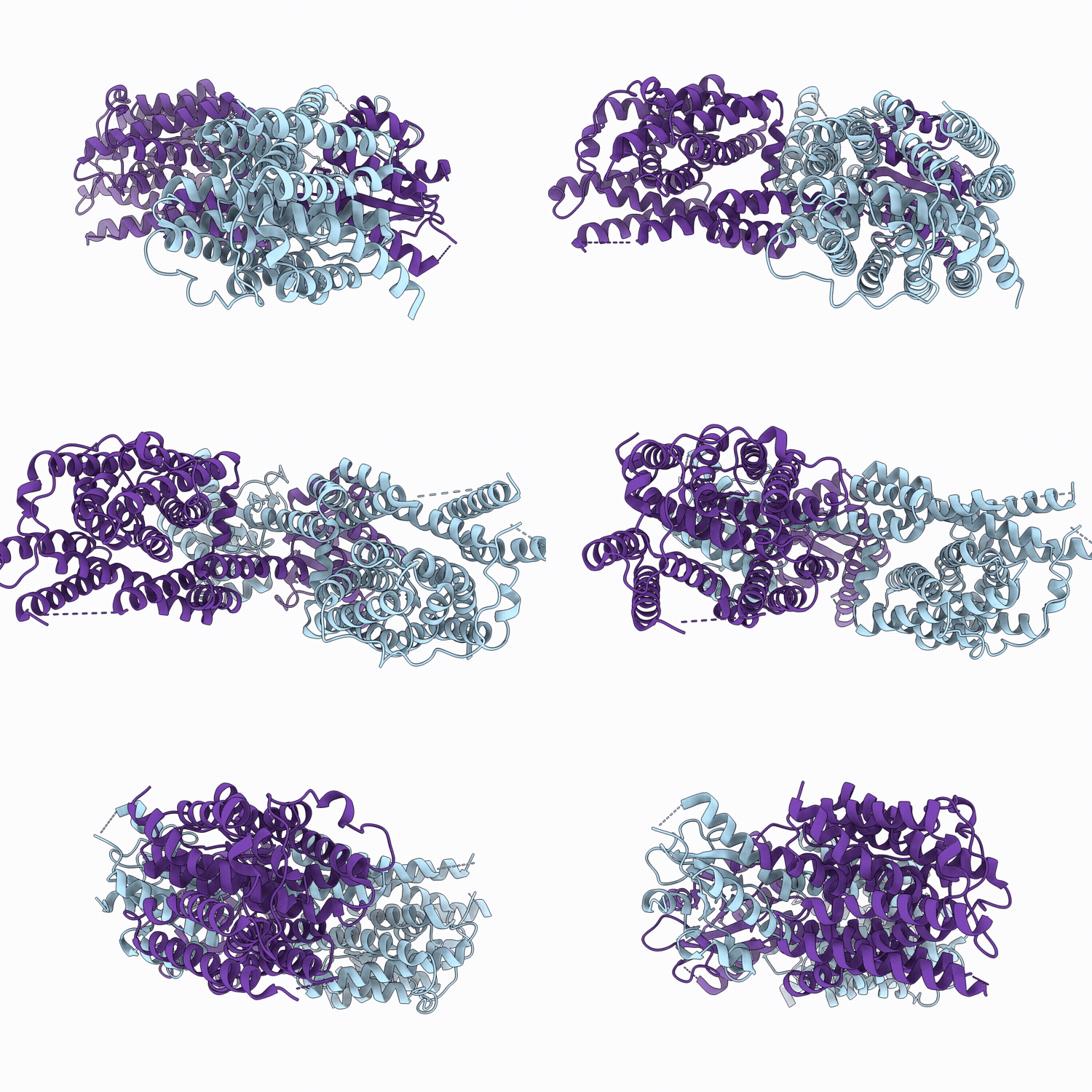
9VKY image
Deposition Date 2025-06-24
Release Date 2026-06-10
Last Version Date 2026-07-01
Entry Detail
PDB ID:
9VKY
Title:
Cryo-EM structure of SULTR-like phosphate distribution transporter
Biological Source:
Source Organism(s):
Expression System(s):
Method Details:
Experimental Method:
Resolution:
2.67 Å
Aggregation State:
PARTICLE
Reconstruction Method:
SINGLE PARTICLE

Macromolecular Entities
Polymer Type:polypeptide(L)
Molecule:Os06g0143700 protein
Gene (Uniprot):SPDT
Chain IDs:A, B
Chain Length:670
Number of Molecules:2
Biological Source:Oryza sativa Japonica Group
Ligand Molecules
Primary Citation
Structural and dynamic insights into SPDT for phosphorus allocation in rice.
Sci China Life Sci ? ? ? (2026)
PMID: 42295638 DOI: 10.1007/s11427-026-3403-5

Abstact

Phosphorus is essential for plants, absorbed as inorganic phosphate (Pi) and distributed via specialized transporters. The SULTR-like phosphorus distribution transporter (SPDT) preferentially allocates phosphorus to developing grains-an energetically costly process that can potentially be attenuated without affecting crop yield and germination, positioning SPDT as a prime target for sustainable agriculture. Here, we report cryo-EM structures of rice SPDT in Pi-bound and apo states, uncovering an elevator-type transport mechanism. The transmembrane region segregates into a mobile Pi-binding core domain and a stationary gate domain. Pi coordination involves specific residues within the core domain, followed by an electropositive vestibule that extends from the binding pocket to the cytoplasm. Integrative structural and smFRET analyses demonstrate a dynamic mechanism regulating the transporter's conformational equilibrium. In this mechanism, the transporter's intracellular STAS domain acts as a bidirectional conformation-switch: (i) membrane-proximal binding stabilizes the inward-facing state via interactions with the core/gate domains, while (ii) dissociation enables reset to the outward-facing state. This dynamic coupling elucidates the regulatory mechanism of the STAS domain, highlighting its universally conserved function across the SulP, SULTR, and SLC26 families. Our findings provide a mechanistic blueprint for engineering phosphorus allocation in crops to enhance nutrient-use efficiency.

Legend

Protein

Chemical

Disease

Primary Citation of related structures
Feedback Form
Name
Email
Institute
Feedback