

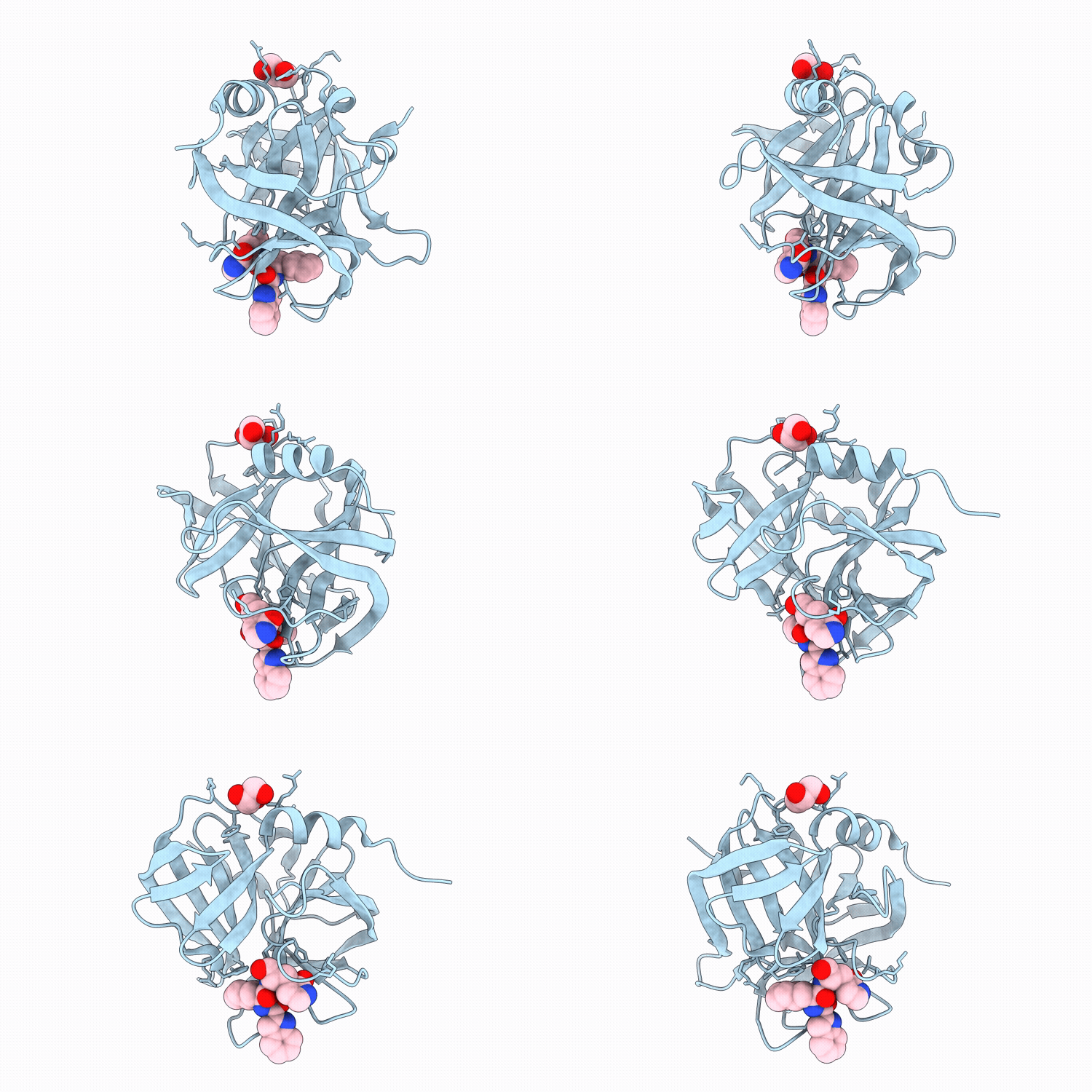
9VKK image
Deposition Date 2025-06-23
Release Date 2026-04-01
Last Version Date 2026-04-01
Entry Detail
PDB ID:
9VKK
Keywords:
Title:
Crystal structure of EV71 3C protease in complex with bofutrelvir
Biological Source:
Source Organism(s):
Expression System(s):
Method Details:
Experimental Method:
Resolution:
2.30 Å
R-Value Free:
0.21
R-Value Work:
0.16
R-Value Observed:
0.16
Space Group:
C 1 2 1

Macromolecular Entities
Structures with similar UniProt ID
Protein Blast
Polymer Type:polypeptide(L)
Molecule:Protease 3C
Chain IDs:A
Chain Length:183
Number of Molecules:1
Biological Source:Human enterovirus 71 (strain BRCR)
Peptide-like Molecules
PRD_002347
Primary Citation
A clinical SARS-CoV-2 Mpro inhibitor blocks replication of multiple enteroviruses and confers oral in vivo protection in animal models.
PLoS Pathog. 22 e1014051 e1014051 (2026)
PMID: 41811867 DOI: 10.1371/journal.ppat.1014051

Abstact

Enteroviruses, which belong to the family Picornaviridae, cause hand, foot, and mouth disease (HFMD), respiratory symptoms, and severe neurological complications in children. Since vaccines cannot provide cross-protection against different serotypes of enteroviruses, the development of broad-spectrum anti-enteroviral drugs is imperative. The viral 3C protease (3Cpro), which is essential for polyprotein processing represents a validated target for therapeutic intervention. Importantly, enterovirus 3Cpro shares conserved structural and catalytic features with coronavirus main protease (Mpro, also known as 3C-like protease, 3CLpro), providing a rationale for cross-target inhibitor repurposing. Through targeted screening of peptidomimetic protease inhibitors, a clinical-stage SARS-CoV-2 Mpro inhibitor was identified as a potent inhibitor of enterovirus A71 (EV71) 3Cpro. Bofutrelvir displayed nanomolar antiviral activity in multiple cell lines and demonstrated broad-spectrum efficacy against several enteroviruses including coxsackievirus B5, coxsackievirus A16 (CA16) and echovirus 11. In EV71 infected neonatal mice, intraperitoneal administration of bofutrelvir markedly reduced viral loads in brain, spinal cord, and muscle, alleviated clinical symptoms, and suppressed tissue inflammation. Oral administration of bofutrelvir also provided therapeutic benefits in neonatal mice models of both EV71 and CA16. Crystallographic analysis revealed that bofutrelvir binds in the conserved substrate-binding cleft of EV71 3Cpro, elucidating its molecular mechanism of inhibition. These findings identify bofutrelvir as a broad-spectrum peptidomimetic 3Cpro inhibitor with strong antiviral efficacy against enteroviruses and highlight its potential for repurposing as a promising antiviral candidate for the treatment of enteroviral infections.

Legend

Protein

Chemical

Disease

Primary Citation of related structures
Feedback Form
Name
Email
Institute
Feedback