

9VBD image
Deposition Date 2025-06-04
Release Date 2026-04-08
Last Version Date 2026-06-03
Entry Detail
PDB ID:
9VBD
Title:
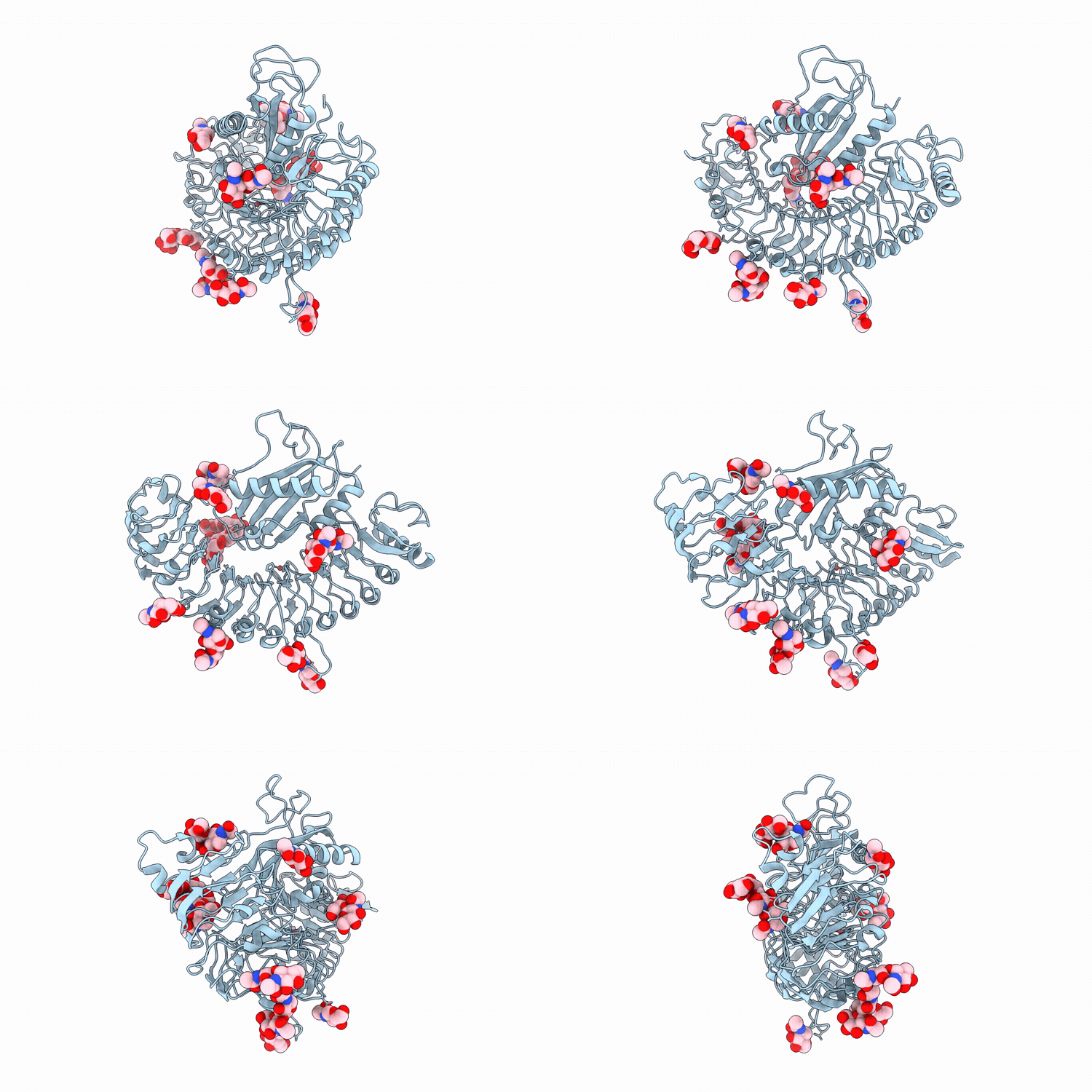
Cryo-EM structure of CARD1 ectodomain
Biological Source:
Source Organism(s):
Expression System(s):
Method Details:
Experimental Method:
Resolution:
3.26 Å
Aggregation State:
PARTICLE
Reconstruction Method:
SINGLE PARTICLE
Macromolecular Entities
Protein Blast
Polymer Type:polypeptide(L)
Molecule:Leucine-rich repeat receptor
Gene (Uniprot):malE, HPCA1
Chain IDs:A
Chain Length:893
Number of Molecules:1
Biological Source:Arabidopsis thaliana, Escherichia coli K12
Primary Citation
A copper-dependent redox-based hydrogen peroxide perception in plants.
Nat Commun 17 ? ? (2026)
PMID: 42151134 DOI: 10.1038/s41467-026-72573-8

Abstact

Redox-related molecules, such as quinones and reactive oxygen species (ROS), are important signaling molecules for all living organisms. A plant-specific leucine-rich repeat receptor-like kinase (LRR-RLK) CANNOT RESPOND TO DMBQ 1 (CARD1), also known as HYDROGEN-PEROXIDE-INDUCED Ca(2+) INCREASES (HPCA1), perceives both quinones and ROS, but the mechanism by which it distinguishes between these two types of signals remains unclear. Here, we determine the structure of the CARD1 ectodomain and uncover its unique features. Structural studies, coupled with genetics and biochemical analysis, demonstrate that previously identified unique cysteine residues are not essential for signal perception in CARD1. Interestingly, CARD1 harbors a copper ion on the surface of the ectodomain via histidine-coordination that is crucial for hydrogen peroxide signaling. Our work reports a unique copper-dependent redox perception in plants and provides insight into interactions between receptors and non-peptide stimuli during perception.

Legend

Protein

Chemical

Disease

Primary Citation of related structures
Feedback Form
Name
Email
Institute
Feedback