

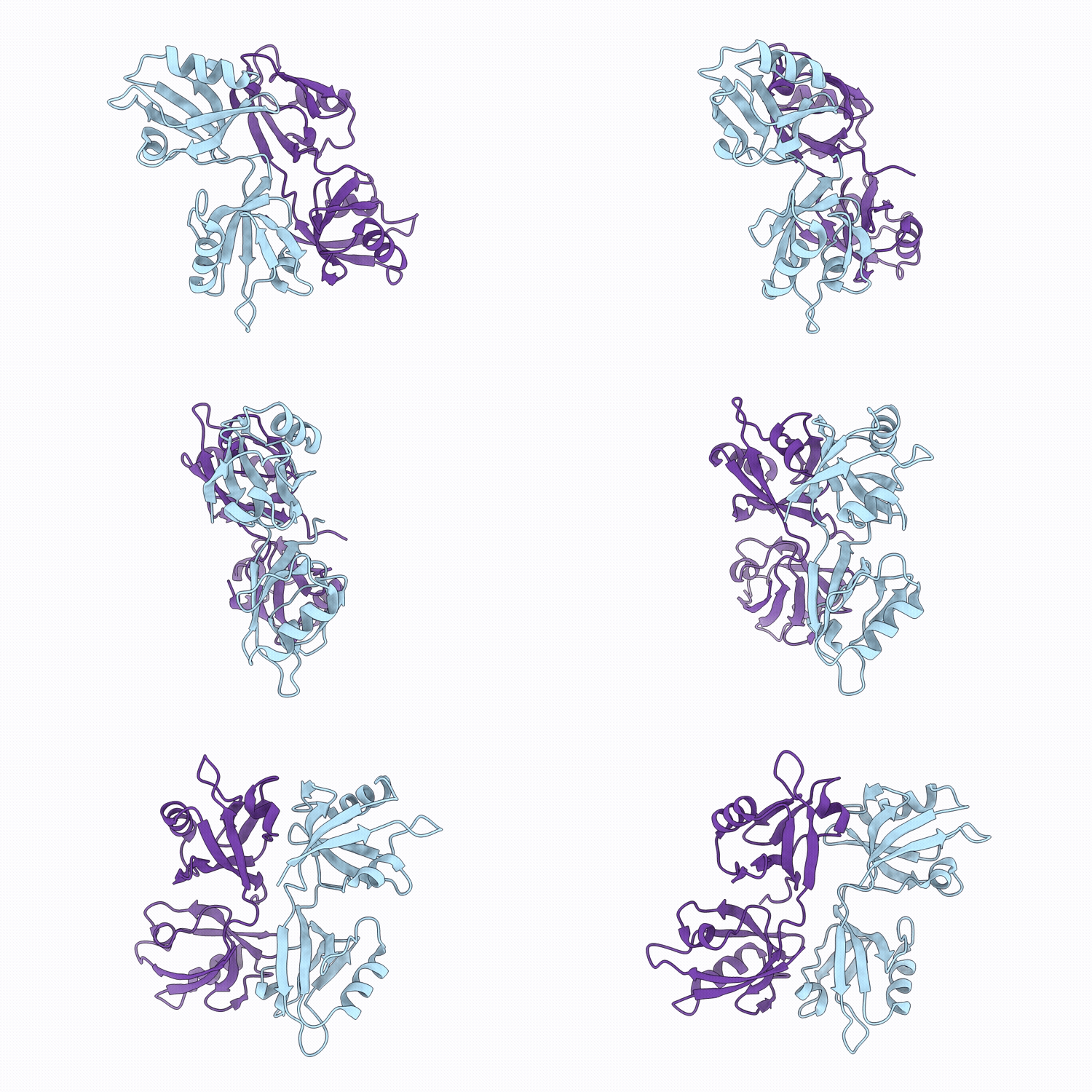
9VAL image
Deposition Date 2025-06-03
Release Date 2026-04-29
Last Version Date 2026-05-27
Entry Detail
PDB ID:
9VAL
Title:
Crystal structure of the PDZ tandem of syntenin
Biological Source:
Source Organism(s):
Homo sapiens (Taxon ID: 9606)
Expression System(s):
Method Details:
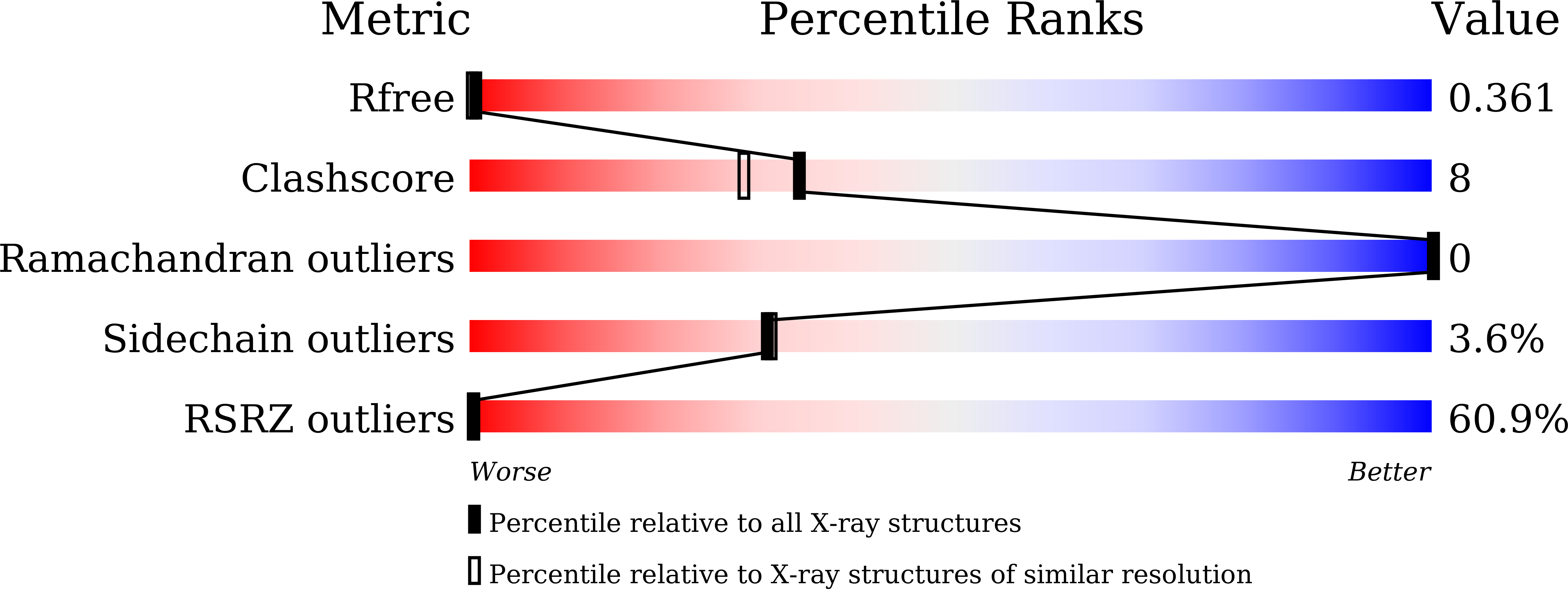
Experimental Method:
Resolution:
2.15 Å
R-Value Free:
0.36
R-Value Work:
0.30
R-Value Observed:
0.30
Space Group:
P 31 2 1
Macromolecular Entities
Structures with similar UniProt ID
Protein Blast
Polymer Type:polypeptide(L)
Molecule:Syntenin-1
Gene (Uniprot):SDCBP
Chain IDs:A, B
Chain Length:166
Number of Molecules:2
Biological Source:Homo sapiens
Primary Citation
Intrinsically dominant conformational diversity in PDZ1 within the tandem PDZ1-PDZ2 of human syntenin-1 underlined by crystal structures.
Protein Sci. 35 e70607 e70607 (2026)
PMID: 42084449 DOI: 10.1002/pro.70607

Abstact

The intrinsic dynamic asymmetry between homologous PDZ domains in multidomain scaffold proteins offers insight into how they achieve multivalent partner recognition. Through a systematic x-ray crystallographic analysis of tandem PDZ1-PDZ2 domains in human syntenin-1 (SDCBP/MDA-9), we solved nine high-resolution structures and uncovered fundamental differences in conformational plasticity between these sequentially similar domains. Pairwise root mean square deviation (RMSD) analysis of 20 PDZ1 structures across multiple crystal forms revealed substantial structural variability concentrated in the Lys119-Ile125 and Ala181-Glu184 loops-key regions governing ligand specificity within PDZ1's binding cleft-whereas PDZ2 maintained remarkable structural conservation, indicating divergent evolutionary constraints on these tandem domains. Comparative analysis of isotropic B-factors and multistructure RMSD highlighted the limitations of B-factors alone and emphasized the value of multistructure comparisons for mapping dynamic landscapes. Molecular dynamics (MD) simulations implemented through GROMACS corroborate the crystallographic observations, showing elevated residue-specific fluctuation values in PDZ1's ligand-binding interface compared to analogous PDZ2 regions, and steady-state heteronuclear NOE measurements support enhanced loop flexibility in PDZ1 relative to PDZ2. Together, these findings indicate that PDZ1's conformational diversity represents an inherent biophysical property rather than a crystallographic artifact, suggest a functional division of labor in which PDZ1's structural plasticity enables broad ligand recognition via conformational selection while PDZ2's rigid architecture stabilizes the tandem domain arrangement, and provide an atomic-level framework for developing domain-selective therapeutics targeting syntenin-1 in cancer, viral infection, and neurodevelopmental disorders.

Legend

Protein

Chemical

Disease

Primary Citation of related structures
Feedback Form
Name
Email
Institute
Feedback