

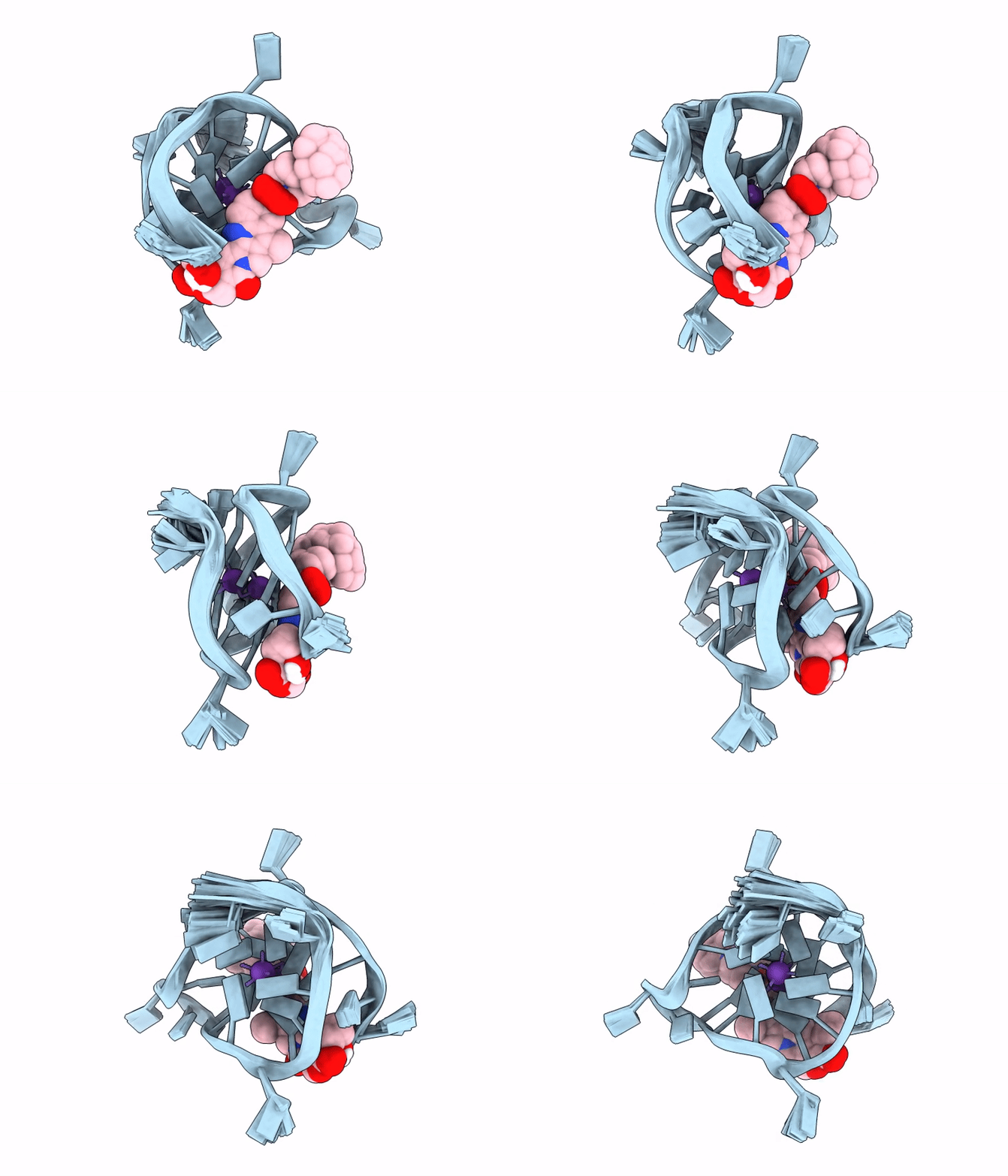
9VA0 image
Deposition Date 2025-06-02
Release Date 2026-02-11
Last Version Date 2026-05-06
Entry Detail
PDB ID:
9VA0
Keywords:
Title:
Solution NMR structures of hTERT DNA G-quadruplexes (G4s) in complex with small molecule CPT-11
Biological Source:
Source Organism(s):
Homo sapiens (Taxon ID: 9606)
Method Details:
Experimental Method:
Conformers Calculated:
200
Conformers Submitted:
20
Selection Criteria:
structures with the lowest energy

Macromolecular Entities
Polymer Type:polydeoxyribonucleotide
Molecule:DNA (5'-D(*AP*AP*TP*GP*GP*GP*
Chain IDs:A
Chain Length:22
Number of Molecules:1
Biological Source:Homo sapiens
Primary Citation
Dual targeting of topoisomerase I and DNA G-quadruplexes enhances senescence and chemosensitivity in colorectal cancer.
Commun Biol 9 ? ? (2026)
PMID: 41803560 DOI: 10.1038/s42003-026-09801-w

Abstact

Colorectal cancer (CRC) remains a therapeutic challenge due to chemoresistance that limits conventional treatment efficacy. We developed ZBH-01, a camptothecin derivative engineered to target both topoisomerase I (TOP1) and DNA G-quadruplexes (G4s). Unlike irinotecan (CPT-11), which requires metabolic activation, ZBH-01 directly stabilizes TOP1-DNA covalent complexes and preferentially binds the hTERT promoter G4, a regulator of telomere maintenance and oncogenic transcription. Structural studies reveal that the crescent-shaped scaffold of ZBH-01 pi-pi stacks onto the external G-tetrad of the hTERT G4, displacing SP1/MYC transcription factors and suppressing hTERT expression. Functionally, ZBH-01 demonstrated improved efficacy in chemoresistant models, exhibiting 14-fold and 7-fold greater efficacy than CPT-11 and SN-38 respectively in cisplatin-resistant cells, and outperforming CPT-11 by 61-fold and SN-38 by 2.4-fold in 5-FU-resistant models. By concurrently disrupting DNA repair through TOP1-trapping and transcriptional adaptation via G4-stabilization, ZBH-01 induced DNA damage, telomere shortening, and cellular senescence. These findings establish TOP1/G4 dual-targeting as a potential therapeutic strategy to enhance CRC chemosensitivity, presenting a new framework for combining DNA damage induction with transcription modulation.

Legend

Protein

Chemical

Disease

Primary Citation of related structures
Feedback Form
Name
Email
Institute
Feedback