

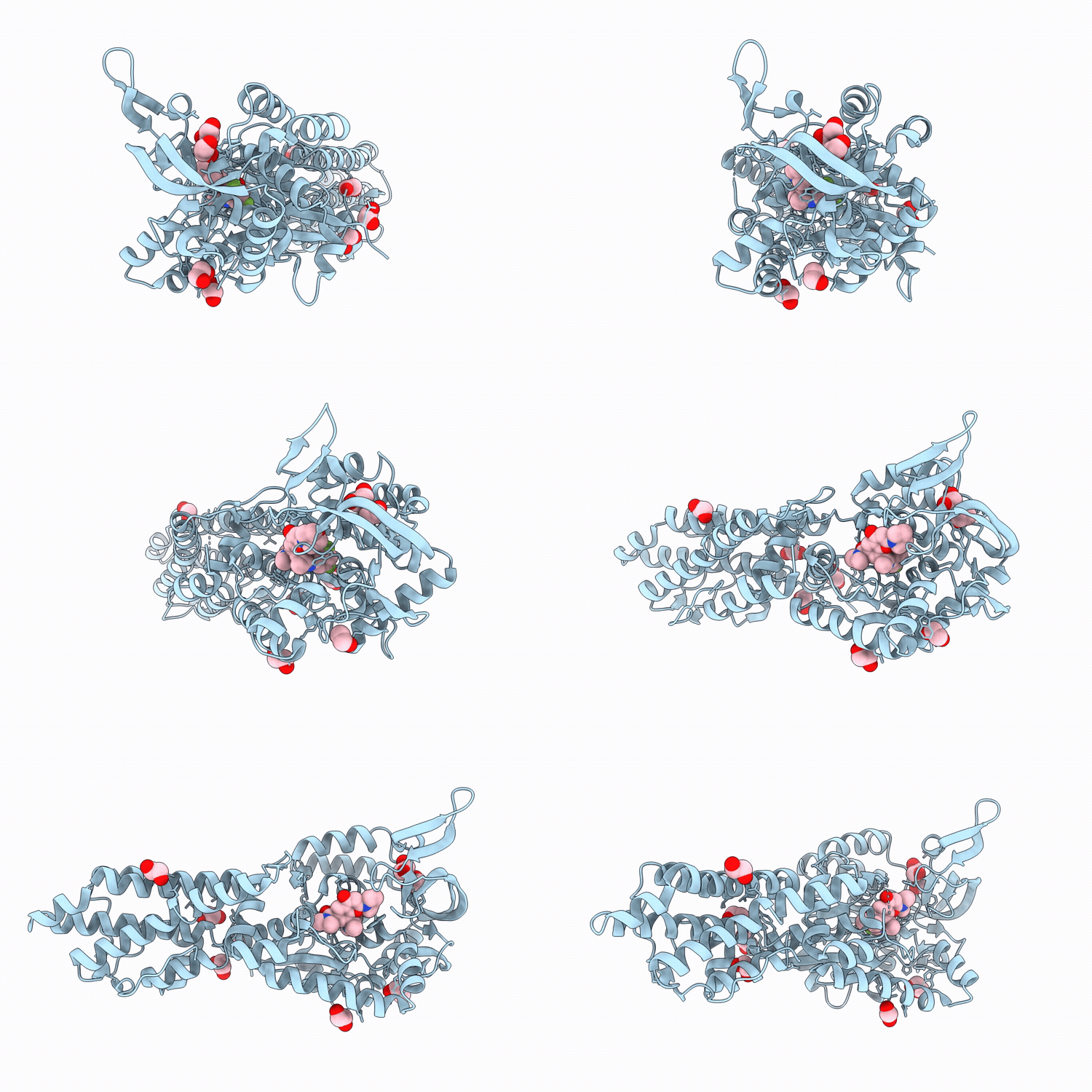
9V9M image
Deposition Date 2025-06-01
Release Date 2026-06-03
Last Version Date 2026-06-03
Entry Detail
PDB ID:
9V9M
Keywords:
Title:
Methionyl-tRNA synthetase from Staphylococcus aureus in complex with an inhibitor
Biological Source:
Source Organism(s):
Expression System(s):
Method Details:
Experimental Method:
Resolution:
2.50 Å
R-Value Free:
0.25
R-Value Work:
0.22
Space Group:
P 21 21 21

Macromolecular Entities
Structures with similar UniProt ID
Protein Blast
Polymer Type:polypeptide(L)
Molecule:Methionine--tRNA ligase
Gene (Uniprot):metG
Chain IDs:A (auth: AAA)
Chain Length:530
Number of Molecules:1
Biological Source:Staphylococcus aureus
Primary Citation
Discovery of a triple-site inhibitor targeting bacterial methionyl-tRNA synthetase through combined drug repurposing screening and generative AI-assisted optimization.
Nucleic Acids Res. 54 ? ? (2026)
PMID: 42152681 DOI: 10.1093/nar/gkag488

Abstact

Methionyl-tRNA synthetase (MetRS) plays an critical role in protein translation by catalyzing the attachment of l-methionine (l-Met) to its cognate tRNAMet and has long been recognized as a valuable target for antimicrobial drug development. In this study, a drug repurposing screen of a kinase inhibitor library identified AZD8186, a clinically investigated PI3Kbeta modulator, as a promising inhibitor of Staphylococcus aureus MetRS (SaMetRS). The binding mode of AZD8186 to SaMetRS was elucidated through co-crystallography, and subsequent knowledge-directed ligand optimization resulted in enhanced inhibitory activity and improved synthetic accessibility. Furthermore, we developed a novel conservation-aware and interaction-guided 3D generative AI model, designated DiffDeCIG, to facilitate structure-based drug design. DiffDeCIG modified inhibitors to establish additional interactions preferentially with conserved residues within the active pocket of SaMetRS. The optimal compound, MRS-9, potentially competed with all three substrates of MetRS (ATP, l-Met and tRNAMet), and demonstrated over a 300-fold increase in inhibitory activity relative to AZD8186. Importantly, MRS-9 selectively inhibited type 1 MetRS enzymes, while minimally affecting the tested type 2 MetRSs, including the human MetRS, thereby reducing potential adverse effects. This study reveals a novel triple-site inhibitory mechanism targeting MetRS and highlights an integrated strategy that combines knowledge-directed and AI-guided approaches in drug design.

Legend

Protein

Chemical

Disease

Primary Citation of related structures
Feedback Form
Name
Email
Institute
Feedback