

9V38 image
Deposition Date 2025-05-21
Release Date 2026-07-01
Last Version Date 2026-07-01
Entry Detail
PDB ID:
9V38
Title:
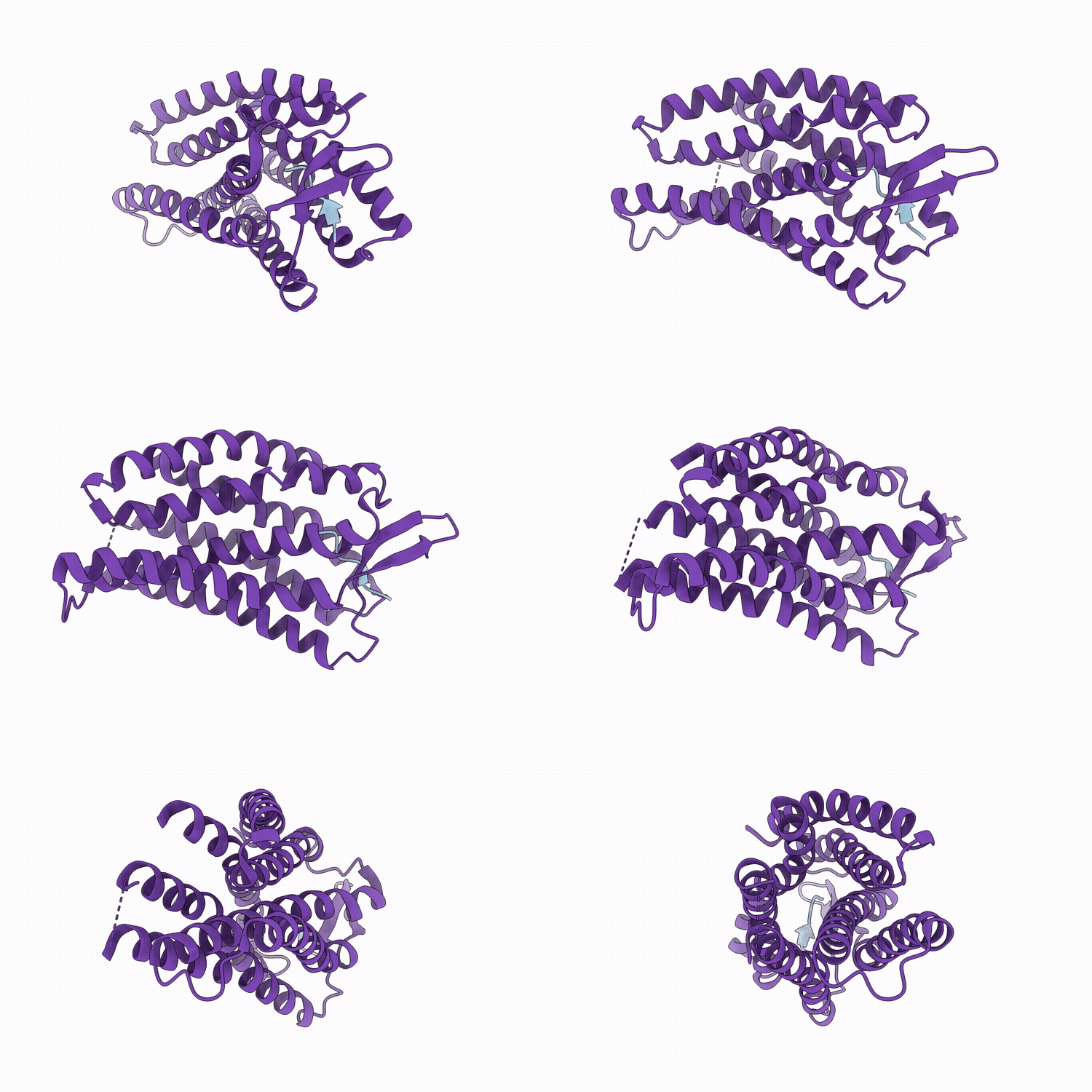
Structure of C5a anaphylatoxin chemotactic receptor 2, C5aR2 bound to EP54
Biological Source:
Source Organism(s):
Homo sapiens (Taxon ID: 9606)
Expression System(s):
Method Details:
Experimental Method:
Resolution:
3.25 Å
Aggregation State:
PARTICLE
Reconstruction Method:
SINGLE PARTICLE
Macromolecular Entities
Protein Blast
Polymer Type:polypeptide(L)
Molecule:EP54 ligand
Chain IDs:B (auth: C)
Chain Length:10
Number of Molecules:1
Biological Source:Homo sapiens
Structures with similar UniProt ID
Protein Blast
Polymer Type:polypeptide(L)
Molecule:C5a anaphylatoxin chemotactic
Gene (Uniprot):C5AR2
Chain IDs:A (auth: R)
Chain Length:393
Number of Molecules:1
Biological Source:Homo sapiens
Ligand Molecules
Primary Citation

Abstact

The conceptual framework of biased agonism has greatly impacted our understanding of G-protein-coupled receptor (GPCR) signaling, regulatory paradigms, and drug discovery efforts. Here, we present fundamental molecular and structural insights into intrinsic bias encoded at the human and mouse complement anaphylatoxin C5a receptors, namely C5aR1 and C5aR2. We discover that a naturally occurring version of C5a, i.e., C5a(-d-Arg), exhibits a robust G-protein-coupling bias at C5aR1 with attenuated beta-arrestin (betaarr) recruitment, which originates from a distinct conformation of TM7 and helix 8 in the receptor, leading to inefficient GRK recruitment and phosphorylation. We also determine a series of cryo-electron microscopy (cryo-EM) structures of C5aR2, a naturally encoded betaarr-biased receptor, which uncover key differences in anaphylatoxin recognition by C5aR2 relative to C5aR1. These structural snapshots also uncover a shallower cytoplasmic pocket in C5aR2 with a hydrophobic interior, which is likely incompatible with efficient G-protein coupling, leading to intrinsic bias. Our findings illuminate the molecular basis of naturally encoded signaling bias at GPCRs, with direct implications for therapeutic design.

Legend

Protein

Chemical

Disease

Primary Citation of related structures
Feedback Form
Name
Email
Institute
Feedback