

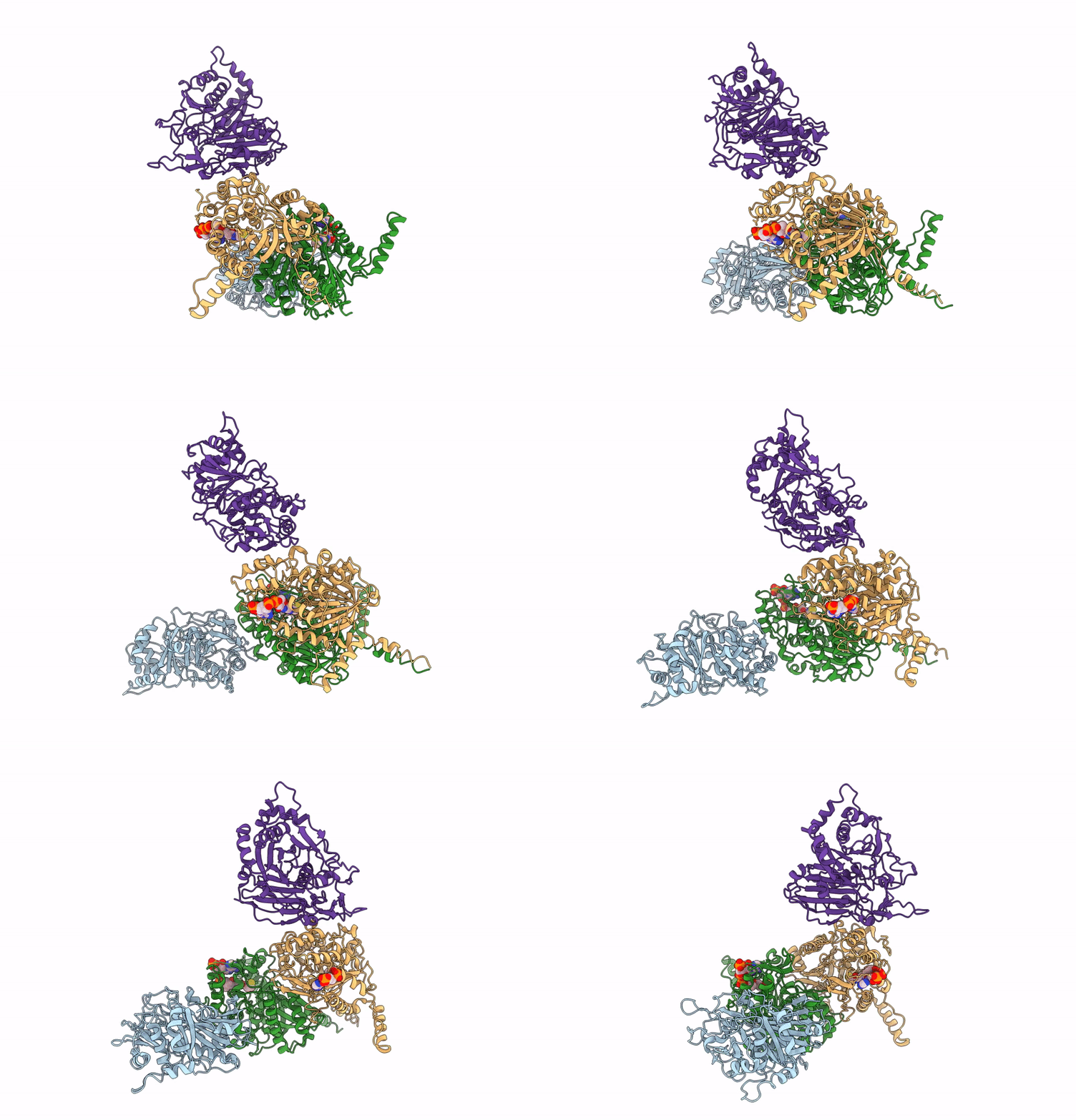
9UU3 image
Deposition Date 2025-05-05
Release Date 2025-10-29
Last Version Date 2026-03-11
Entry Detail
PDB ID:
9UU3
Keywords:
Title:
Cryo-EM structure of the maize CER6-GL2 complex bound with CoA
Biological Source:
Source Organism(s):
Zea mays (Taxon ID: 4577)
Expression System(s):
Method Details:
Experimental Method:
Resolution:
3.01 Å
Aggregation State:
PARTICLE
Reconstruction Method:
SINGLE PARTICLE
Macromolecular Entities
Structures with similar UniProt ID
Protein Blast
Polymer Type:polypeptide(L)
Molecule:Protein ECERIFERUM 26-like
Gene (Uniprot):LOC103645956
Chain IDs:A, C (auth: D)
Chain Length:434
Number of Molecules:2
Biological Source:Zea mays
Structures with similar UniProt ID
Protein Blast
Polymer Type:polypeptide(L)
Molecule:3-ketoacyl-CoA synthase
Gene (Uniprot):LOC100191595
Chain IDs:B (auth: C), D (auth: B)
Chain Length:500
Number of Molecules:2
Biological Source:Zea mays
Ligand Molecules
Primary Citation
Molecular basis of very-long-chain fatty acid elongation by the CER6-GL2 enzyme complex in plant wax biosynthesis.
Sci Adv 11 eadz0135 eadz0135 (2025)
PMID: 41337596 DOI: 10.1126/sciadv.adz0135

Abstact

Plant cuticular waxes, crucial hydrophobic barriers, are primarily composed of aliphatics derived from very-long-chain fatty acids (VLCFAs; >C28) synthesized by the endoplasmic reticulum fatty acid elongase complex. The core catalytic subunit, CER6 (KCS6), requires interaction with the BAHD protein GL2 to elongate acyl chains beyond C28. We determined the cryo-electron microscopy structure of the maize CER6-GL2 (ZmCER6-ZmGL2) heterotetramer bound to coenzyme A (CoA) and malonyl-CoA, revealing a membrane-anchored ZmCER6 homodimer, with each cytosolic catalytic domain having a substrate tunnel. Structural and biochemical analyses suggest that ZmGL2's amino terminus binds ZmCER6 and remodels its substrate tunnel into a continuous hydrophobic channel at their interface, enabling acyl-chain elongation. CER6 uses a distinct Cys-His-Asn catalytic triad, differing from the histidine-dependent catalysis of mammalian elongases. GL2 acts noncatalytically to modulate CER6 activity. Comparative analyses suggest that species-specific substrate preferences arise from divergent CER2/GL2 interactions. This work elucidates the acyl-chain elongation mechanism of plant VLCFA biosynthesis and provides a foundation for engineering stress-resilient crops via wax modulation.

Legend

Protein

Chemical

Disease

Primary Citation of related structures
Feedback Form
Name
Email
Institute
Feedback