

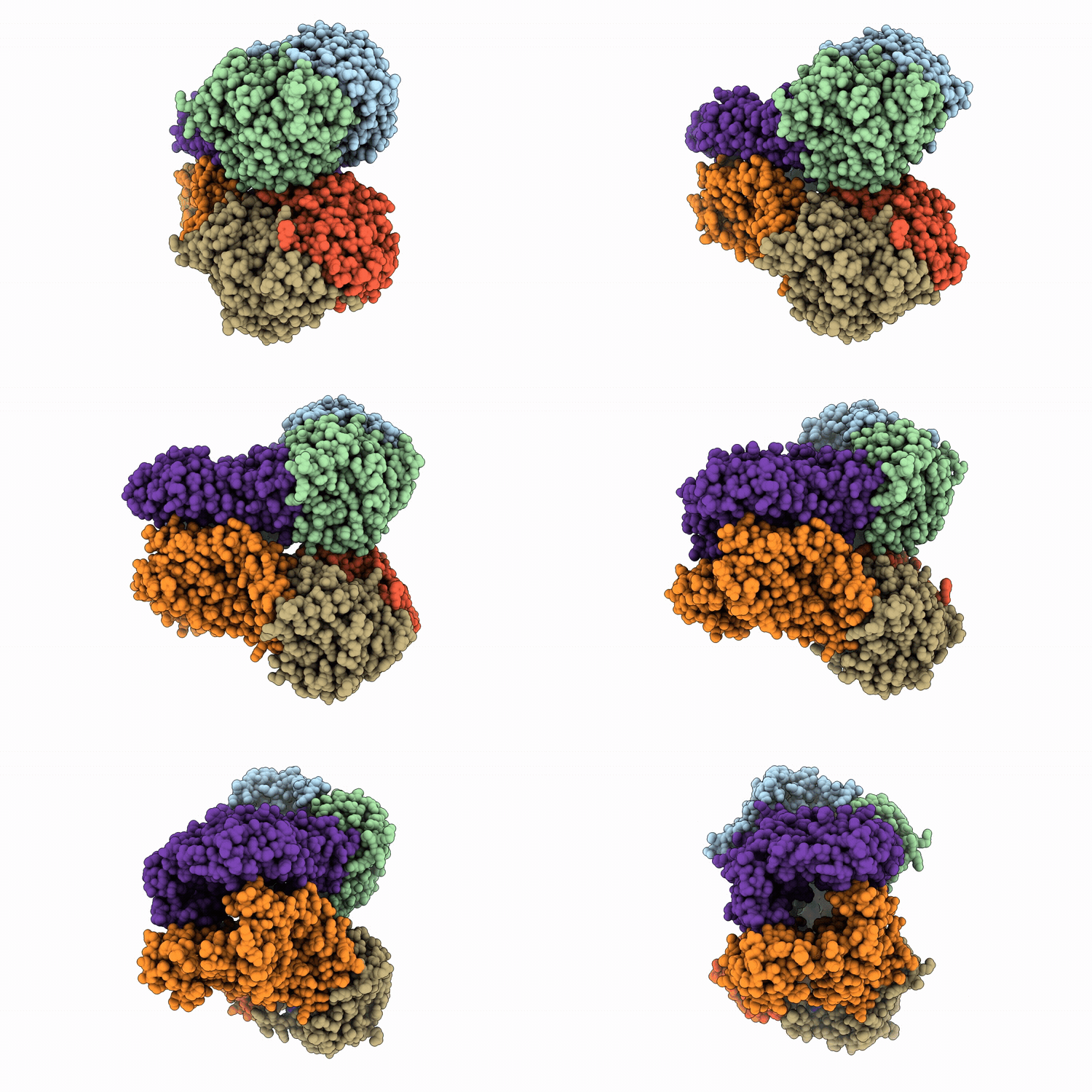
9UGG image
Deposition Date 2025-04-11
Release Date 2026-04-15
Last Version Date 2026-04-15
Entry Detail
PDB ID:
9UGG
Title:
PsdAB dimer (peptidisc sample)
Biological Source:
Source Organism(s):
Method Details:
Experimental Method:
Resolution:
3.60 Å
Aggregation State:
PARTICLE
Reconstruction Method:
SINGLE PARTICLE
Macromolecular Entities
Structures with similar UniProt ID
Protein Blast
Polymer Type:polypeptide(L)
Molecule:Lantibiotic ABC transporter A
Chain IDs:A, B, C, D
Chain Length:259
Number of Molecules:4
Biological Source:Bacillus sp. TSA-4
Structures with similar UniProt ID
Protein Blast
Polymer Type:polypeptide(L)
Molecule:Lantibiotic ABC transporter p
Chain IDs:E, F
Chain Length:646
Number of Molecules:2
Biological Source:Bacillus sp. TSA-4
Ligand Molecules
Primary Citation
Cryo-EM structure of the Nisin resistance pump PsdAB reveals an unusual ABC transporter architecture.
Structure 34 311 321.e5 (2026)
PMID: 41418778 DOI: 10.1016/j.str.2025.11.013

Abstact

Bacteria have evolved diverse strategies to resist antimicrobial peptides, among them lipid II-targeting lantibiotics such as nisin. PsdAB, an ABC-type transporter regulated by the PsdRS two-component system, contributes to nisin resistance, though its structural and mechanistic basis have remained unclear. Here, we report the cryo-EM structure of Bacillus subtilis PsdAB, revealing a dimeric assembly with an unusually large central cavity at the TMD interface. Cross-linking studies confirm the dimeric nature of PsdAB both in vitro and in cells. Functional assays demonstrate that dimer-disrupting mutations compromise nisin resistance, highlighting the importance of dimerization for activity. Compared to canonical ABC transporter types, PsdAB adopts an atypical architecture comprising four NBDs and two TMDs arranged around a central cavity, which may accommodate lipid II. We propose that PsdAB represents a previously unrecognized ABC transporter class. These findings offer new insights into transporter-mediated lantibiotic resistance and suggest a potential mechanism of lipid II shielding.

Legend

Protein

Chemical

Disease

Primary Citation of related structures
Feedback Form
Name
Email
Institute
Feedback