

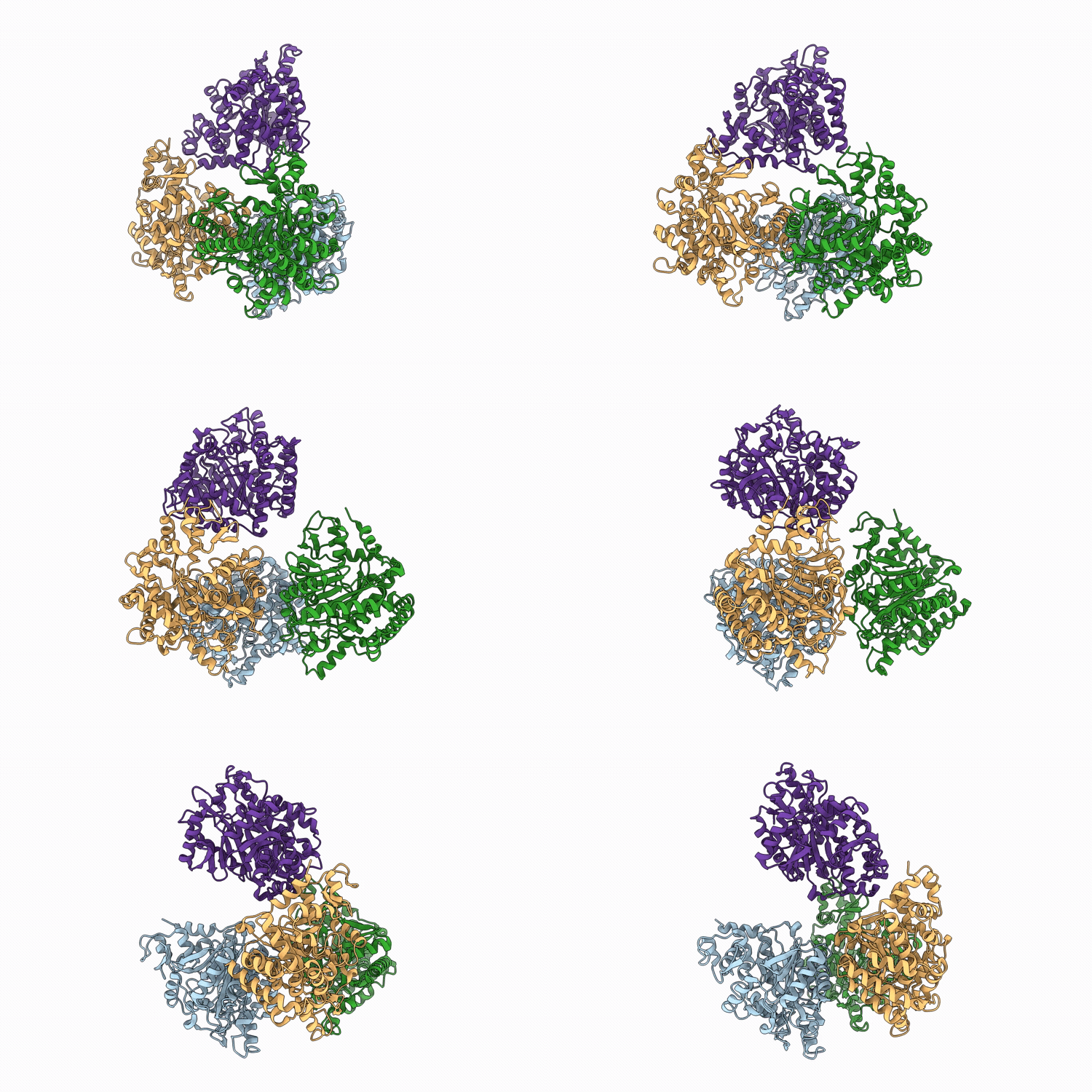
9UFC image
Deposition Date 2025-04-10
Release Date 2026-04-15
Last Version Date 2026-04-15
Entry Detail
PDB ID:
9UFC
Keywords:
Title:
Structural of a glutamate cysteine ligase StGSH1 in Solanum tuberosum
Biological Source:
Source Organism(s):
Expression System(s):
Method Details:
Experimental Method:
Resolution:
2.53 Å
R-Value Free:
0.24
R-Value Work:
0.19
R-Value Observed:
0.19
Space Group:
C 2 2 21

Macromolecular Entities
Polymer Type:polypeptide(L)
Molecule:Glutamate--cysteine ligase, c
Chain IDs:A, B, C, D
Chain Length:523
Number of Molecules:4
Biological Source:Solanum tuberosum
Primary Citation
Structural basis for the redox control of plant glutamate cysteine ligase
J. Biol. Chem. 281 27557 27565 (2006)
PMID: 16766527 DOI: 10.1074/jbc.M602770200

Abstact

Glutathione (GSH) plays a crucial role in plant metabolism and stress response. The rate-limiting step in the biosynthesis of GSH is catalyzed by glutamate cysteine ligase (GCL) the activity of which is tightly regulated. The regulation of plant GCLs is poorly understood. The crystal structure of substrate-bound GCL from Brassica juncea at 2.1-A resolution reveals a plant-unique regulatory mechanism based on two intramolecular redox-sensitive disulfide bonds. Reduction of one disulfide bond allows a beta-hairpin motif to shield the active site of B. juncea GCL, thereby preventing the access of substrates. Reduction of the second disulfide bond reversibly controls dimer to monomer transition of B. juncea GCL that is associated with a significant inactivation of the enzyme. These regulatory events provide a molecular link between high GSH levels in the plant cell and associated down-regulation of its biosynthesis. Furthermore, known mutations in the Arabidopsis GCL gene affect residues in the close proximity of the active site and thus explain the decreased GSH levels in mutant plants. In particular, the mutation in rax1-1 plants causes impaired binding of cysteine.

Legend

Protein

Chemical

Disease

Primary Citation of related structures
Feedback Form
Name
Email
Institute
Feedback