

9UBC image
Deposition Date 2025-04-02
Release Date 2026-02-25
Last Version Date 2026-04-01
Entry Detail
PDB ID:
9UBC
Keywords:
Title:
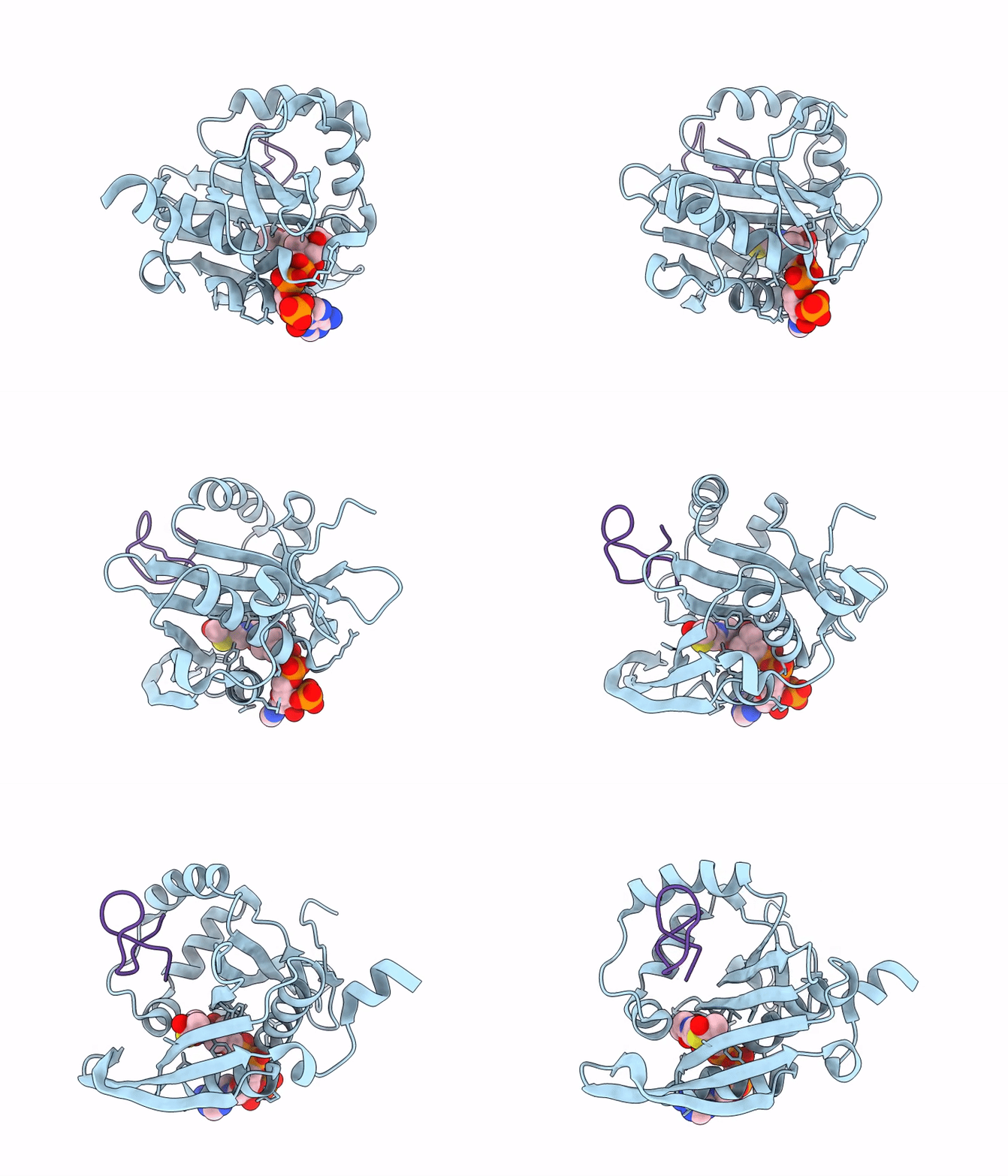
Sub-particle structure of the iterative acetyltransferase from Actinomycetes in complex with AcCoA and monoacetylated lasso peptides
Biological Source:
Source Organism(s):
Expression System(s):
Method Details:
Experimental Method:
Resolution:
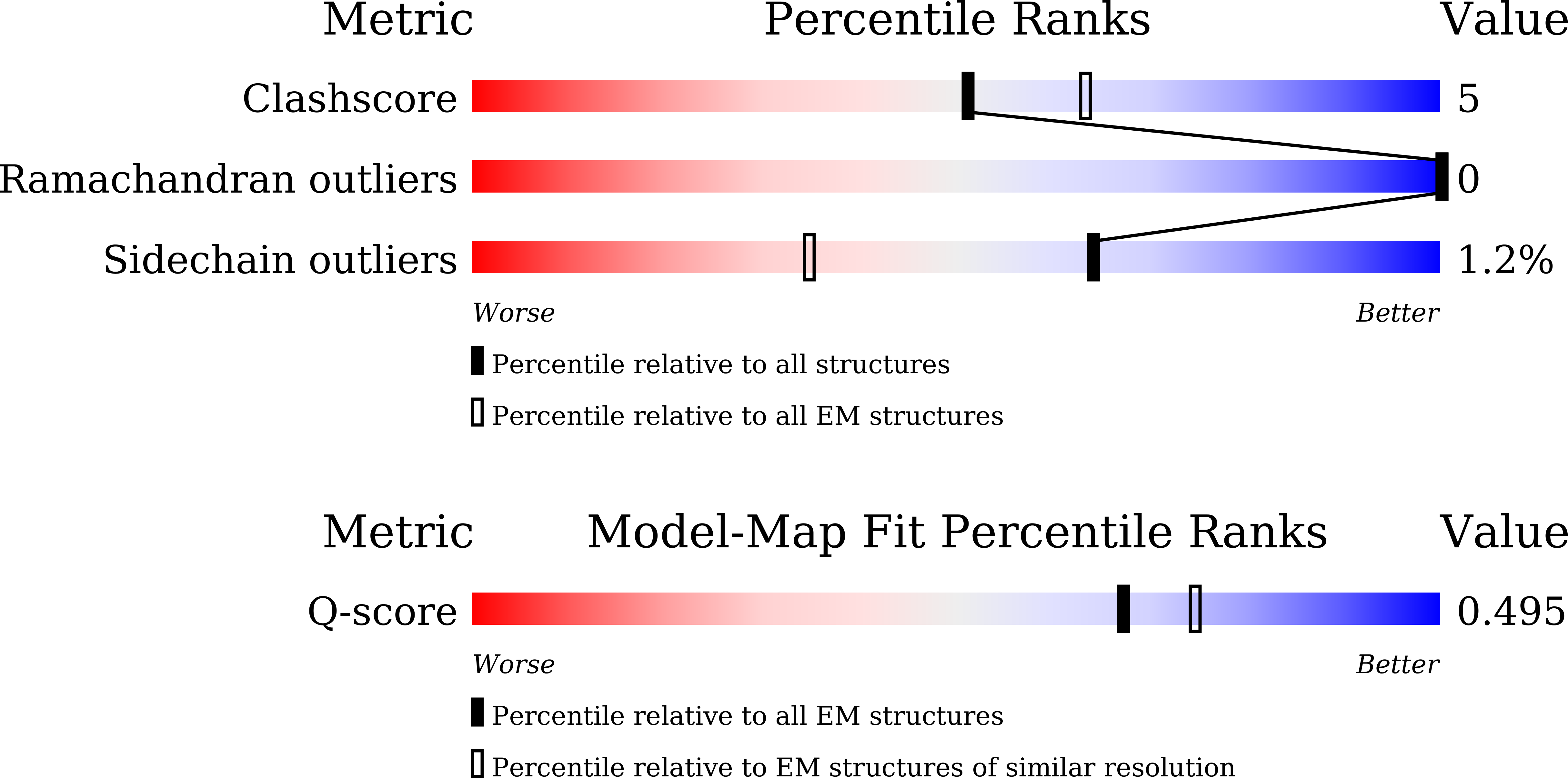
3.43 Å
Aggregation State:
PARTICLE
Reconstruction Method:
SINGLE PARTICLE
Macromolecular Entities
Structures with similar UniProt ID
Protein Blast
Polymer Type:polypeptide(L)
Molecule:GCN5-related N-acetyltransfer
Gene (Uniprot):Amir_6318
Chain IDs:A
Chain Length:196
Number of Molecules:1
Biological Source:Actinosynnema mirum DSM 43827
Structures with similar UniProt ID
Protein Blast
Polymer Type:polypeptide(L)
Molecule:Albusnodin family lasso pepti
Gene (Uniprot):FHR32_000276
Chain IDs:B (auth: C)
Chain Length:15
Number of Molecules:1
Biological Source:Actinosynnema mirum DSM 43827
Modified Residue
Compound ID Chain ID Parent Comp ID Details 2D Image
ALY B LYS modified residue
Ligand Molecules
Primary Citation
Iterative acylation on mature lasso peptides by widespread acetyltransferases.
Nat.Chem.Biol. ? ? ? (2026)
PMID: 41826761 DOI: 10.1038/s41589-026-02149-6

Abstact

The biosynthesis of ribosomally synthesized and posttranslationally modified peptides (RiPPs) leverages iterative catalysis to enhance structural and biological diversity. Traditionally, iterative enzymes install posttranslational modifications on linear peptides, rather than mature RiPPs with intricate three-dimensional structures, which require complex changes in substrate binding. Here we present a prolific class of GCN5-related N-acetyltransferases (GNATs) that iteratively and consecutively acylate two Lys residues within the loop and ring motifs of lasso peptides, diverging from the typical iterative modification of linear peptides. Utilizing high-resolution cryogenic-electron microscopy and enzymatic reconstitution, we define the lasso peptide-binding pocket of IatT and pinpoint key residues that distinguish its two distinct acetylation steps. Structure-based engineering of IatT's acetyl-recognition site expands the cavity to accommodate longer-chain acyl groups, enabling the creation of lipolasso peptides, a class of ribosomal lipopeptide. This engineering strategy can be applied to any RiPP biosynthetic gene cluster encoding GNAT, facilitating the efficient diversification of ribosomal lipopeptides.

Legend

Protein

Chemical

Disease

Primary Citation of related structures
Feedback Form
Name
Email
Institute
Feedback