

9UAZ image
Deposition Date 2025-04-02
Release Date 2025-10-29
Last Version Date 2026-05-13
Entry Detail
PDB ID:
9UAZ
Title:
Cryo-EM structure of the M1 muscarinic acetylcholine receptor bound to atropine and nanobody NbA12
Biological Source:
Source Organism(s):
Homo sapiens (Taxon ID: 9606)
Expression System(s):
Method Details:
Experimental Method:
Resolution:
3.29 Å
Aggregation State:
PARTICLE
Reconstruction Method:
SINGLE PARTICLE
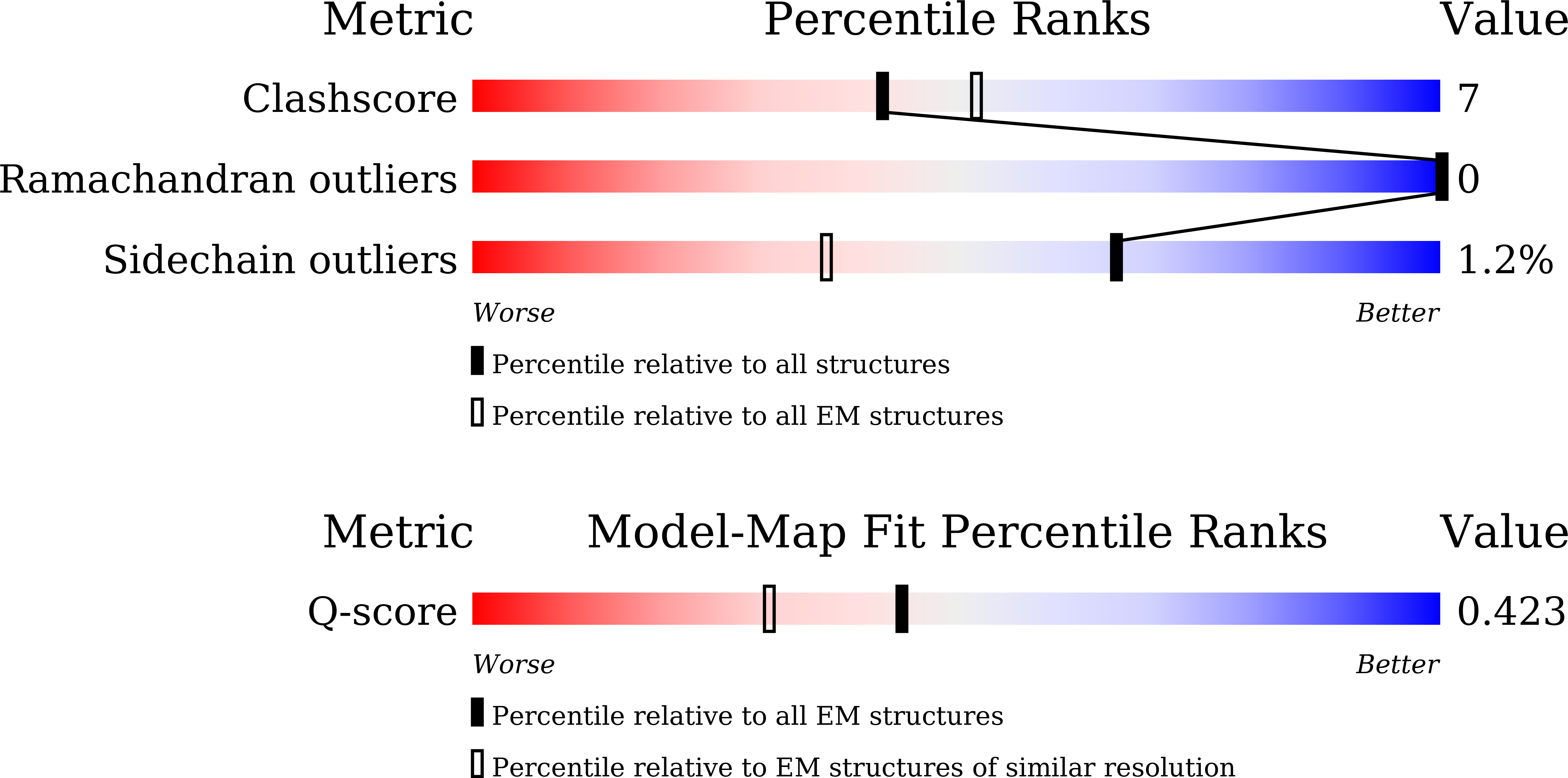
Macromolecular Entities
Protein Blast
Polymer Type:polypeptide(L)
Molecule:M1 muscarinic acetylcholine r
Chain IDs:A (auth: B)
Chain Length:487
Number of Molecules:1
Biological Source:Homo sapiens
Ligand Molecules
Primary Citation
Extracellular nanobody screening using conformationally stable GPCR variants.
Proc.Natl.Acad.Sci.USA 122 e2508879122 e2508879122 (2025)
PMID: 41187083 DOI: 10.1073/pnas.2508879122

Abstact

G protein-coupled receptors (GPCRs) are prominent drug targets that have attracted intensive efforts in drug screening. Binding-based screening methods for GPCR ligands often require conformationally stable, purified receptors. However, obtaining large quantities of GPCRs in stable states, particularly with unoccupied extracellular ligand-binding pockets and especially in their active conformations, remains challenging due to the inherent dynamic nature of these receptors. To address this challenge, we propose a universal approach for stabilizing GPCRs in specific conformations. Using the M1 muscarinic acetylcholine receptor (M1R) as a model, we successfully stabilized M1R in its active conformation through de novo design of a fusion protein, and further demonstrated the generalizability of this strategy by applying it to other GPCRs. We screened a synthetic yeast display library of nanobodies against both the stabilized active-state and previously reported inactive-state M1R, identifying several nanobodies that specifically recognize each conformation. This method not only facilitates the stabilization of GPCRs in desired states but also provides valuable tools for developing more selective therapeutic agents, enhancing drug discovery efficiency and specificity.

Legend

Protein

Chemical

Disease

Primary Citation of related structures
Feedback Form
Name
Email
Institute
Feedback