

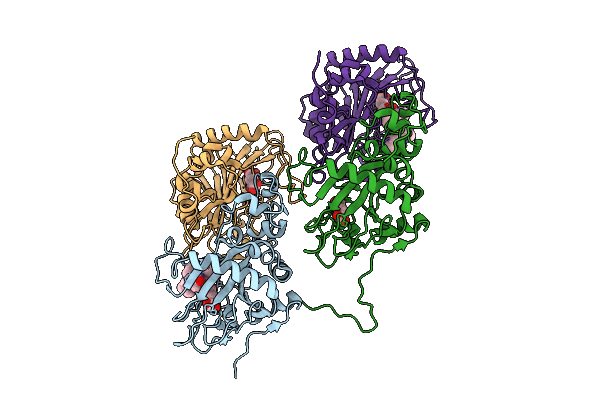
9UAG image
Deposition Date 2025-03-31
Release Date 2026-03-11
Last Version Date 2026-04-08
Entry Detail
PDB ID:
9UAG
Keywords:
Title:
Crystal structure of the OkaE-M71A mutant with a-ketoglutarate and okaramine A
Biological Source:
Source Organism(s):
Expression System(s):
Method Details:
Experimental Method:
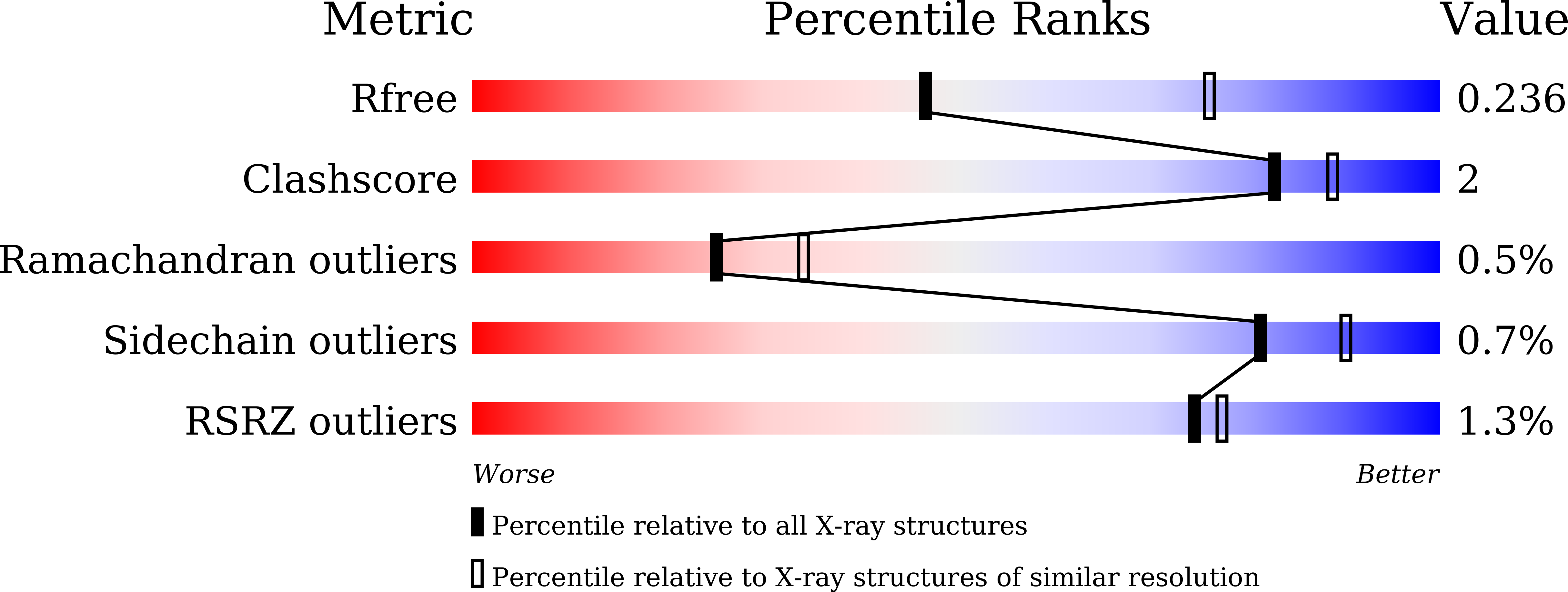
Resolution:
2.55 Å
R-Value Free:
0.23
R-Value Work:
0.19
R-Value Observed:
0.19
Space Group:
P 21 21 21
Macromolecular Entities
Structures with similar UniProt ID
Protein Blast
Polymer Type:polypeptide(L)
Molecule:Iron/alpha-ketoglutarate-depe
Chain IDs:A, B, C, D
Chain Length:315
Number of Molecules:4
Biological Source:Penicillium simplicissimum
Primary Citation
Structural and mechanistic insights into azetidine-associated alpha KG-NHFe enzyme OkaE with multifunctional catalysis.
Nat Commun 17 ? ? (2026)
PMID: 41702921 DOI: 10.1038/s41467-026-69519-5

Abstact

alpha-Ketoglutarate-dependent mononuclear non-haem iron (alphaKG-NHFe) enzymes are catalytically versatile, yet OkaE is unique for synthesizing azetidine rings via C-C bond formation. Here, we report the unexpected multifunctionality of OkaE, which catalyzes sequential oxidations. Isotopic labelling studies demonstrate that a second O(2) molecule participates in sequential epoxidation and ring cleavage, incorporating two oxygen atoms within a single catalytic cycle to form the previously unknown structure, neuokaramine IV. Crystal structures of the OkaE*Co(II)*alphaKG*okaramine A complex unveil a unique methionine-pi interaction network that facilitates substrate binding. Mutational and crystallographic analyses suggest this network fine-tunes substrate orientation relative to the metallo-centre, activating distinct reaction pathways at the 3a-OH or C8a positions. QM/MM simulations indicate that dynamic rotation of the Fe(IV)=O species initiates the cycle, enabling reaction bifurcation. This study elucidates the structural and mechanistic basis of OkaE's reactivity, highlighting its potential as a programmable biocatalyst for natural product diversification.

Legend

Protein

Chemical

Disease

Primary Citation of related structures
Feedback Form
Name
Email
Institute
Feedback