

9U8K image
Deposition Date 2025-03-26
Release Date 2026-04-15
Last Version Date 2026-04-15
Entry Detail
PDB ID:
9U8K
Keywords:
Title:
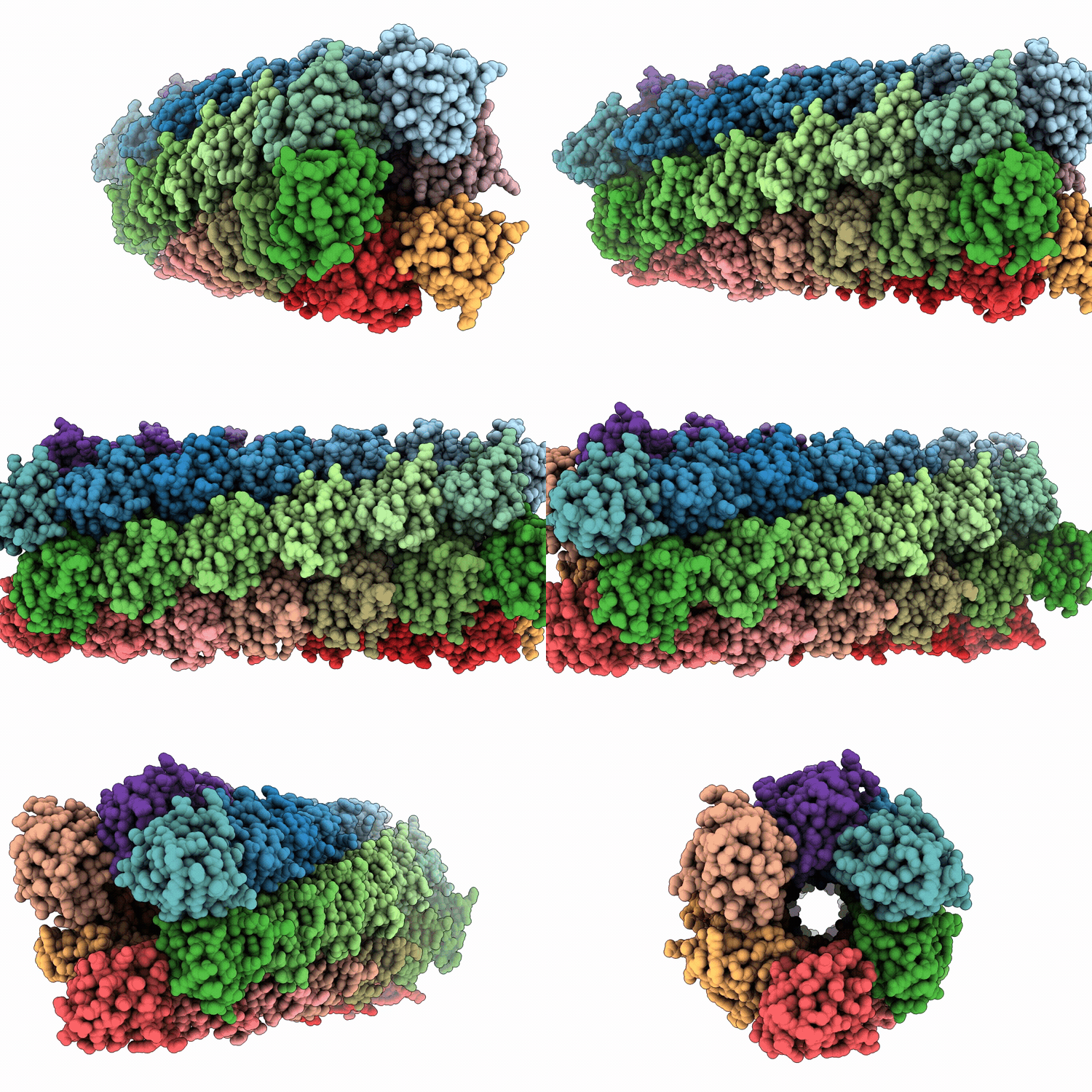
Structure of ASC-PYD filament from condensates
Biological Source:
Source Organism(s):
Expression System(s):
Method Details:
Experimental Method:
Resolution:
2.70 Å
Aggregation State:
PARTICLE
Reconstruction Method:
SINGLE PARTICLE
Macromolecular Entities
Structures with similar UniProt ID
Protein Blast
Polymer Type:polypeptide(L)
Molecule:Apoptosis-associated speck-li
Gene (Uniprot):Pycard
Chain IDs:A, B, C, D, E, F, G, H, I, J, K, L, M, N, O, P, Q, R, S, T, U, V, W, X, Y, Z, AA (auth: a1), BA (auth: b1), CA (auth: c1), DA (auth: d1), EA (auth: e1), FA (auth: f1), GA (auth: g1), HA (auth: h1), IA (auth: i1), JA (auth: j1), KA (auth: k1), LA (auth: l1), MA (auth: m1)
Chain Length:105
Number of Molecules:39
Biological Source:human gammaherpesvirus 4
Ligand Molecules
Primary Citation
DNA-triggered AIM2 condensation orchestrates immune activation and regulation.
Protein Cell ? ? ? (2026)
PMID: 41883156 DOI: 10.1093/procel/pwag024

Abstact

The innate immune sensor AIM2 detects cytosolic DNA and initiates inflammatory responses, yet its activation mechanism remains incompletely understood. Here, we show that AIM2 undergoes liquid-liquid phase separation upon DNA binding, forming dynamic condensates both in vitro and in cells. These condensates serve as platforms for inflammasome and PANoptosome assembly, promoting immune activation across multiple pathways. Direct structural determination from condensates reveals the assembly of active-form ASC filaments. Mechanistically, liquid-phase condensation is governed by multivalent interactions involving different AIM2 domains, including previously uncharacterized regions and species-specific elements. In vitro and in vivo assays show that mutants specifically disrupting condensation impair immune complex assembly, cell death initiation, antimicrobial defense, and intestinal homeostasis. Moreover, AIM2-DNA condensates function as regulatory hubs targeted by host- and pathogen-derived factors to balance immune homeostasis or facilitate immune evasion. These findings establish liquid-phase condensation as a fundamental mechanism of AIM2 activation and a potential therapeutic target.

Legend

Protein

Chemical

Disease

Primary Citation of related structures
Feedback Form
Name
Email
Institute
Feedback