

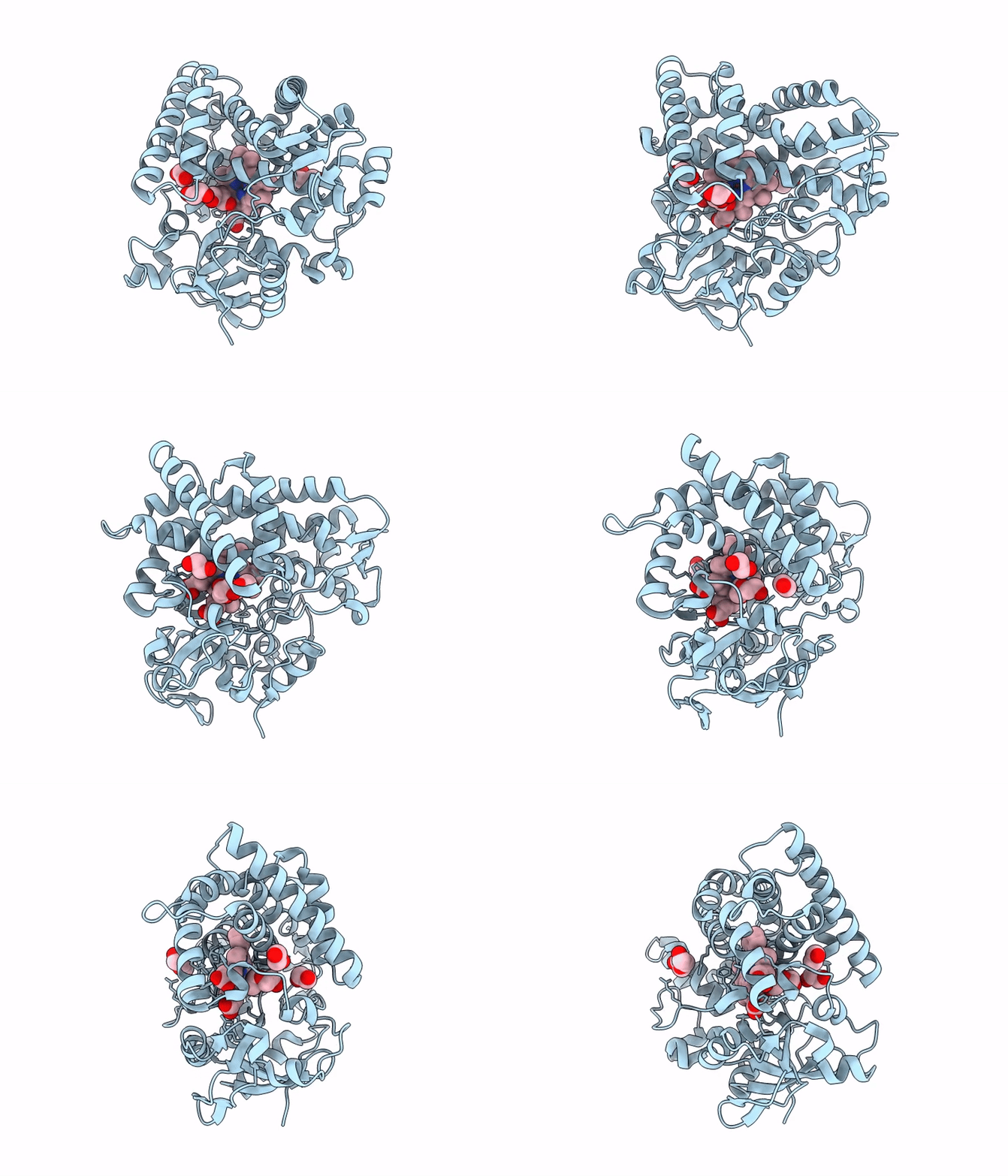
9U53 image
Deposition Date 2025-03-20
Release Date 2025-09-24
Last Version Date 2026-04-08
Entry Detail
PDB ID:
9U53
Keywords:
Title:
Crystal structure of the CYP154C2 Q230A from Streptomyces avermitilis
Biological Source:
Source Organism(s):
Expression System(s):
Method Details:
Experimental Method:
Resolution:
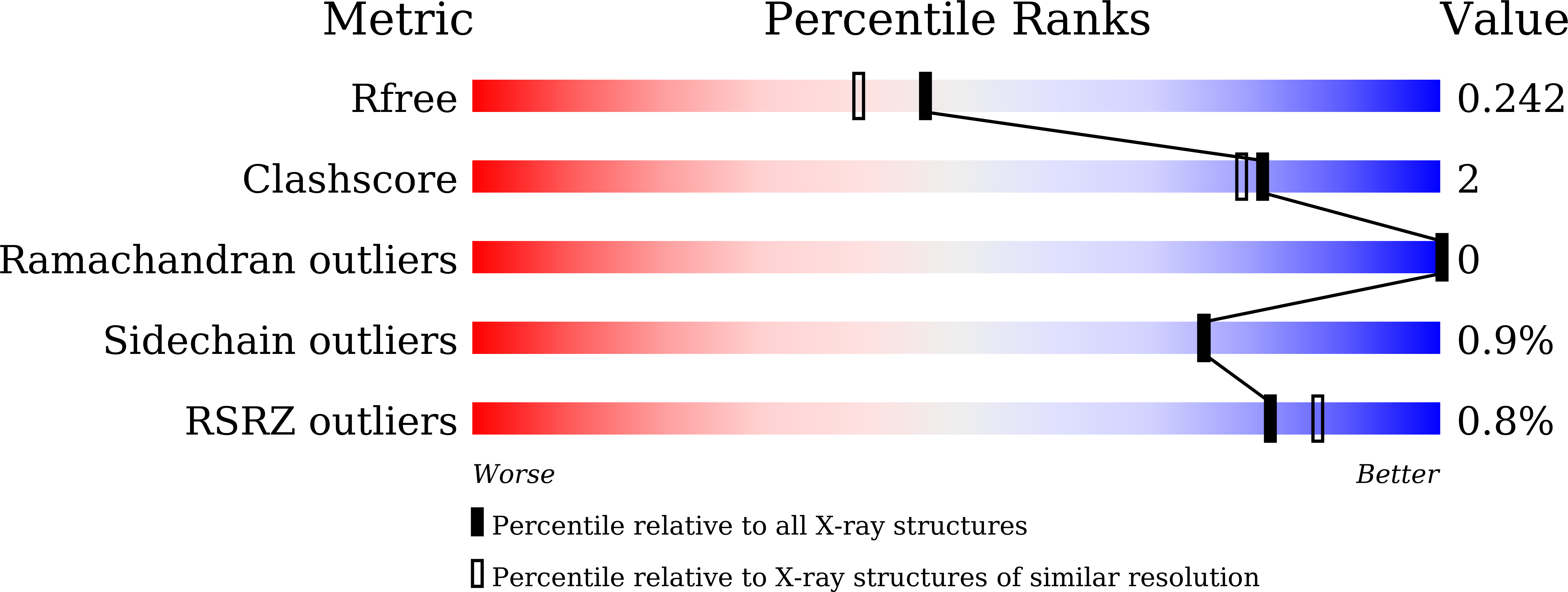
1.97 Å
R-Value Free:
0.23
R-Value Work:
0.17
R-Value Observed:
0.18
Space Group:
P 21 21 21
Macromolecular Entities
Structures with similar UniProt ID
Protein Blast
Polymer Type:polypeptide(L)
Molecule:Cytochrome P450
Gene (Uniprot):SAV14893_032670, SAV31267_054670
Mutagens:Q230A
Chain IDs:A
Chain Length:420
Number of Molecules:1
Biological Source:Streptomyces avermitilis
Primary Citation
Conformational gating in CYP154C2: Gln230-mediated substrate recognition and catalytic switching revealed by structural dynamics.
Biosci. Biotechnol. Biochem. 89 1144 1153 (2025)
PMID: 40408304 DOI: 10.1093/bbb/zbaf076

Abstact

Previously, we reported that CYP154C2 from Streptomyces avermitilis is capable of catalyzing the 2alpha-hydroxylation of the two model substrates, testosterone (TES) and androstenedione (ASD), and resolved the closed structures of both the substrate-free form and the TES-bound form. In this study, we extend these findings by determining the open-conformation structures of the substrate-free and ASD-bound forms-a rare achievement among bacterial P450s. Structural analyses revealed coordinated conformational shifts in the FG helices, HI helices, and BC loop during open-to-closed transitions. Despite divergent overall conformations, both substrates positioned their C2 atoms near the heme iron, aligning for 2alpha-hydroxylation. Mutagenesis studies established Gln230's pivotal role in substrate recognition and catalytic activation. High-resolution crystallography (1.97 A) of the Q230A mutant revealed polyethylene glycol-occupied catalytic pockets (indicating complete loss of TES binding) while maintaining the open conformation. These results provide atomic-level evidence that Gln230 coordinates both substrate-driven conformational gating and catalytic site optimization.

Legend

Protein

Chemical

Disease

Primary Citation of related structures
Feedback Form
Name
Email
Institute
Feedback