

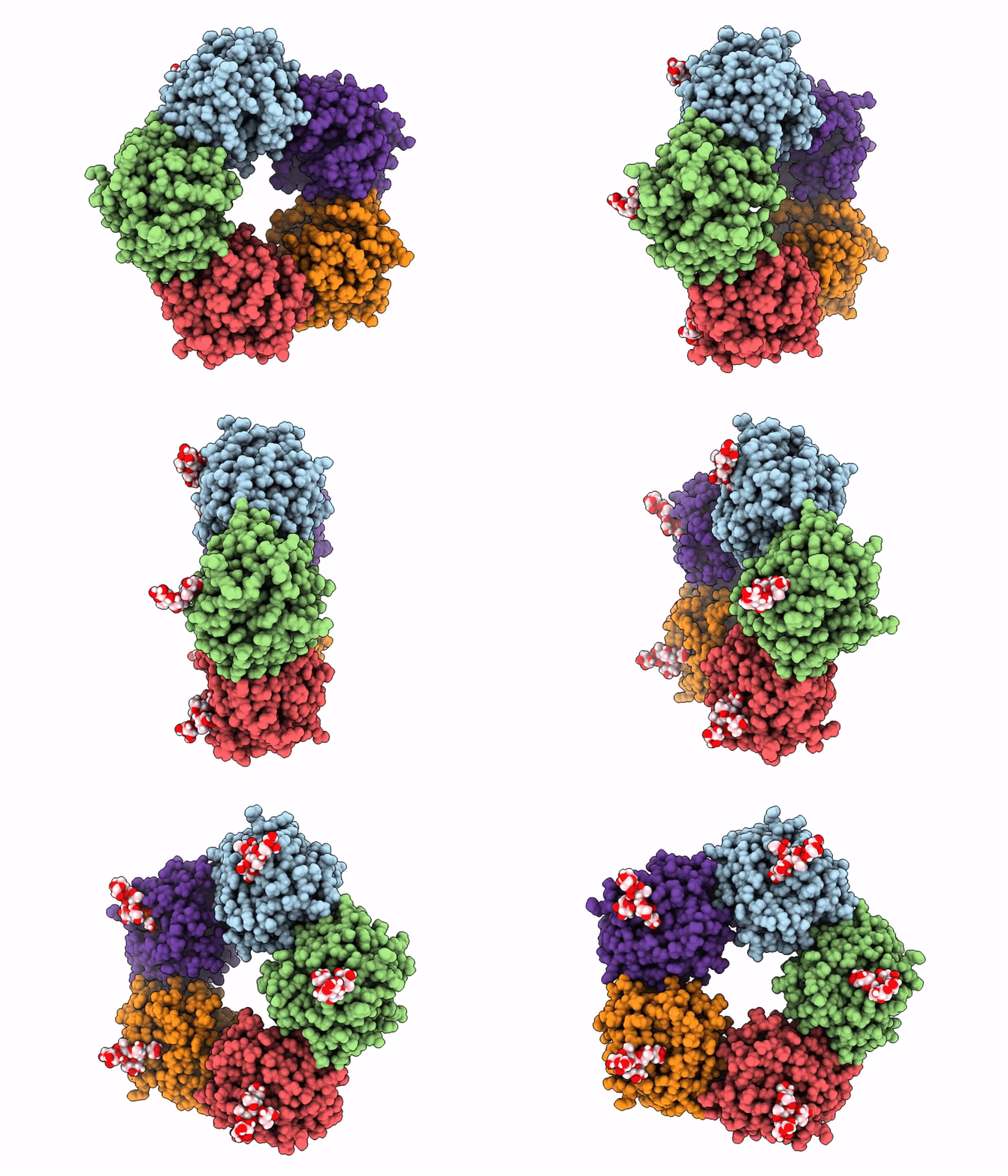
9U4E image
Deposition Date 2025-03-19
Release Date 2025-09-24
Last Version Date 2026-04-08
Entry Detail
PDB ID:
9U4E
Keywords:
Title:
Cryo-EM structure of the human CRP-CPS23F complex
Biological Source:
Source Organism(s):
Homo sapiens (Taxon ID: 9606)
Expression System(s):
Method Details:
Experimental Method:
Resolution:
2.78 Å
Aggregation State:
PARTICLE
Reconstruction Method:
SINGLE PARTICLE

Macromolecular Entities
Structures with similar UniProt ID
Protein Blast
Polymer Type:polypeptide(L)
Molecule:C-reactive protein
Gene (Uniprot):CRP
Chain IDs:A, B, C, D, E
Chain Length:224
Number of Molecules:5
Biological Source:Homo sapiens
Ligand Molecules
Primary Citation
C-reactive protein is a broad-spectrum capsule-binding receptor for hepatic capture of blood-borne bacteria.
EMBO J. 44 7364 7394 (2025)
PMID: 41214213 DOI: 10.1038/s44318-025-00623-w

Abstact

Plasma C-reactive protein (CRP) is widely used as a biomarker for bacterial infections due to its massive induction during infections. However, the biological function of CRP remains largely undefined. Here we show that CRP enables liver resident macrophages (Kupffer cells) to capture and eliminate a wide range of invasive bacteria from the bloodstream of mice, and thereby provides rapid and sterilizing immunity. Mechanistically, CRP binds to at least 20 capsule types of Gram-positive and -negative pathogens, and shuffles the encapsulated bacteria to Kupffer cells embedded in the lining of the liver sinusoidal vasculatures by the complement-dependent and -independent pathways. The complement-dependent mode involves the activation of complement C3 at the bacterial surface, and the capture of the C3-opsonized bacteria by the CRIg and CR3 complement receptors on Kupffer cells. Cryo-electron microscopy analysis revealed a flexible structural framework for CRP's recognition of structurally diverse capsular polysaccharides. Because human CRP also possesses the broad capsule-binding activities, our findings provide a biological reason for the massive rise of plasma CRP during bacterial infections.

Legend

Protein

Chemical

Disease

Primary Citation of related structures
Feedback Form
Name
Email
Institute
Feedback