

9U00 image
Deposition Date 2026-01-25
Release Date 2026-06-10
Last Version Date 2026-06-10
Entry Detail
PDB ID:
9U00
Keywords:
Title:
Crystal structure of NbH10, a nanobody against the PWWP domains of LEDGF and HRP-2
Biological Source:
Source Organism(s):
Lama glama (Taxon ID: 9844)
Expression System(s):
Method Details:
Experimental Method:
Resolution:
2.32 Å
R-Value Free:
0.32
R-Value Work:
0.26
R-Value Observed:
0.27
Space Group:
P 65 2 2
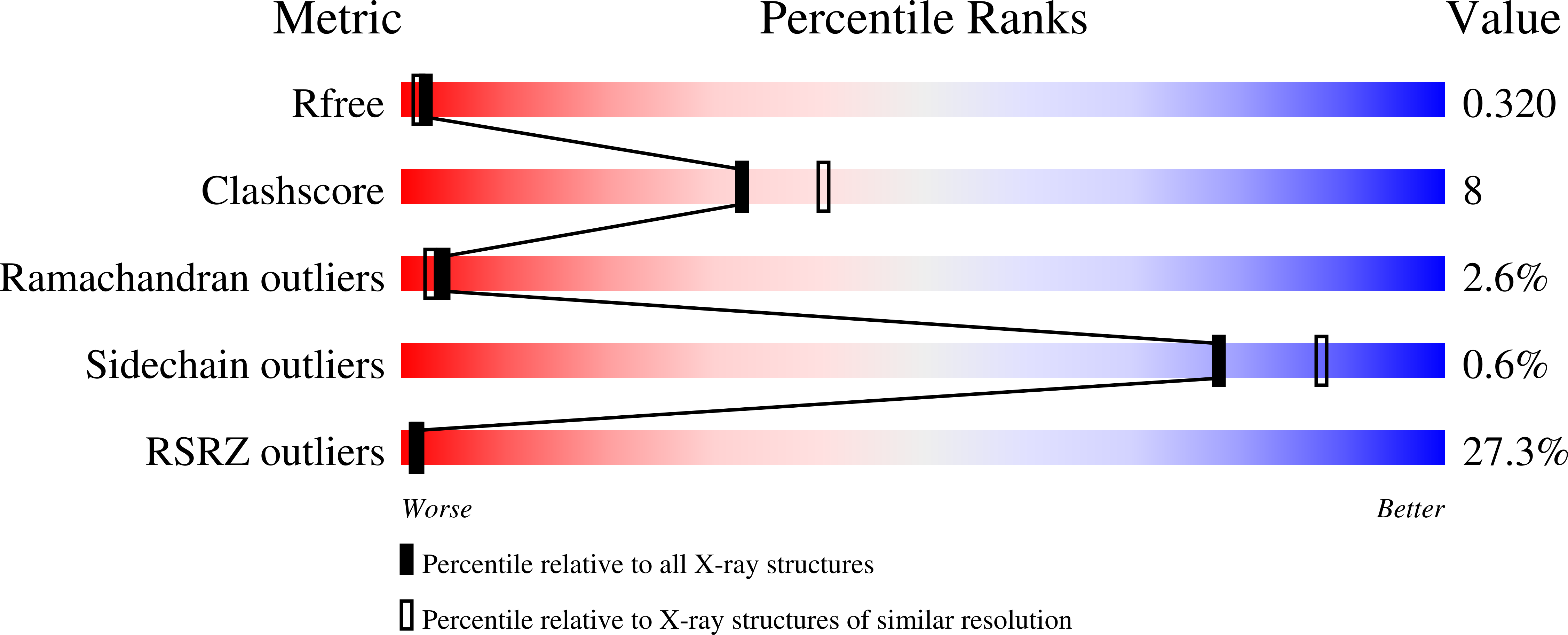
Macromolecular Entities
Protein Blast
Polymer Type:polypeptide(L)
Molecule:NbH10
Chain IDs:A, B
Chain Length:117
Number of Molecules:2
Biological Source:Lama glama
Primary Citation
High-Affinity Nanobody Against the LEDGF PWWP Domain Inhibits Chromatin Binding In Vitro.
Biomolecules 16 ? ? (2026)
PMID: 42194065 DOI: 10.3390/biom16050716

Abstact

Background and objectives: The PWWP domain of lens epithelium-derived growth factor p75 (LEDGF/p75) mediates chromatin engagement through recognition of histone H3 lysine 36 di- and trimethylation (H3K36me2/3) and nucleosomal DNA. LEDGF/p75 plays a role in multiple human diseases. In particular, its interaction with HIV-1 integrase enables viral genome integration. However, the LEDGF PWWP domain remains difficult to target with small molecules as it lacks optimally shaped binding pockets. Here, we report the generation of high-affinity nanobodies (Nbs) to investigate the structure and function of this domain. Methods: Camelids were immunized with recombinant LEDGF PWWP domain, and immune phage display libraries were screened for affinity. Selected Nbs were recombinantly expressed in E. coli and purified. Their interaction with the PWWP domain of LEDGF and its close homolog HRP-2 was characterized using size-exclusion chromatography and surface plasmon resonance. Structural characterization of the Nbs was performed using X-ray crystallography. Functional effects on chromatin engagement were evaluated using an AlphaScreen assay. Results: Nine sequence-distinct Nbs were identified, seven of which were confirmed to bind the LEDGF PWWP domain with nanomolar affinities. Five Nbs also bound the HRP-2 domain, consistent with conserved functional surfaces, while two showed reduced affinity. The crystal structures of two Nbs (NbC03 and NbH10) confirmed there were canonical immunoglobulin folds, while the latter additionally revealed a domain-swapped dimer. Moreover, NbH10 dose-dependently inhibited the interaction between full-length LEDGF/p75 and H3K36me3-modified nucleosomes in vitro. Conclusions: This work establishes a validated panel of Nbs targeting the LEDGF PWWP domain and identifies one Nb capable of functionally disrupting the LEDGF-chromatin interaction. These Nbs serve as valuable tools for functional studies and structure-based drug design.

Legend

Protein

Chemical

Disease

Primary Citation of related structures
Feedback Form
Name
Email
Institute
Feedback