

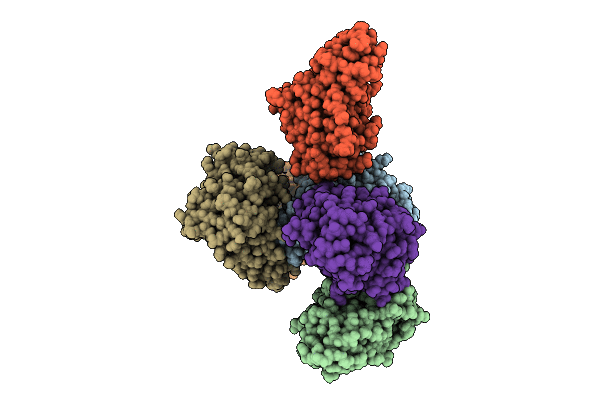
9TWC image
Deposition Date 2026-01-14
Release Date 2026-03-11
Last Version Date 2026-04-01
Entry Detail
PDB ID:
9TWC
Keywords:
Title:
Legionella monocytogenes SodA wt
Biological Source:
Source Organism(s):
Expression System(s):
Method Details:
Experimental Method:
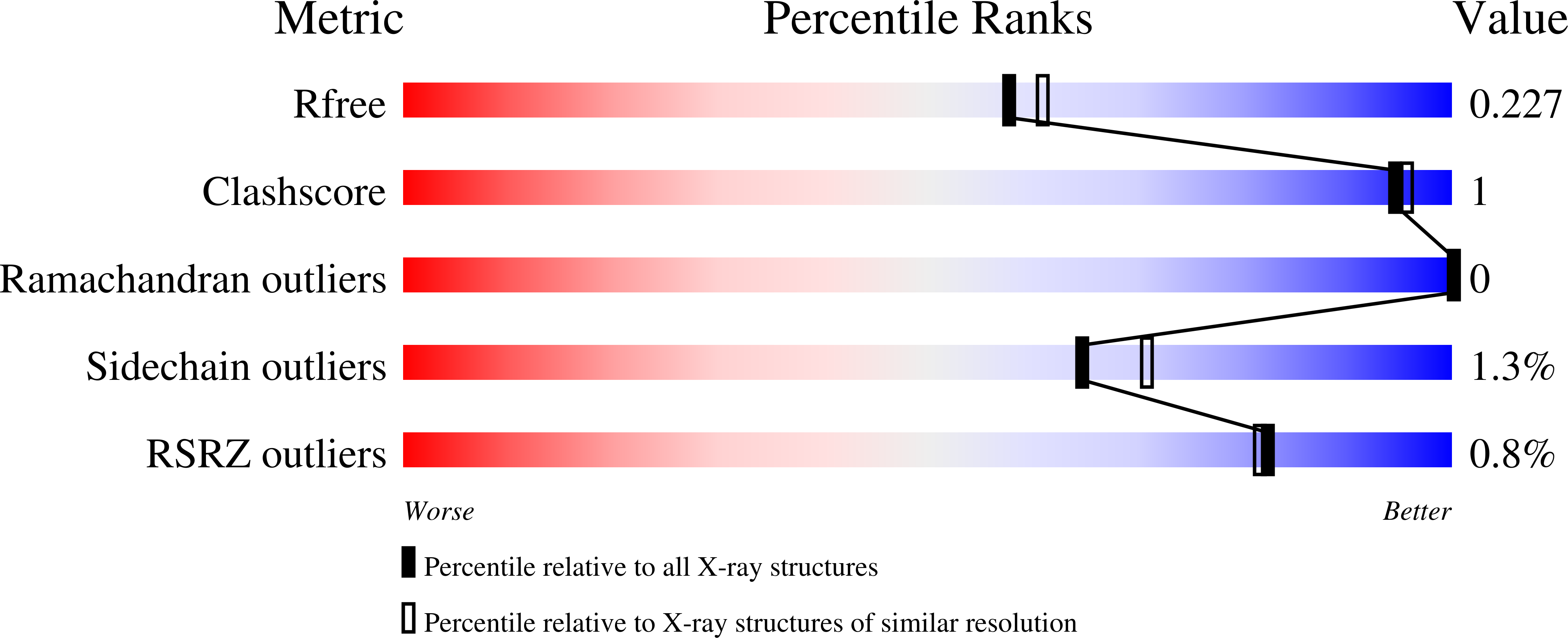
Resolution:
2.00 Å
R-Value Free:
0.22
R-Value Work:
0.19
Space Group:
P 21 21 21
Macromolecular Entities
Structures with similar UniProt ID
Protein Blast
Polymer Type:polypeptide(L)
Molecule:Superoxide dismutase
Chain IDs:A, B, C, D, E, F (auth: G)
Chain Length:193
Number of Molecules:6
Biological Source:Neisseria gonorrhoeae
Ligand Molecules
Primary Citation
An enzyme's metal preference evolves through redox modulation driven by the cofactor's secondary coordination sphere.
Mol.Biol.Evol. 43 ? ? (2026)
PMID: 41684149 DOI: 10.1093/molbev/msag040

Abstact

Changes in protein properties and functions are central to the evolution of life. Metalloproteins can evolve by changing their preference from one metal cofactor to another. Recently, we demonstrated that the widely distributed iron- or manganese-dependent superoxide dismutase (SodFM) family has undergone numerous metal-preference changes, including during evolutionary adaptation of pathogenic bacteria to altered metal availability within the host. Yet the underlying properties of metal-binding sites that control metalloenzyme metal preference are unclear, and thus, we lack an understanding of how enzymatic metal preference can be reshaped by evolution. Here, we used spectral features of bound iron or manganese, whose intensities reflect their oxidation state, to assess how their redox properties are tuned during SodFM evolution. We systematically analyzed the metal oxidation state across diverse SodFMs from multiple phylogenetic groups with different catalytic metal preferences, including those known to have undergone evolutionary metal-preference switching. We observed a striking relationship between resting oxidation state and catalytic metal preferences. Mutagenesis of second-sphere residues previously identified as determining metal preference revealed that they modulate metal-dependent activity and cofactor oxidation state in tandem, demonstrating these properties are linked. Together, these data argue that the differing SodFM metal preferences observed across the tree of life evolved through tuning of their redox properties by the secondary coordination sphere. This study gives insight into the process by which a metalloenzyme originally optimized for one metal cofactor can evolve a new metal preference, under suitable selection pressure, through re-optimization of its active site for catalytic reactivity of the new metal cofactor.

Legend

Protein

Chemical

Disease

Primary Citation of related structures
Feedback Form
Name
Email
Institute
Feedback