

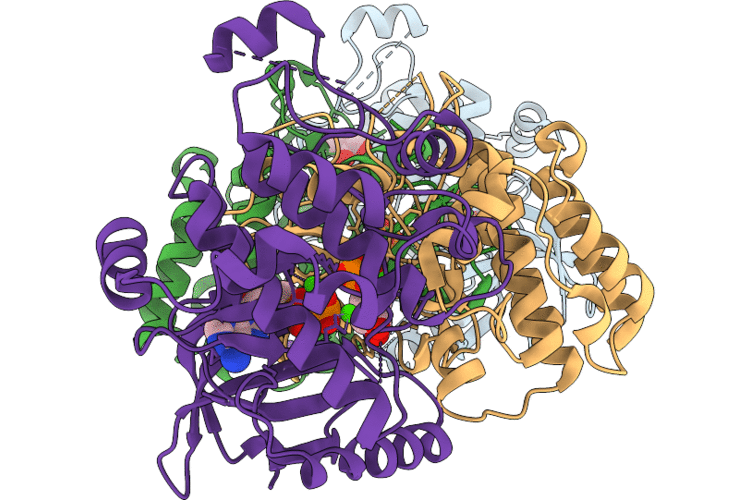
9TWB image
Deposition Date 2026-01-14
Release Date 2026-08-05
Last Version Date 2026-09-02
Entry Detail
PDB ID:
9TWB
Title:
Crystal structure of BRAF(val600):MEK1(pS222) complex with asymmetric dimer interface bound to ADP
Biological Source:
Source Organism(s):
Homo sapiens (Taxon ID: 9606)
Expression System(s):
Method Details:
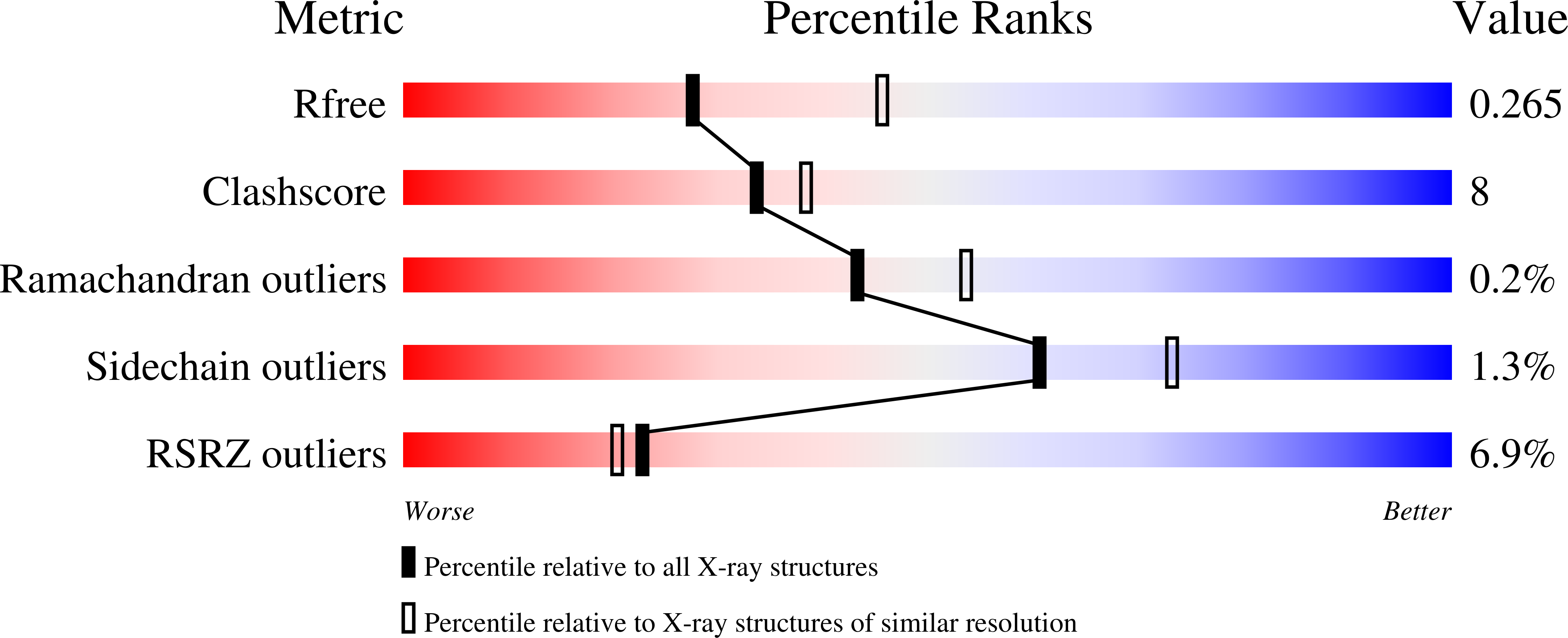
Experimental Method:
Resolution:
2.45 Å
R-Value Free:
0.26
R-Value Work:
0.21
Space Group:
P 21 21 21
Macromolecular Entities
Polymer Type:polypeptide(L)
Molecule:Dual specificity mitogen-acti
Gene (Uniprot):MAP2K1
Chain IDs:A, D
Chain Length:0
Number of Molecules:2
Biological Source:Homo sapiens
Polymer Type:polypeptide(L)
Molecule:Serine/threonine-protein kina
Gene (Uniprot):BRAF
Chain IDs:B (auth: C), C (auth: B)
Chain Length:0
Number of Molecules:2
Biological Source:Homo sapiens
Modified Residue
Compound ID Chain ID Parent Comp ID Details 2D Image
SEP A SER modified residue
Primary Citation
Mechanism of MEK1 phosphorylation by the N-terminal acidic motif-mediated asymmetric BRAF dimer.
Mol.Cell 86 3294 ? (2026)
PMID: 42480522 DOI: 10.1016/j.molcel.2026.06.039

Abstact

The rapidly accelerated fibrosarcoma/mitogen-activated protein kinase kinase/extracellular signal-regulated kinase (RAF/MEK/ERK) signaling cascade regulates cell proliferation and differentiation and is frequently dysregulated in cancer. Approximately 90% of RAF-mutant cancers harbor mutations in B-type rapidly accelerated fibrosarcoma (BRAF). Its proto-oncogenicity is attributed to a four-residue N-terminal acidic (NtA) motif. Although a long-standing model proposes that the NtA promotes activating asymmetric RAF dimerization, the model lacks structural support. Here, we present structures of NtA-mediated asymmetric BRAF dimers bound to their substrate MEK1. Cellular and biochemical data show that the NtA is not required for KRAS-mediated BRAF recruitment to the plasma membrane but is required for the fully catalytically active state. The structure capturing BRAF in a post-catalytic state bound to Ser222-phosphorylated MEK1 further supports this model. The combination of structural and cellular data corroborates the model of NtA-driven asymmetry in BRAF activation and resolves a long-standing disconnect between RAF cancer genetics and structural biology.

Legend

Protein

Chemical

Disease

Primary Citation of related structures
Feedback Form
Name
Email
Institute
Feedback