

9TSN image
Deposition Date 2025-12-30
Release Date 2026-05-13
Last Version Date 2026-05-13
Entry Detail
PDB ID:
9TSN
Title:
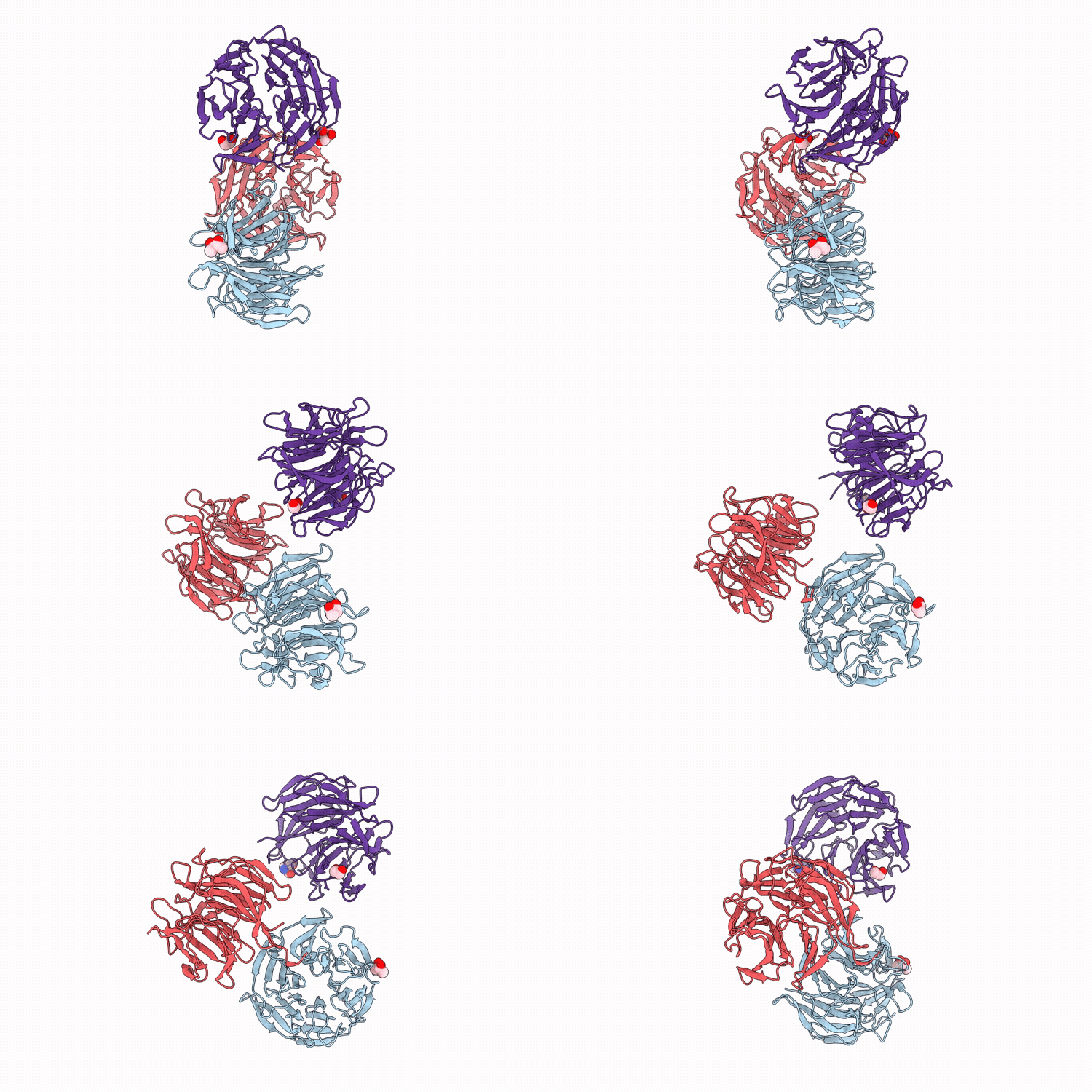
ProteinMPNN mutated KREP domain of PF3D7_1343700 (PfK13-KREP, 59,4% sequence identity)
Biological Source:
Source Organism(s):
Expression System(s):
Method Details:
Experimental Method:
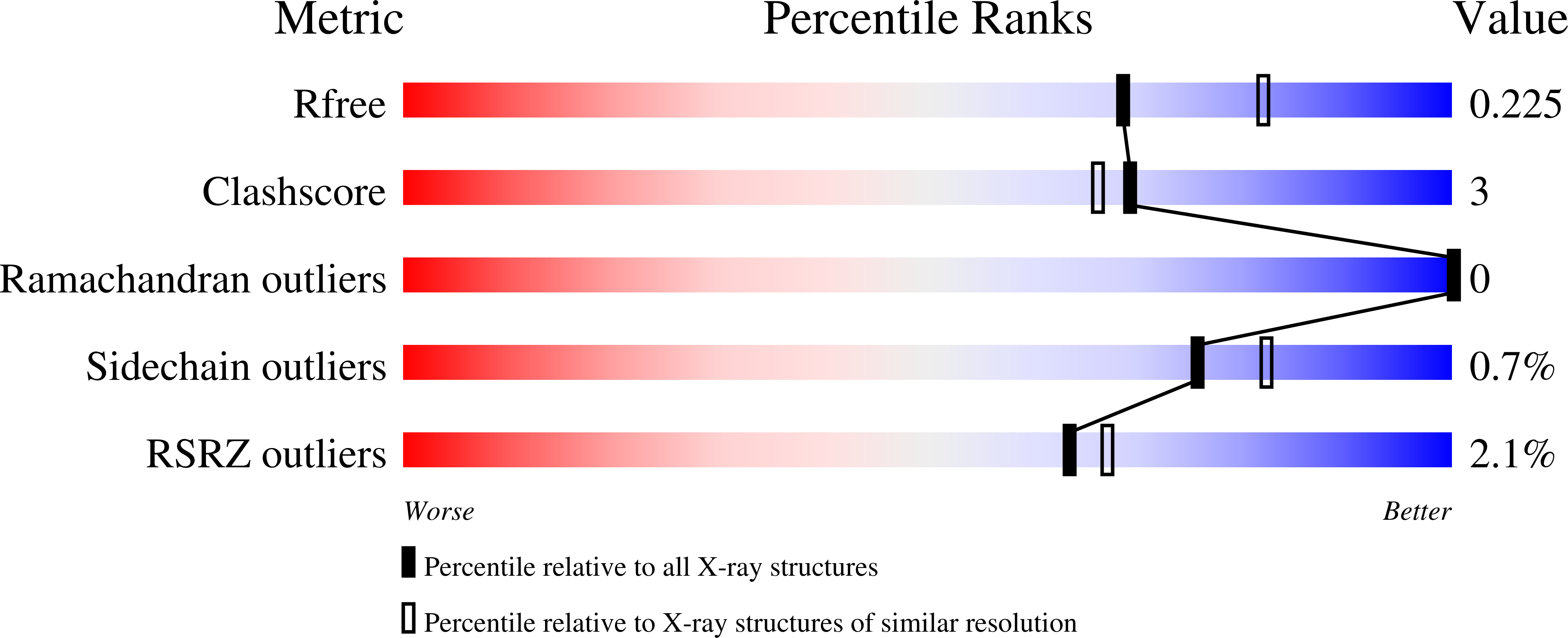
Resolution:
2.15 Å
R-Value Free:
0.22
R-Value Work:
0.18
R-Value Observed:
0.18
Space Group:
P 31
Macromolecular Entities
Structures with similar UniProt ID
Protein Blast
Polymer Type:polypeptide(L)
Molecule:Kelch protein
Gene (Uniprot):PF13_0238
Chain IDs:A, B, C
Chain Length:306
Number of Molecules:3
Biological Source:Plasmodium falciparum 3D7
Primary Citation
Stabilizing Plasmodium falciparum proteins for small molecule drug discovery.
Protein Sci. 35 e70614 e70614 (2026)
PMID: 42068230 DOI: 10.1002/pro.70614

Abstact

Early-stage drug discovery relies on the availability of stable protein for reliable biophysical characterization of ligand binding. However, many Plasmodium falciparum proteins are challenging to produce in heterologous systems, which limits their experimental utility. To address this, we tested whether ProteinMPNN-guided sequence design could generate stabilized surrogate constructs that retain wild-type-like structure and binding thermodynamics. Designs were generated with constraints to maintain conserved and binding-site residues for three therapeutically relevant targets: PfBDP1-BRD, PfBDP4-BRD, and PfK13-KREP. The resulting constructs showed markedly increased thermal stability. Using PfBDP1-BRD as a benchmark, isothermal titration calorimetry confirmed that the stabilized variants retained wild-type-like binding thermodynamics with a known ligand. Extending this approach to other targets, a PfK13-KREP construct led to an apo structure with a binding pocket closely matching the wild type. For PfBDP4-BRD, virtual screening against a previously reported wild-type crystal structure identified putative binders, while a stabilized surrogate for this otherwise unstable target enabled their experimental validation and the determination of a 1.25 A co-crystal structure with a newly identified inhibitor. Our findings demonstrate that computationally stabilized surrogates are practical and effective tools for robust biophysics and structure-enabled drug discovery against otherwise challenging malaria proteins.

Legend

Protein

Chemical

Disease

Primary Citation of related structures
Feedback Form
Name
Email
Institute
Feedback