

9TPH image
Deposition Date 2025-12-18
Release Date 2026-04-15
Last Version Date 2026-04-15
Entry Detail
PDB ID:
9TPH
Keywords:
Title:
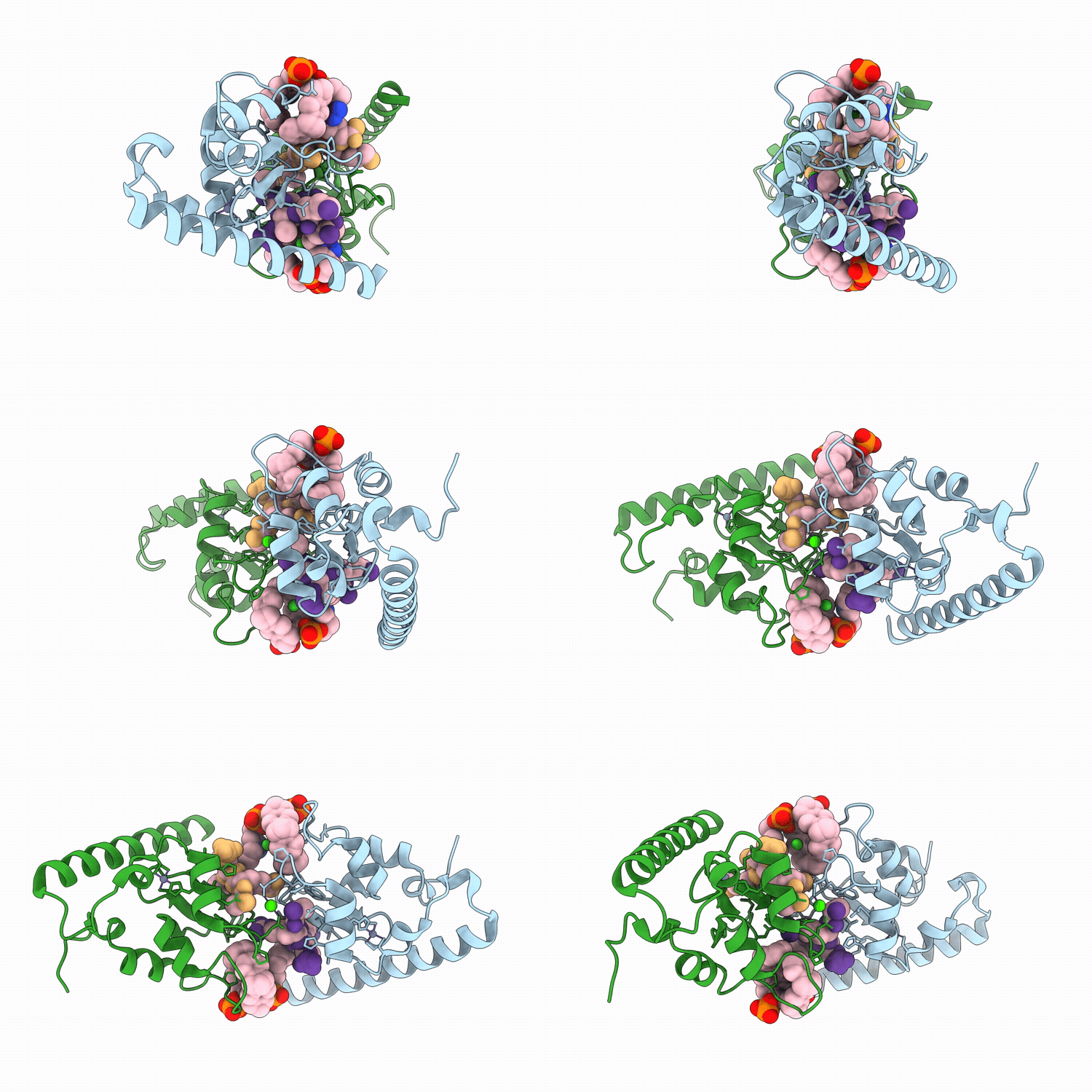
Survivin 1-127 in complex with a molecular tweezer-Histone-H3-peptide conjugate
Biological Source:
Source Organism(s):
Expression System(s):
Method Details:
Experimental Method:
Resolution:
2.00 Å
R-Value Free:
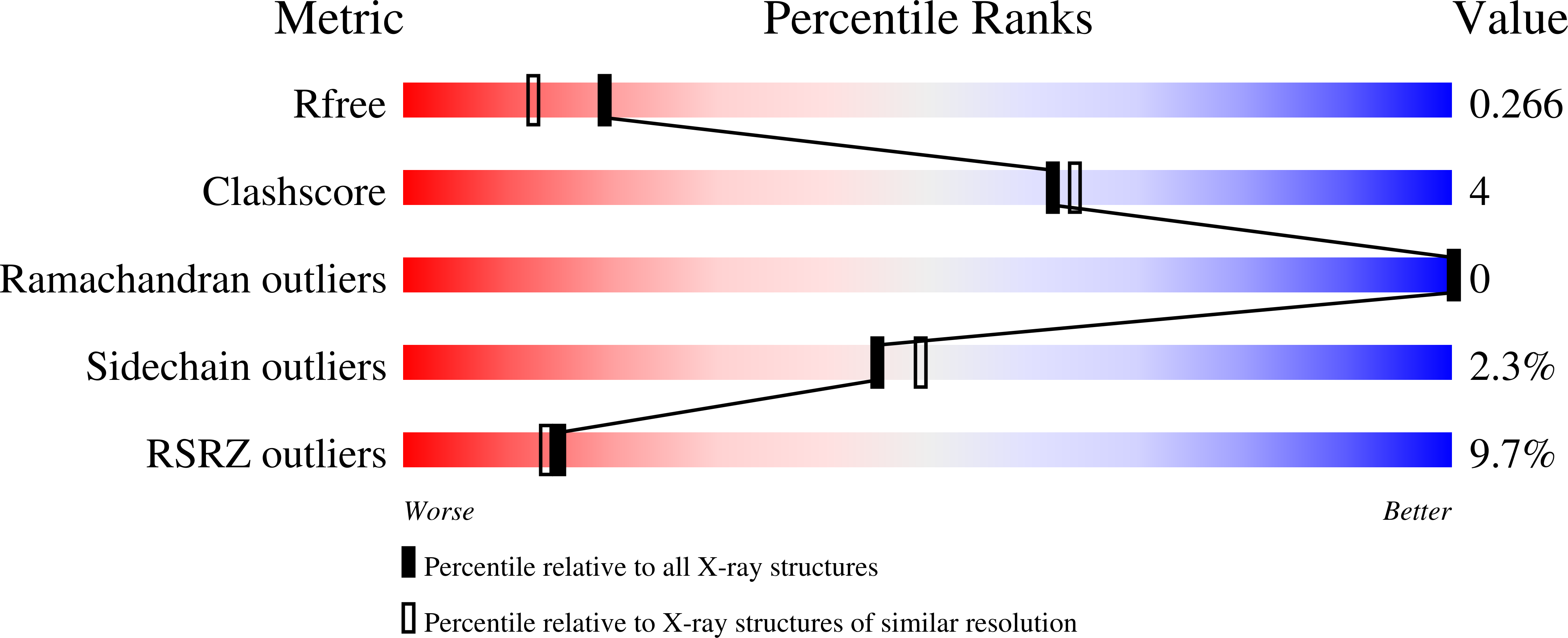
0.26
R-Value Work:
0.21
R-Value Observed:
0.21
Space Group:
C 1 2 1
Macromolecular Entities
Structures with similar UniProt ID
Protein Blast
Polymer Type:polypeptide(L)
Molecule:Baculoviral IAP repeat-contai
Gene (Uniprot):BIRC5
Chain IDs:A, B
Chain Length:126
Number of Molecules:2
Biological Source:Homo sapiens
Protein Blast
Polymer Type:polypeptide(L)
Molecule:Histone-H3-peptide conjugated
Chain IDs:C, D
Chain Length:6
Number of Molecules:2
Biological Source:synthetic construct
Primary Citation
Molecular tweezer-peptide conjugates disrupt the protein-protein interaction between survivin and histone H3 essential in mitosis.
Beilstein J Org Chem 22 557 567 (2026)
PMID: 41929663 DOI: 10.3762/bjoc.22.41

Abstact

Peptide-modified supramolecular tweezers, a promising new class of chemical tools, were designed and employed to inhibit the interaction of the BIR domain of human survivin, a member of the chromosomal passenger complex (CPC), with the phosphorylated histone H3 N-terminal peptide. Fluorescence polarization measurements revealed a nanomolar affinity of the BIR domain for the peptide-tweezer, depending on the presence of lysine residue 121, as proven by the K121A mutant of survivin. Two crystal structures of C-terminally truncated human survivin with the peptide-tweezer molecules demonstrated that the peptide moiety binds the BIR domain as expected from the well-known published crystal structures of survivin with various peptides, but the tweezer itself, surprisingly, was bound to a putative Ca(2+) ion and the side chain of Pro26, corresponding to a previously unknown binding mode. Guided by the accessibility of survivin's lysine residues in the CPC, a number of new promising peptide tweezers was synthesized, able to connect both binding sites on the protein.

Legend

Protein

Chemical

Disease

Primary Citation of related structures
Feedback Form
Name
Email
Institute
Feedback