

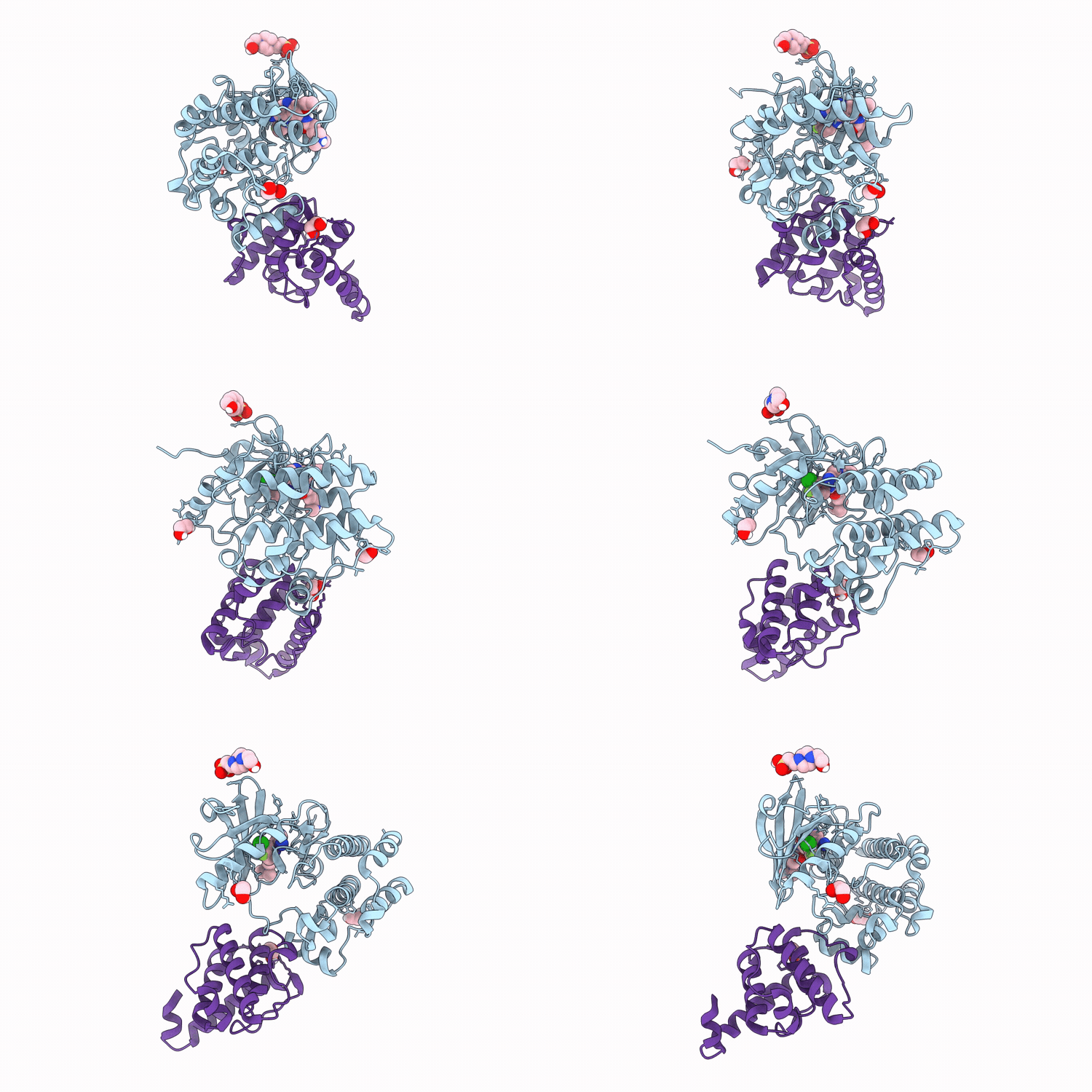
9TP9 image
Deposition Date 2025-12-17
Release Date 2026-06-03
Last Version Date 2026-06-24
Entry Detail
PDB ID:
9TP9
Keywords:
Title:
Crystal structure of integrin-linked kinase (ILK) in complex with Alpha-Parvin and dihydroPelitinib
Biological Source:
Source Organism(s):
Homo sapiens (Taxon ID: 9606)
Expression System(s):
Method Details:
Experimental Method:
Resolution:
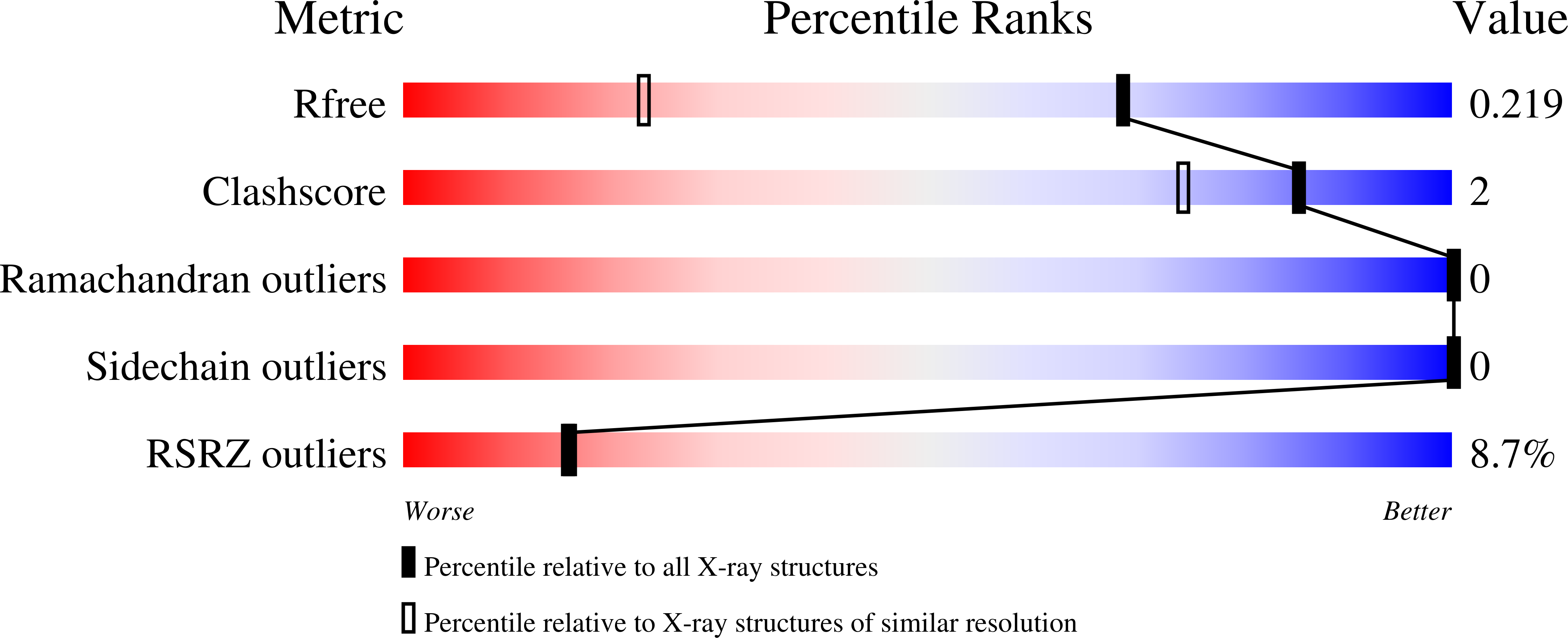
1.45 Å
R-Value Free:
0.21
R-Value Work:
0.19
R-Value Observed:
0.19
Space Group:
P 1 21 1
Macromolecular Entities
Structures with similar UniProt ID
Protein Blast
Polymer Type:polypeptide(L)
Molecule:Scaffold protein ILK
Gene (Uniprot):ILK
Mutagens:C422S
Chain IDs:A
Chain Length:271
Number of Molecules:1
Biological Source:Homo sapiens
Structures with similar UniProt ID
Protein Blast
Polymer Type:polypeptide(L)
Molecule:Alpha-parvin
Gene (Uniprot):PARVA
Chain IDs:B
Chain Length:127
Number of Molecules:1
Biological Source:Homo sapiens
Primary Citation
Identification and Validation of 3-Cyano-Quinoline Ligands Targeting Integrin-Linked Kinase (ILK).
J.Med.Chem. 69 12982 13001 (2026)
PMID: 42185966 DOI: 10.1021/acs.jmedchem.5c03773

Abstact

Integrin-linked kinase (ILK) is a pseudokinase that directly interacts with beta-integrins and plays a pivotal role in regulating focal adhesion function. ILK has been implicated in the development of various diseases, particularly cancer. However, currently, no validated ligands for ILK have been reported. Here, we describe the identification of 3-cyano-quinolines that potently bind to ILK (K(D) = approximately 250 nM), and crystallographic studies revealed a type I binding mode. A medicinal chemistry campaign exploring structure-activity relationships (SAR) using a robust parallel synthesis approach provided comprehensive SAR and identified regions amenable to modification. In addition, we demonstrated that the optimized 3-cyano-quinoline 1 (DHP) modulates actin cytoskeletal dynamics. This work highlights the first validated ILK ligands and establishes a foundation for future translational efforts, such as the development of selective PROTACs targeting ILK for degradation by the ubiquitin system.

Legend

Protein

Chemical

Disease

Primary Citation of related structures
Feedback Form
Name
Email
Institute
Feedback