

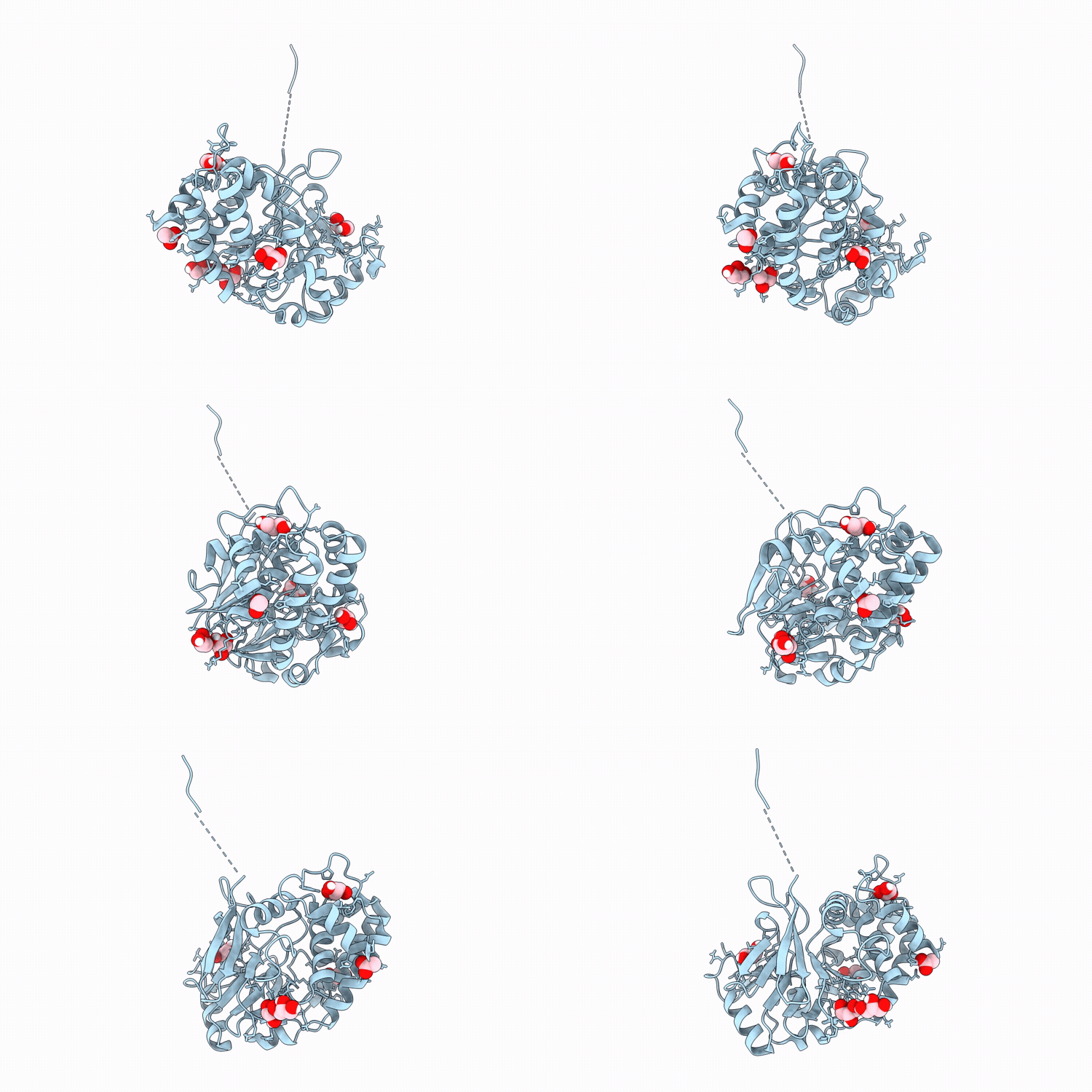
9TP8 image
Deposition Date 2025-12-17
Release Date 2026-06-03
Last Version Date 2026-06-03
Entry Detail
PDB ID:
9TP8
Keywords:
Title:
Crystal structure of the C-terminal Ser/Thr phosphatase D510N H707K mutant of the Kelch phosphatase BSU1 from Arabidopsis thaliana
Biological Source:
Source Organism(s):
Expression System(s):
Method Details:
Experimental Method:
Resolution:
1.60 Å
R-Value Free:
0.18
R-Value Work:
0.16
R-Value Observed:
0.16
Space Group:
C 1 2 1

Macromolecular Entities
Structures with similar UniProt ID
Protein Blast
Polymer Type:polypeptide(L)
Molecule:Serine/threonine-protein phos
Gene (Uniprot):BSU1
Mutagens:D510N,H707K
Chain IDs:A
Chain Length:387
Number of Molecules:1
Biological Source:Arabidopsis thaliana
Primary Citation
Plant Kelch phosphatases are Ser/Thr phosphatases involved in cell cycle regulation.
Proc.Natl.Acad.Sci.USA 123 e2600591123 e2600591123 (2026)
PMID: 42166246 DOI: 10.1073/pnas.2600591123

Abstact

Brassinosteroids (BRs) are plant steroid hormones sensed by the membrane receptor kinase BRI1. Activation of BRI1 leads to the dephosphorylation of BZR1/BES1 transcription factors. Overexpression of the Kelch phosphatase BRI1 SUPPRESSOR 1 (BSU1) rescued the growth defects of bri1 mutants. Subsequent studies identified BSU1 as a protein tyrosine phosphatase, which promotes BR signaling by dephosphorylating a phosphotyrosine in the glycogen synthase kinase 3 BIN2. Crystal structures of the BSU1 phosphatase domain now reveal a high degree of structural similarity to protein phosphatase 1 (PP1), a eukaryotic serine/threonine phosphatase. Consistently, BSU1 efficiently dephosphorylated phosphothreonine- and phosphoserine-containing substrate peptides, but showed no detectable activity toward BIN2 and other phosphotyrosine substrates. A catalytically inactive BSU1 phosphatase domain suppresses the growth phenotypes of the Arabidopsis bri1-5 mutant and binds the BSU1 homologs BSL1-3. bsu1 and bsu1 bsl1 bsl2/3 loss-of-function mutants display wild-type-like BR responses, but exhibit stomatal patterning and fertility defects. Importantly, the PP1-like C-terminal tail of BSU1 is phosphorylated at Thr785 by a cyclin-dependent kinase complex. The phosphorylated tail binds to the BSU1 substrate-binding grooves, blocking access to the active site. Mutation of Thr785 to alanine activates BSU1, suggesting that Kelch phosphatases and PP1 share a common regulatory mechanism. Deletion of the Marchantia polymorpha Kelch phosphatase MpBSLM results in an undifferentiated cell mass phenotype, associated with the overactivation of a cell cycle reporter. Taken together, our experiments suggest that plant Kelch phosphatases act as PP1-like cell cycle regulators, rather than as tyrosine phosphatases in BR signaling.

Legend

Protein

Chemical

Disease

Primary Citation of related structures
Feedback Form
Name
Email
Institute
Feedback