

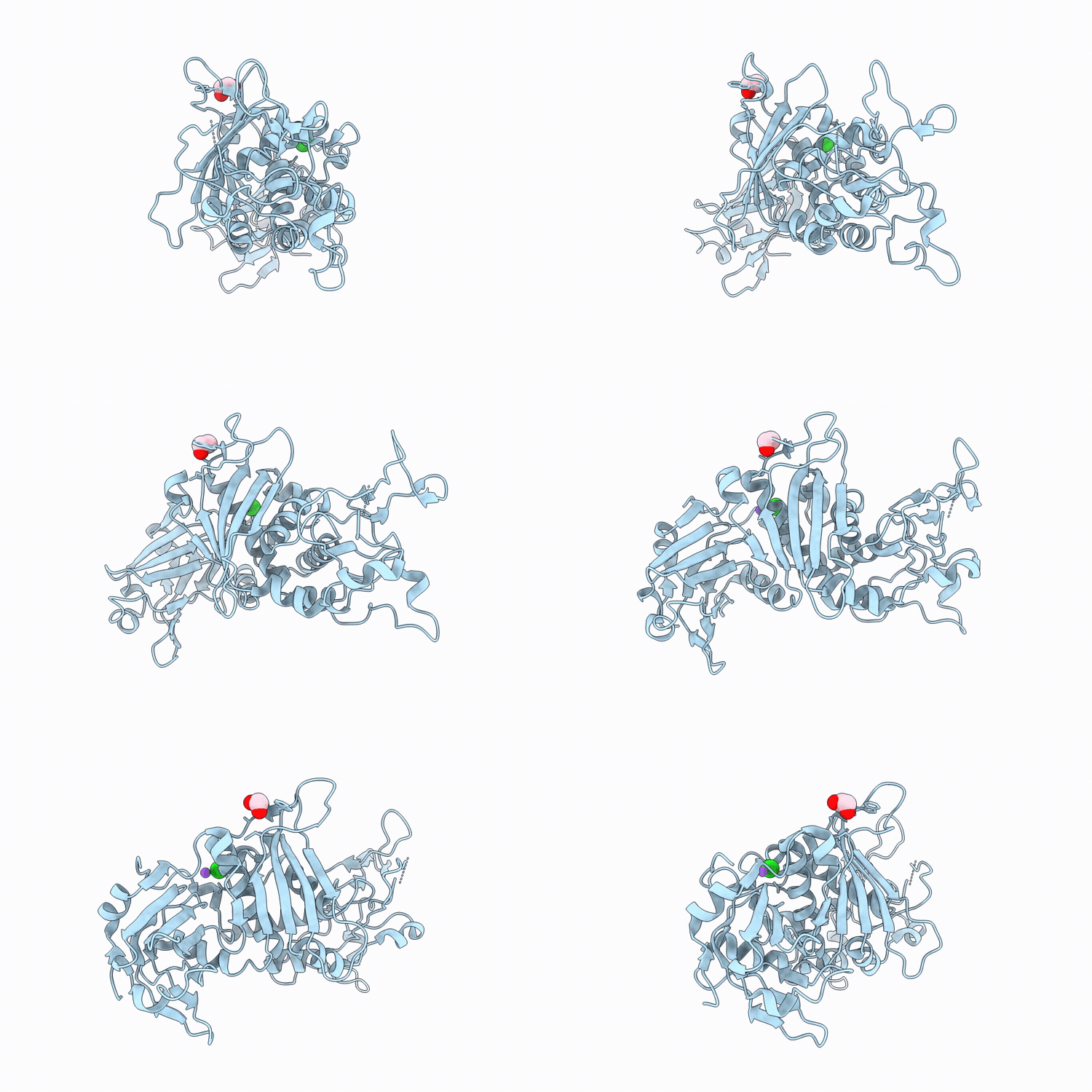
9TP2 image
Deposition Date 2025-12-17
Release Date 2026-08-19
Last Version Date 2026-09-09
Entry Detail
PDB ID:
9TP2
Keywords:
Title:
HomA ecto-domain mutant H350A E351A
Biological Source:
Source Organism(s):
Expression System(s):
Method Details:
Experimental Method:
Resolution:
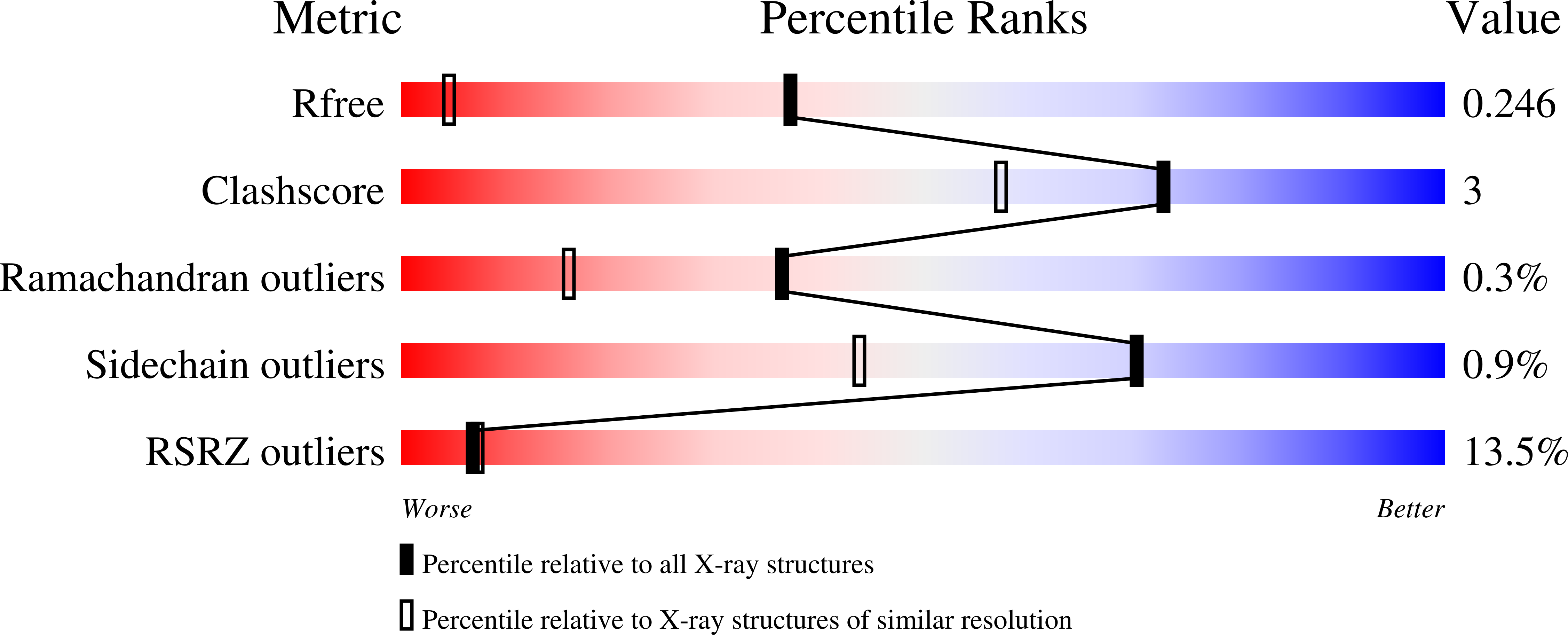
1.40 Å
R-Value Free:
0.23
R-Value Work:
0.20
R-Value Observed:
0.20
Space Group:
C 1 2 1
Macromolecular Entities
Polymer Type:polypeptide(L)
Molecule:HomA
Gene (Uniprot):HP_0710
Chain IDs:A
Chain Length:487
Number of Molecules:1
Biological Source:Helicobacter pylori 26695
Primary Citation
Helicolysins Emerge as a New Family of Metzincin Metallopeptidases in Host-pathogen Interactions.
J.Mol.Biol. 438 169962 169962 (2026)
PMID: 42526584 DOI: 10.1016/j.jmb.2026.169962

Abstact

The Helicobacter pylori Hom group of outer-membrane proteins (OMPs) has been implicated in virulence-related processes. Here, we present a structural and functional characterization of HomA from H. pylori strain 26695. Comparative in vivo analyses of the wild-type strain and a homA deletion mutant demonstrate a role for HomA in focal adhesion kinase phosphorylation at Y(397) and in bacterial adhesion to human leukaemia-derived MEC-1 cells. Recombinant production of several HomA variants identified a soluble ectodomain ((ECD)HomA) that harbours the conserved zinc-binding motif of metzincin metallopeptidases (MPs) and displays dimerization capacity, acid resistance, and immunomodulatory activity by triggering a pro-inflammatory response in Raji human B-lymphoblastoid cancer cells. Site-directed mutagenesis of the zinc-binding motif confirmed its contribution to zinc coordination and thermal stability. Structural analysis of (ECD)HomA revealed a two-domain organization comprising an N-terminal accessory beta-sandwich domain (ND) and a C-terminal catalytic domain (CD), in which a non-canonical 'Thr-turn' replaces the hallmark metzincin 'Met-turn'. Integrating bioinformatics with AI-based structure predictions uncovered putative HomA homologues across 44 proteomes, predominantly from Gram-negative bacteria. Structural and biochemical characterization of the closest non-Helicobacter homologue from the oral pathogen Capnocytophaga canimorsus, dubbed 'canilysin', revealed an architecture equivalent to (ECD)HomA and highly specific MP activity. Together, these findings define the Hom group and canilysin as helicolysins, a previously uncharacterized metzincin family distinguished by a conserved Thr-turn and an accessory ND, and implicates these proteins in host-pathogen interactions, adhesion, and immunomodulation.

Legend

Protein

Chemical

Disease

Primary Citation of related structures
Feedback Form
Name
Email
Institute
Feedback