

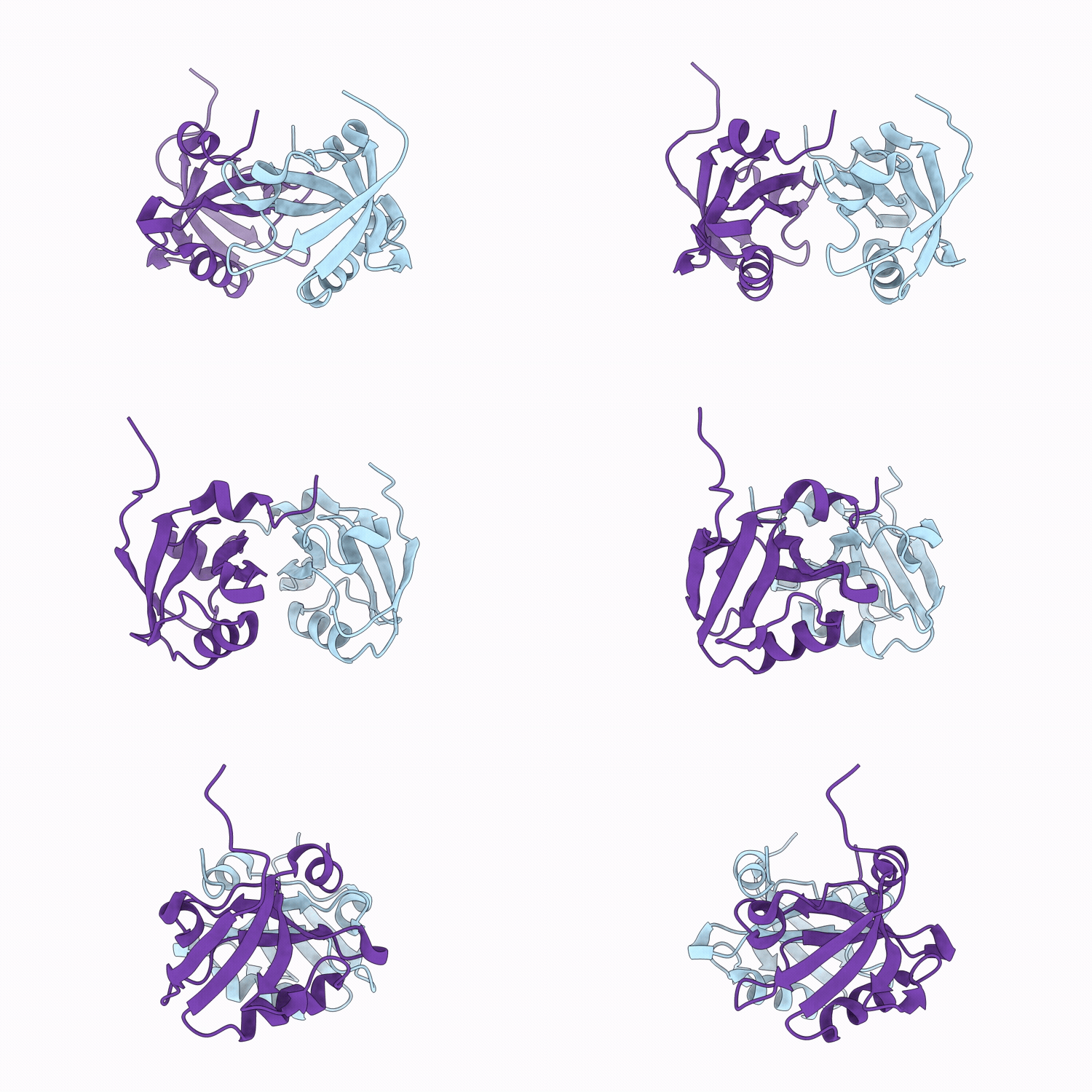
9TNF image
Deposition Date 2025-12-15
Release Date 2026-05-13
Last Version Date 2026-05-13
Entry Detail
PDB ID:
9TNF
Title:
Crystal Structure of the third PDZ domain of PSD-95 protein Y397E mutant
Biological Source:
Source Organism(s):
Homo sapiens (Taxon ID: 9606)
Expression System(s):
Method Details:
Experimental Method:
Resolution:
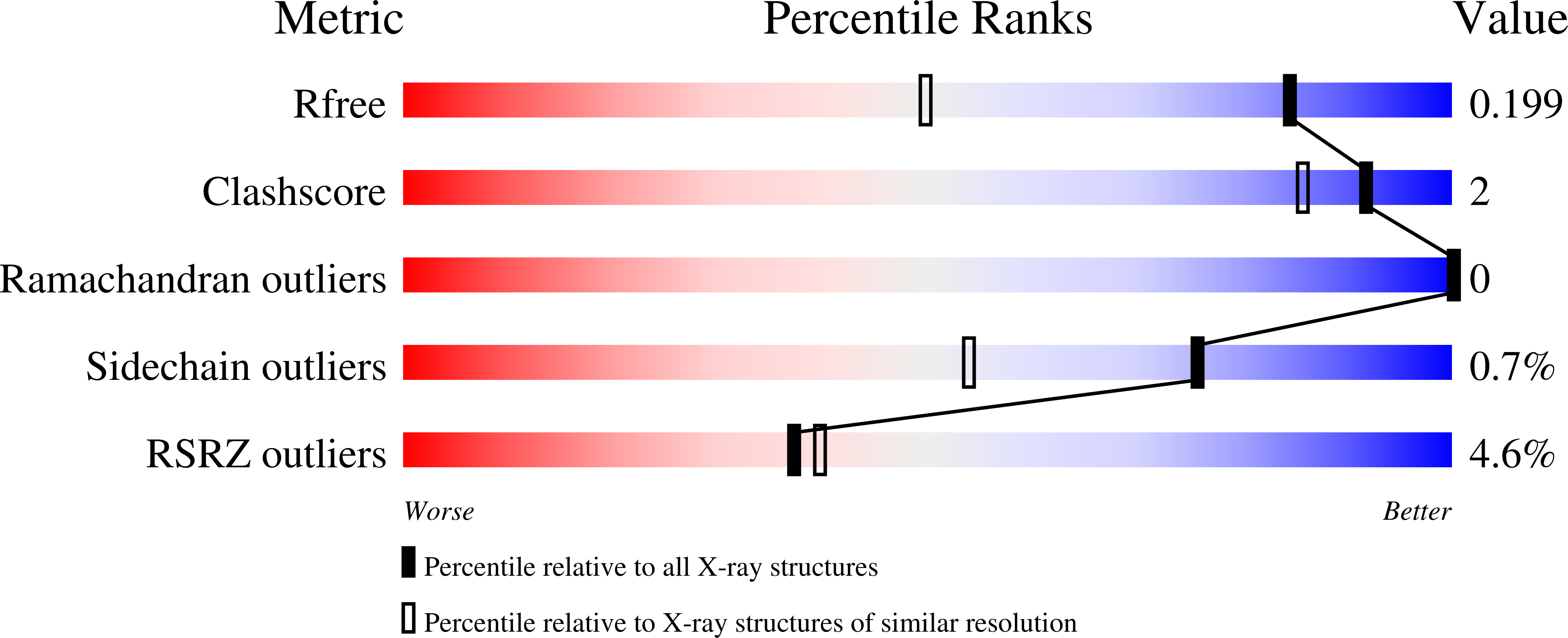
1.45 Å
R-Value Free:
0.20
R-Value Work:
0.16
R-Value Observed:
0.16
Space Group:
P 21 21 21
Macromolecular Entities
Structures with similar UniProt ID
Protein Blast
Polymer Type:polypeptide(L)
Molecule:Disks large homolog 4
Gene (Uniprot):DLG4
Mutagens:Y397E
Chain IDs:A, B
Chain Length:104
Number of Molecules:2
Biological Source:Homo sapiens
Primary Citation
Conformational changes on the third PDZ domain of PSD95 upon phosphorylation of Tyr397.
J.Struct.Biol. 218 108322 108322 (2026)
PMID: 42067080 DOI: 10.1016/j.jsb.2026.108322

Abstact

PSD95, a member of the membrane-associated guanylate kinase family, plays a key role in synaptic transmission. In this multidomain protein, the third PDZ domain has a complex regulatory mechanism that modulates its binding of carboxyl-terminal sequences. Phosphorylation of Tyr397, located in the additional alpha3 helix of this PDZ domain, has been shown to affect the domain's binding affinity. To explore the molecular basis of these changes in affinity, the crystal structure of the mutant Tyr397Glu, a point mutation intended to mimic phosphorylated tyrosine, has been determined. The crystal structure of this mutant reveals conformational changes induced by the introduction of a negative charge into the extra-domain alpha3 helix, suggesting communication between distant secondary-structure elements that may affect the binding affinity of this domain. Additionally, DSC folding studies show a noticeable decrease in the mutant's stability, indicating significant conformational changes. Altogether, the experimental results included in this work demonstrate that alpha3 is part of an electrostatic network that regulates stability and conformational changes at distant sites, including the beta-hairpin at the binding site.

Legend

Protein

Chemical

Disease

Primary Citation of related structures
Feedback Form
Name
Email
Institute
Feedback