

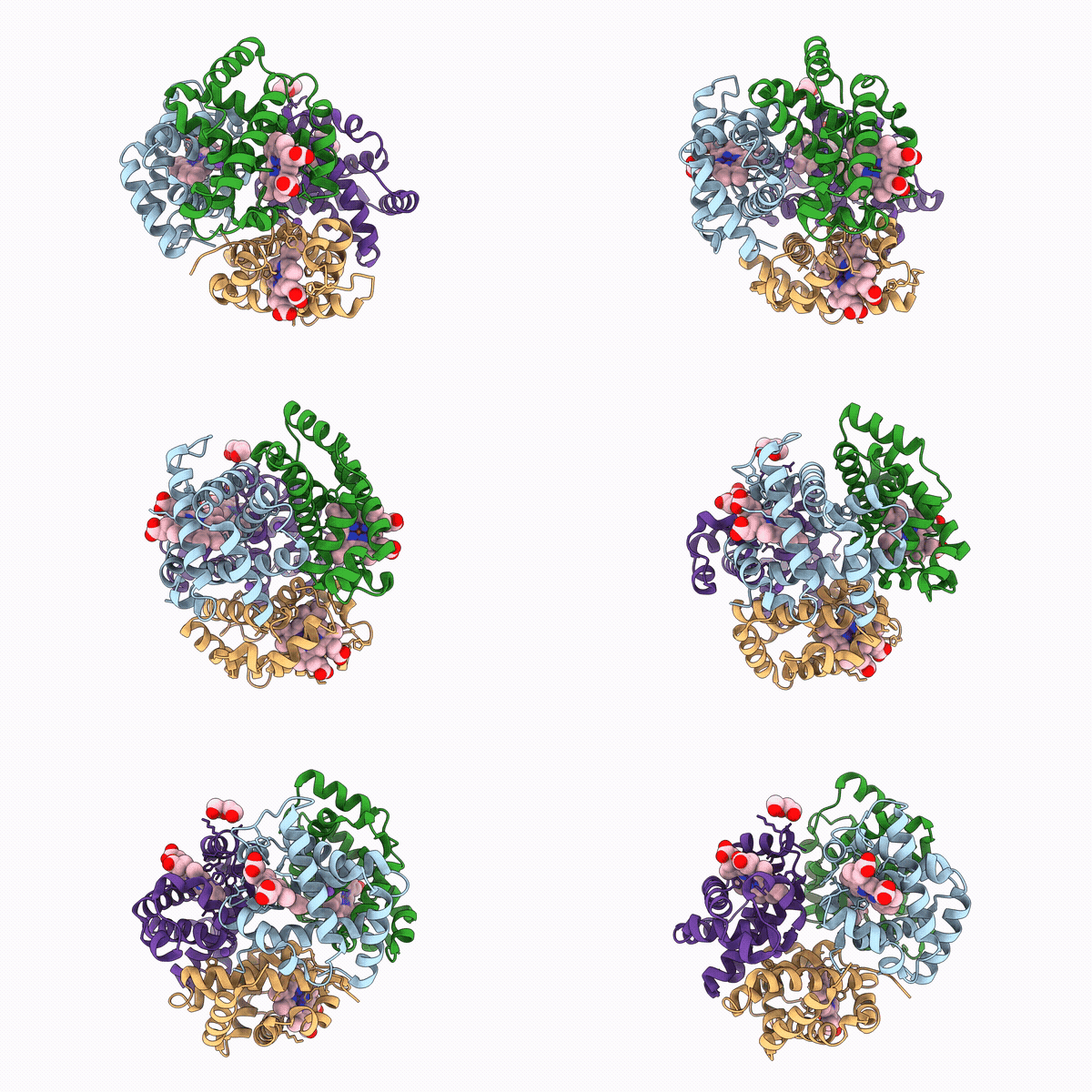
9TLJ image
Deposition Date 2025-12-10
Release Date 2026-10-14
Last Version Date 2026-10-14
Entry Detail
PDB ID:
9TLJ
Keywords:
Title:
Horse hemoglobin structure from serial crystallography with 10 fs pulse
Biological Source:
Source Organism(s):
Equus caballus (Taxon ID: 9796)
Method Details:
Experimental Method:
Resolution:
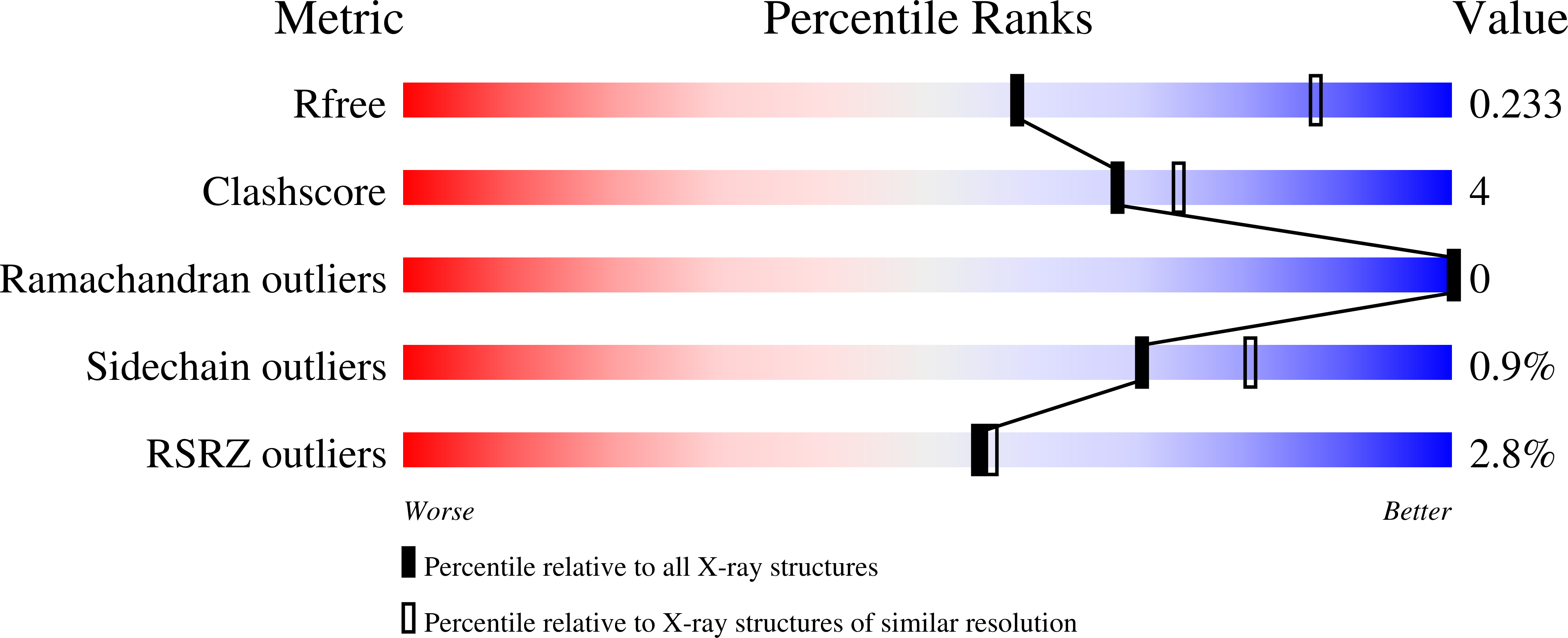
2.46 Å
R-Value Free:
0.22
R-Value Work:
0.17
R-Value Observed:
0.17
Space Group:
P 21 21 21
Macromolecular Entities
Polymer Type:polypeptide(L)
Molecule:Hemoglobin subunit alpha
Gene (Uniprot):HBA
Chain IDs:A, C
Chain Length:142
Number of Molecules:2
Biological Source:Equus caballus
Polymer Type:polypeptide(L)
Molecule:Hemoglobin subunit beta
Gene (Uniprot):HBB
Chain IDs:B, D
Chain Length:146
Number of Molecules:2
Biological Source:Equus caballus
Primary Citation
Radiation damage in serial femtosecond crystallography studied in hemoglobin.
Acta Crystallogr D Struct Biol 82 1169 1180 (2026)
PMID: 42813594 DOI: 10.1107/S2059798326008569

Abstact

A central question in macromolecular crystallography is what X-ray free-electron laser pulse duration is required to obtain damage-free structural information. We compare serial femtosecond crystallography data from hemoglobin crystals using 3 and 10 fs pulses at comparable peak intensities ( approximately 3 x 10(17) W cm(-2)) and fixed photon energy (7.15 keV). Structural refinement produced very similar models and resolution-dependent data-quality indicators remained comparable. Both datasets also retained sufficient anomalous signal for phasing. These observations support the conclusion that high-resolution scattering was preserved under both pulse durations. Hybrid collisional-radiative and molecular-dynamics simulations show that under typical experimental conditions, atomic form-factor changes are negligible (<1%) and atomic displacements fall below the resolution limit imposed by the X-ray photon energy and the geometry of the detector. The combined experimental and theoretical results indicate that 10 fs pulses are adequate to obtain damage-free protein structures using femtosecond crystallography under the intensity conditions explored.

Legend

Protein

Chemical

Disease

Primary Citation of related structures
Feedback Form
Name
Email
Institute
Feedback