

9TKU image
Deposition Date 2025-12-10
Release Date 2026-06-24
Last Version Date 2026-06-24
Entry Detail
PDB ID:
9TKU
Title:
Probing 3-Amino-2H-Azaindazoles as Allosteric Inhibitors of the Protein Tyrosine Phosphatase SHP2
Biological Source:
Source Organism(s):
Homo sapiens (Taxon ID: 9606)
Expression System(s):
Method Details:
Experimental Method:
Resolution:
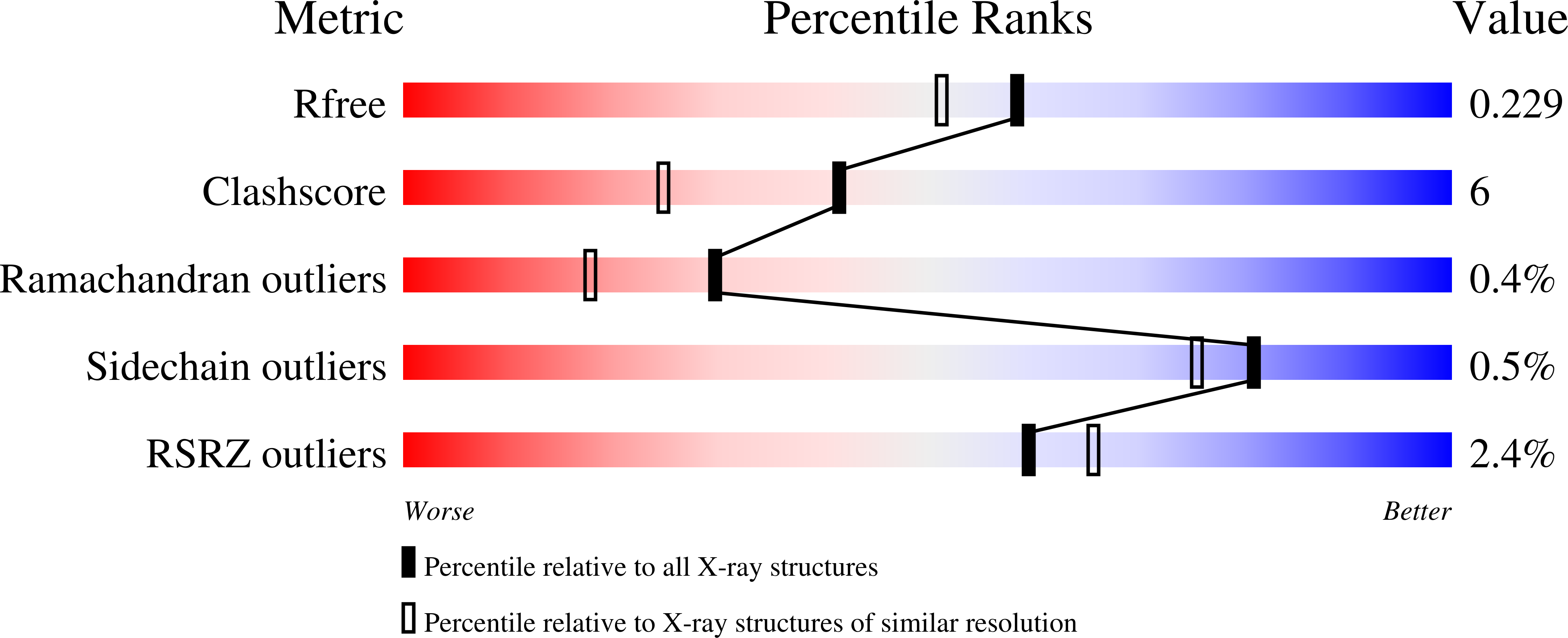
1.87 Å
R-Value Free:
0.22
R-Value Work:
0.18
R-Value Observed:
0.18
Space Group:
P 21 21 2
Macromolecular Entities
Structures with similar UniProt ID
Protein Blast
Polymer Type:polypeptide(L)
Molecule:Tyrosine-protein phosphatase
Gene (Uniprot):PTPN11
Chain IDs:A
Chain Length:524
Number of Molecules:1
Biological Source:Homo sapiens
Primary Citation
Probing 3-Amino-2H-Azaindazoles as Allosteric Inhibitors of the Protein Tyrosine Phosphatase SHP2.
Chemmedchem 21 e70341 e70341 (2026)
PMID: 42289381 DOI: 10.1002/cmdc.70341

Abstact

Src homology 2-containing protein tyrosine phosphatase 2 (SHP2) is an attractive therapeutic target in oncology and immunology-related disorders. However, developing novel phosphatase inhibitors that combine high potency, selectivity, cellular permeability, and drug-like properties remains challenging. The discovery of an allosteric mode of inhibition for SHP2 was a breakthrough, enabling the development of selective inhibitors that stabilize the phosphatase in its inactive conformation. We identified 2H-indazoles as a privileged and underexplored scaffold. Using our recently described palladium-catalyzed domino reaction as a key synthetic step, 3-amino-2H-indazoles were efficiently accessed from readily available precursors, enabling rapid exploration of novel allosteric inhibitors of SHP2. This approach led to compound 17g, a potent and selective allosteric SHP2 inhibitor (SHP2(WT) IC(50) = 49 nM). High-resolution structural characterization by X-ray crystallography revealed binding within the SHP2 allosteric tunnel. Consistent with its biological activity, compound 17g also effectively suppressed ERK phosphorylation in MV-4-11, Panc-1, and KYSE520 cells with an IC(50) of 50, 250, and 410 nM, respectively. These findings not only highlight the therapeutic potential of 2H-azaindazoles as a new class of SHP2 inhibitors but also underscore the importance of advances in efficient synthetic methodologies for constructing novel heterocyclic scaffolds and substitution patterns.

Legend

Protein

Chemical

Disease

Primary Citation of related structures
Feedback Form
Name
Email
Institute
Feedback