

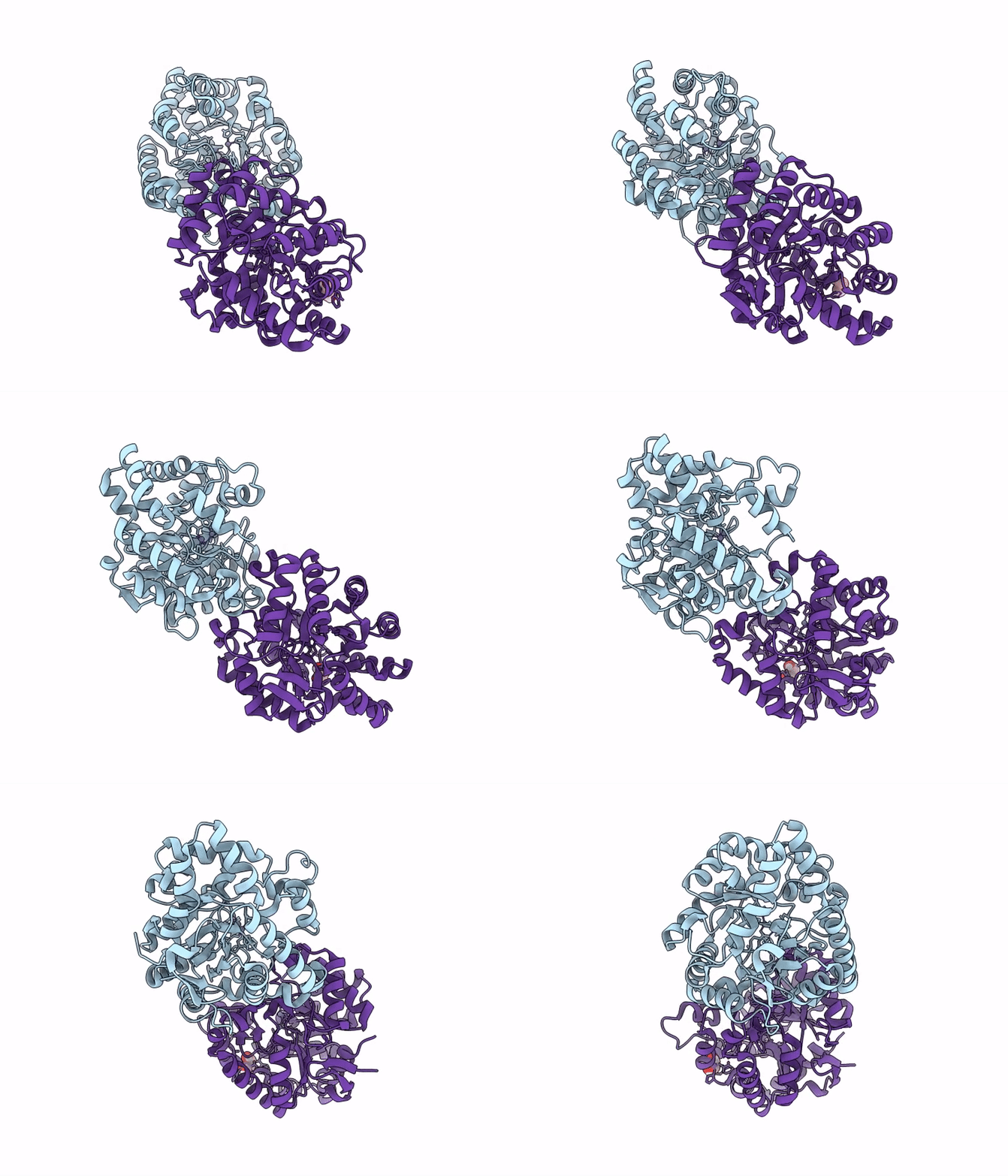
9TI1 image
Deposition Date 2025-12-04
Release Date 2026-02-25
Last Version Date 2026-03-11
Entry Detail
PDB ID:
9TI1
Keywords:
Title:
Crystal structure of the zinc-containing Phosphotriesterase dPTE2-H55
Biological Source:
Source Organism(s):
Expression System(s):
Method Details:
Experimental Method:
Resolution:
1.55 Å
R-Value Free:
0.18
R-Value Work:
0.17
R-Value Observed:
0.17
Space Group:
P 21 21 21

Macromolecular Entities
Structures with similar UniProt ID
Protein Blast
Polymer Type:polypeptide(L)
Molecule:Parathion hydrolase
Gene (Uniprot):opd
Chain IDs:A, B
Chain Length:342
Number of Molecules:2
Biological Source:Brevundimonas diminuta
Modified Residue
Compound ID Chain ID Parent Comp ID Details 2D Image
KCX A LYS modified residue
Primary Citation
Catalytic p K a Attenuation in a Hydrolytic Metalloenzyme by Genetic Code Expansion.
Biochemistry 65 559 570 (2026)
PMID: 41705832 DOI: 10.1021/acs.biochem.5c00768

Abstact

Hydrolytic metalloenzymes employ Lewis-acidic metal cofactors to activate water molecules, generating nucleophilic hydroxide species that facilitate catalysis. Their catalytic efficiency across a wide pH range is often governed by the protonation state of the metal-bound water, reflected in pK(a) values typically between 6.8 and 9. Modulating this parameter is key to expanding enzymatic activity for improved activity at neutral to acidic pH. Herein, we apply genetic code expansion to mutate the primary metal-coordination sphere of a model metallohydrolase: the dizinc phosphotriesterase from Pseudomonas diminuta. Substitution of the most catalytically indispensable coordinating histidine residue (H55) to N(pi)-methyl-l-histidine (piMH) resulted in substantial enzyme yields, efficient metal coordination for either Zn(2+) or Co(2+), and up to 5-fold improved tolerance to acidic conditions. Detailed mechanistic analysis revealed a systematic decrease in catalytic pK(a) and attenuation of several catalytic rate constants. These results add to the growing body of evidence demonstrating the power of ncAA-based engineering for refined tuning of enzyme properties.

Legend

Protein

Chemical

Disease

Primary Citation of related structures
Feedback Form
Name
Email
Institute
Feedback