

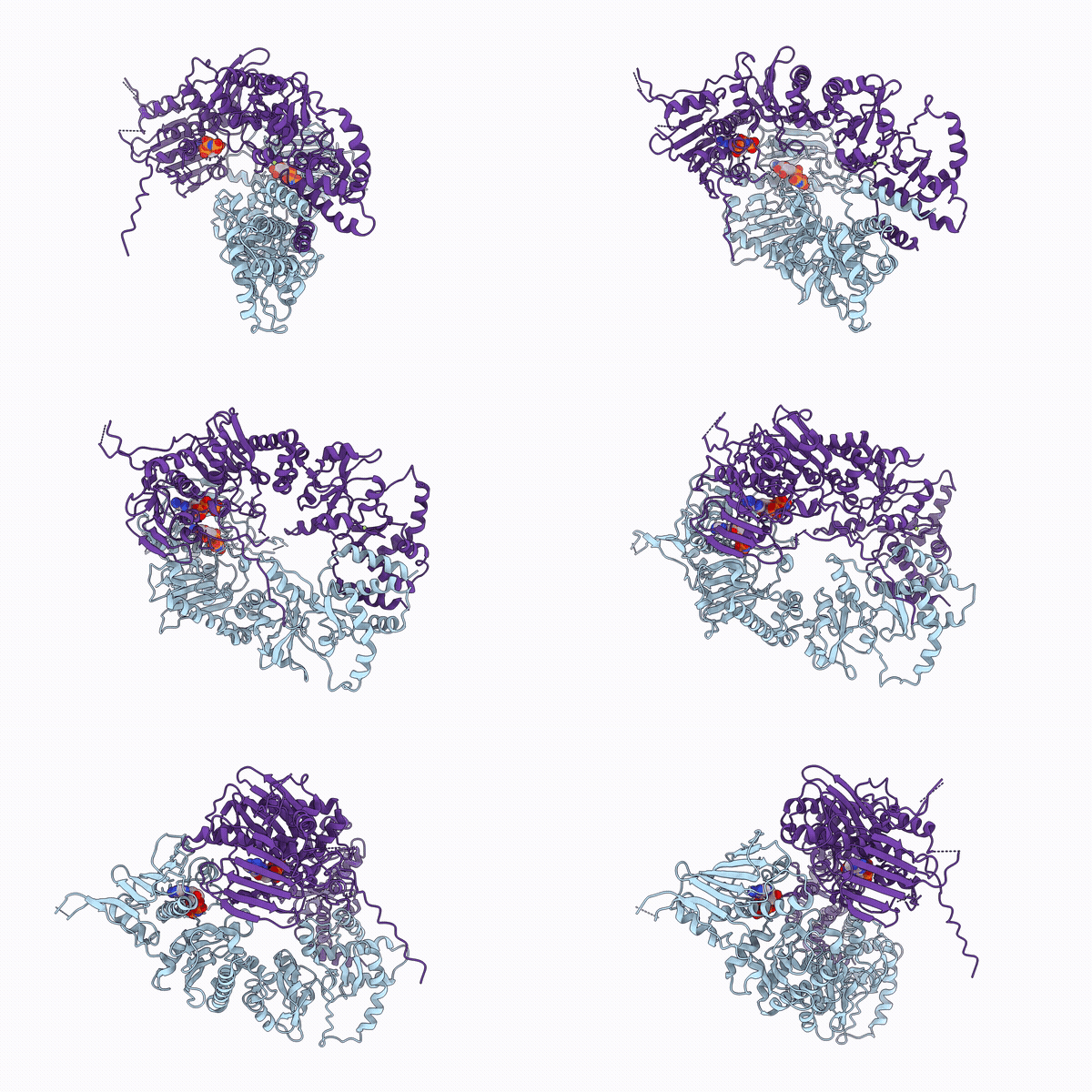
9THZ image
Deposition Date 2025-12-04
Release Date 2026-09-30
Last Version Date 2026-09-30
Entry Detail
PDB ID:
9THZ
Keywords:
Title:
Crystal structure of HtpG chaperone in complex with AMPPNP
Biological Source:
Source Organism(s):
Expression System(s):
Method Details:
Experimental Method:
Resolution:
3.32 Å
R-Value Free:
0.32
R-Value Work:
0.26
R-Value Observed:
0.26
Space Group:
P 21 21 2
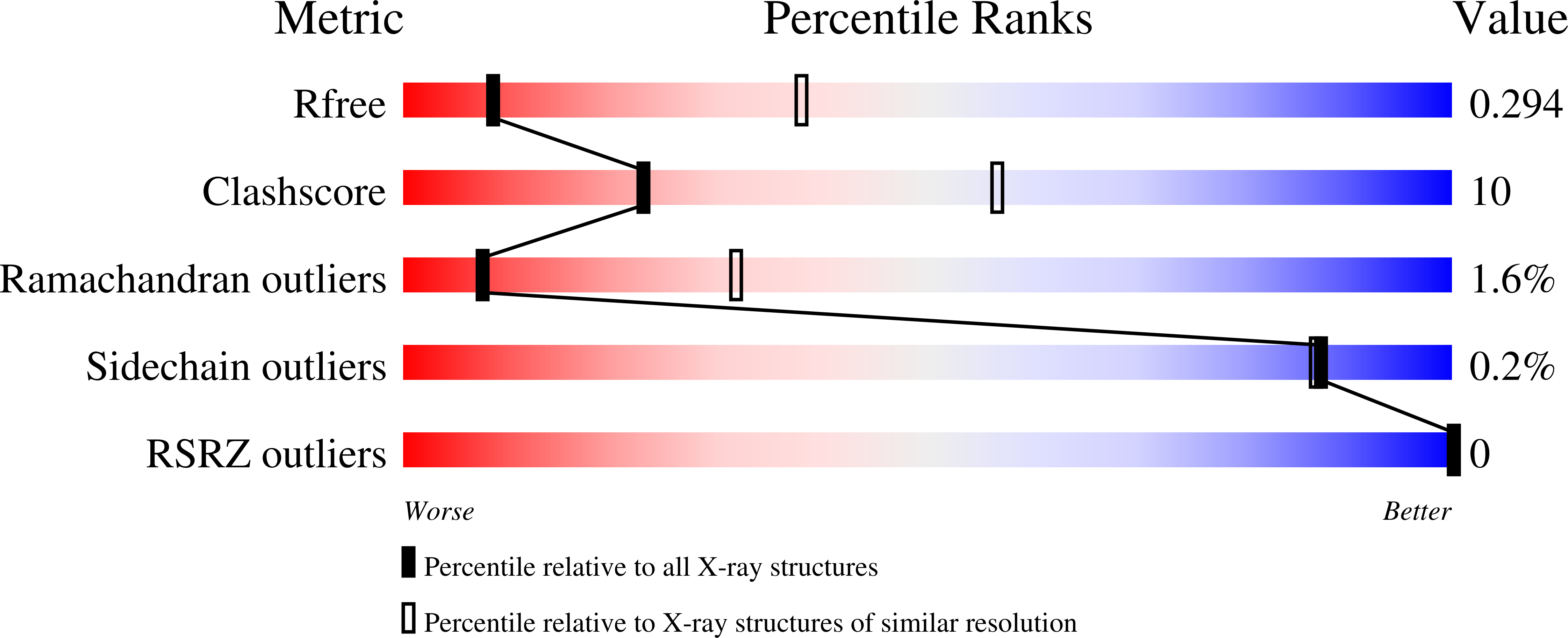
Macromolecular Entities
Polymer Type:polypeptide(L)
Molecule:Chaperone protein HtpG
Gene (Uniprot):htpG
Chain IDs:A, B
Chain Length:660
Number of Molecules:2
Biological Source:Mycobacterium tuberculosis
Primary Citation
Structural and binding studies of the mycobacterial heat shock protein reveal a silent state and offer insights into dendritic cell activation.
Int.J.Biol.Macromol. 353 151218 151218 (2026)
PMID: 41794242 DOI: 10.1016/j.ijbiomac.2026.151218

Abstact

HtpG(Mtb) of Mycobacterium tuberculosis is an ATP-dependent heat shock protein that assists the correct folding of nascent and stress-accumulated misfolded proteins, in concert with other chaperones. Besides playing a role in stress response, it is able to elicit an immune response against M. tuberculosis infection by activating Dendritic Cells in a Toll Like Receptor 4-mediated manner. However, we lack a full understanding of the molecular determinants of HtpG(Mtb) catalytic activity and Toll Like Receptor 4 activation, due to the lack of structural and biophysical data. Here, we report the first crystal structure of HtpG(Mtb), in complex with the non-hydrolysable form of ATP. The crystal structure reveals that the HtpG(Mtb) dimer adopts a conformationally silent structure, that precludes the dimerisation of the chaperone catalytic domains needed for ATP hydrolysis. Also, binding studies show that HtpG(Mtb) directly interacts with Toll Like Receptor 4 with a nanomolar affinity, and that this interaction allows HtpG(Mtb) dimer to engage two host receptor molecules. This finding suggests that activation of Toll Like Receptor 4 by HtpG(Mtb) is due to its ability to induce the dimerisation of the host receptor, an essential step for initiating the entire signaling cascade.

Legend

Protein

Chemical

Disease

Primary Citation of related structures
Feedback Form
Name
Email
Institute
Feedback