

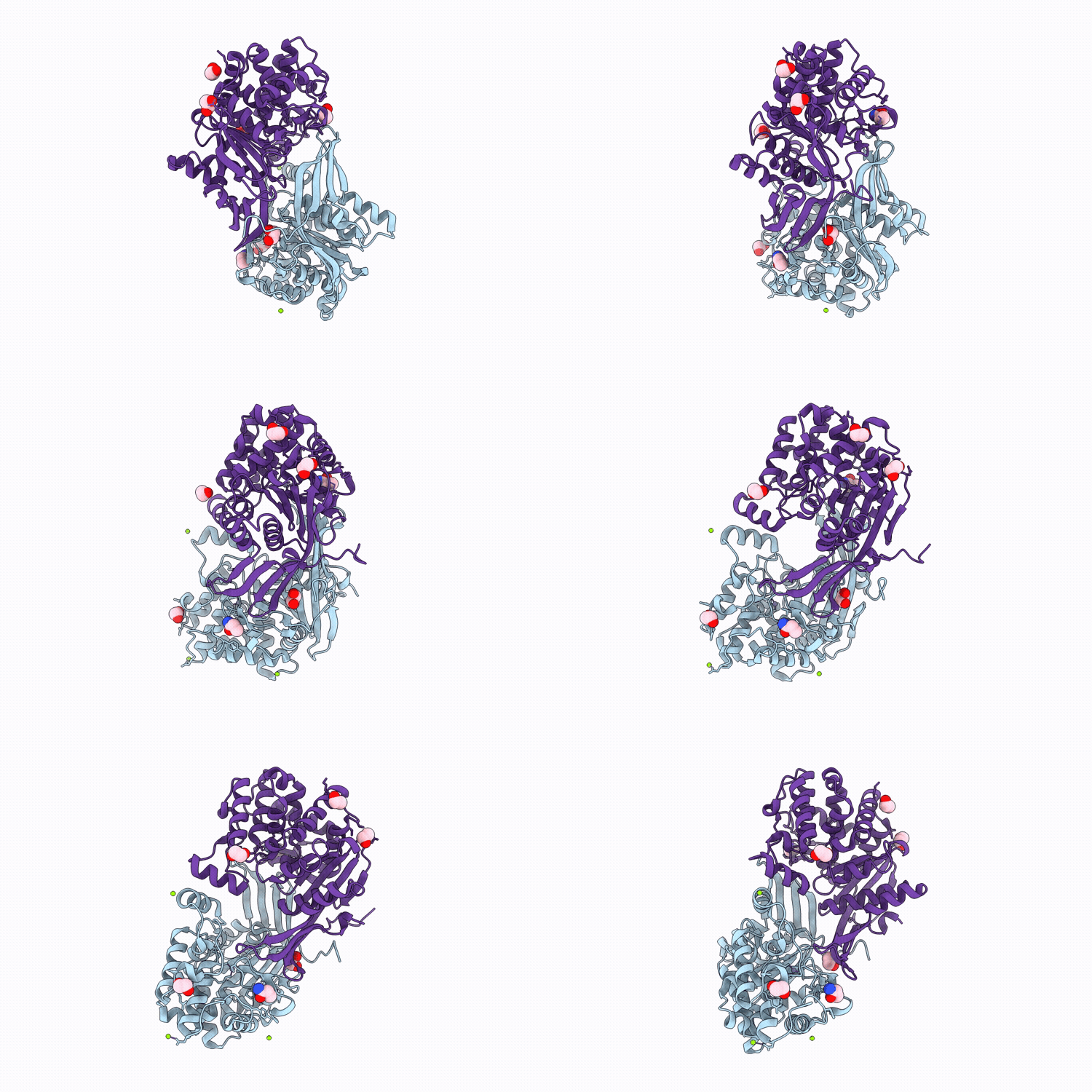
9THY image
Deposition Date 2025-12-04
Release Date 2026-05-27
Last Version Date 2026-05-27
Entry Detail
PDB ID:
9THY
Keywords:
Title:
ReAIV structure containing an acrylamide adduct at Cys183 and an orthoborate ester at Ser47
Biological Source:
Source Organism(s):
Rhizobium etli (Taxon ID: 29449)
Expression System(s):
Method Details:
Experimental Method:
Resolution:
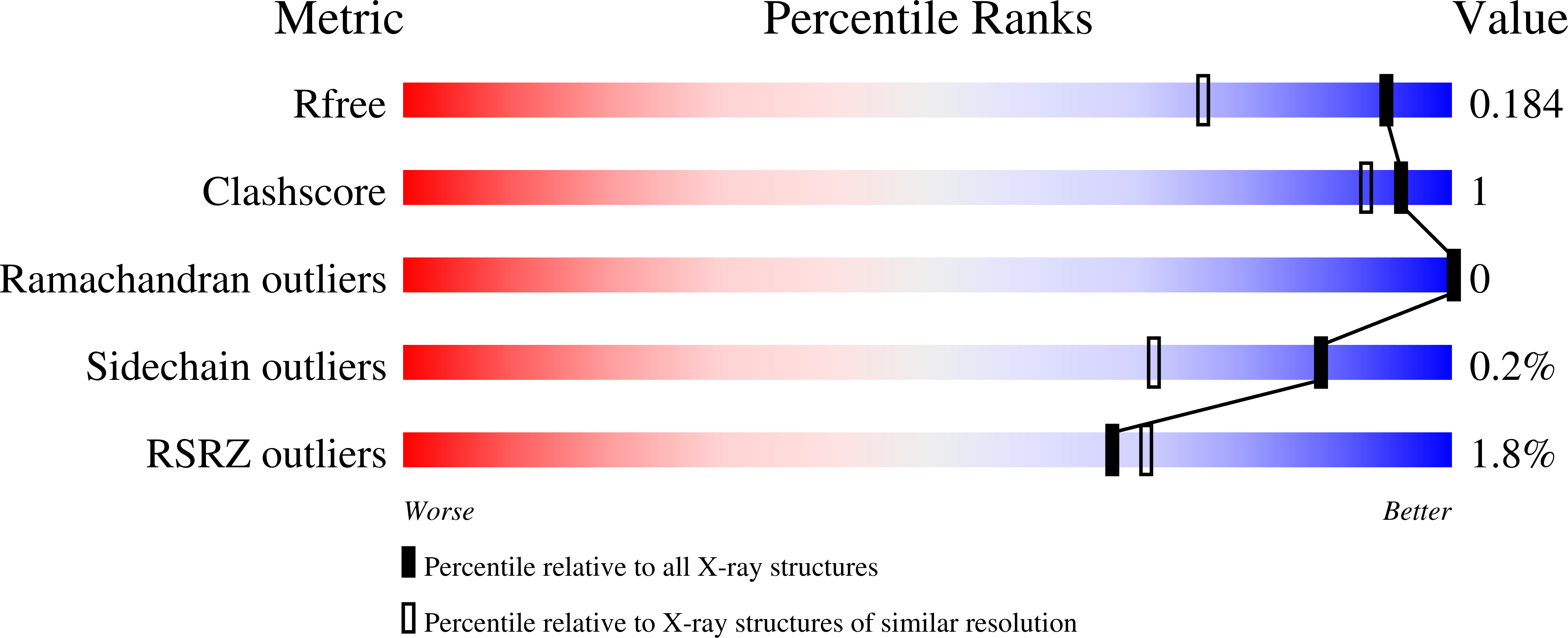
1.40 Å
R-Value Free:
0.18
R-Value Work:
0.13
R-Value Observed:
0.13
Space Group:
P 21 21 21
Macromolecular Entities
Structures with similar UniProt ID
Protein Blast
Polymer Type:polypeptide(L)
Molecule:L-asparaginase II protein
Gene (Uniprot):RHE_CH01144
Chain IDs:A, B
Chain Length:341
Number of Molecules:2
Biological Source:Rhizobium etli
Modified Residue
Compound ID Chain ID Parent Comp ID Details 2D Image
SEE A SER modified residue
Primary Citation
Efficient acrylamide adduct formation suggests dual applications of ReAIV L-asparaginase.
Amino Acids ? ? ? (2026)
PMID: 42113412 DOI: 10.1007/s00726-026-03525-1

Abstact

Isothermal titration calorimetry (ITC) studies of the enzyme kinetics and substrate specificity of Rhizobium etli Class 3 L-asparaginases, ReAIV (constitutive) and ReAV (inducible), showed that despite highly conserved catalytic site, the two isoforms differ significantly in thermostability, zinc affinity, and biochemical properties. As part of a wider investigation of potential non-natural substrates, acrylamide was tested, revealing a pronounced heat effect with ReAIV but none with ReAV. Crystallographic analysis showed the formation of a Michael adduct between acrylamide and a surface-exposed cysteine 183 in ReAIV, while the catalytic activity toward L-asparagine hydrolysis remained unaffected. These findings highlight the unique and multimodal reactivity of ReAIV, suggesting its potential dual application in the food industry: in selective removal of L-asparagine and in covalent sequestration of acrylamide under mild conditions. The acrylamide modification improved crystal morphology of ReAIV, offering practical advantages for structural studies. Additionally, a covalent modification of the catalytic Ser47 residue was observed in the presented crystal structure. Based on B-factor analysis, literature data, and detection of borate contamination in the laboratory water, this modification was interpreted as an orthoborate ester.

Legend

Protein

Chemical

Disease

Primary Citation of related structures
Feedback Form
Name
Email
Institute
Feedback