

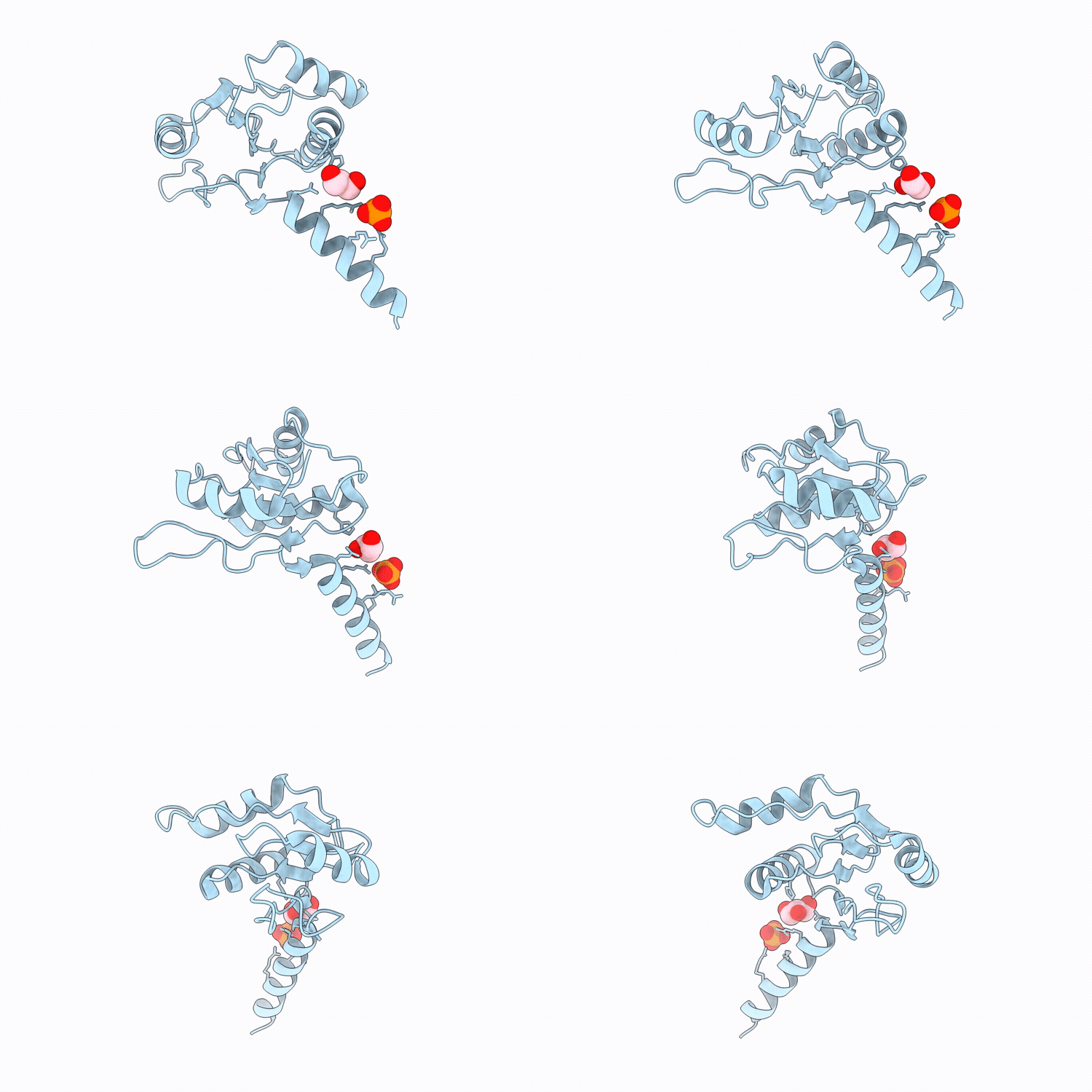
9TET image
Deposition Date 2025-11-26
Release Date 2026-04-15
Last Version Date 2026-04-29
Entry Detail
PDB ID:
9TET
Keywords:
Title:
Oligomerisation of type III CRISPR-associated Csx15 to regulate antiviral signalling
Biological Source:
Source Organism(s):
Expression System(s):
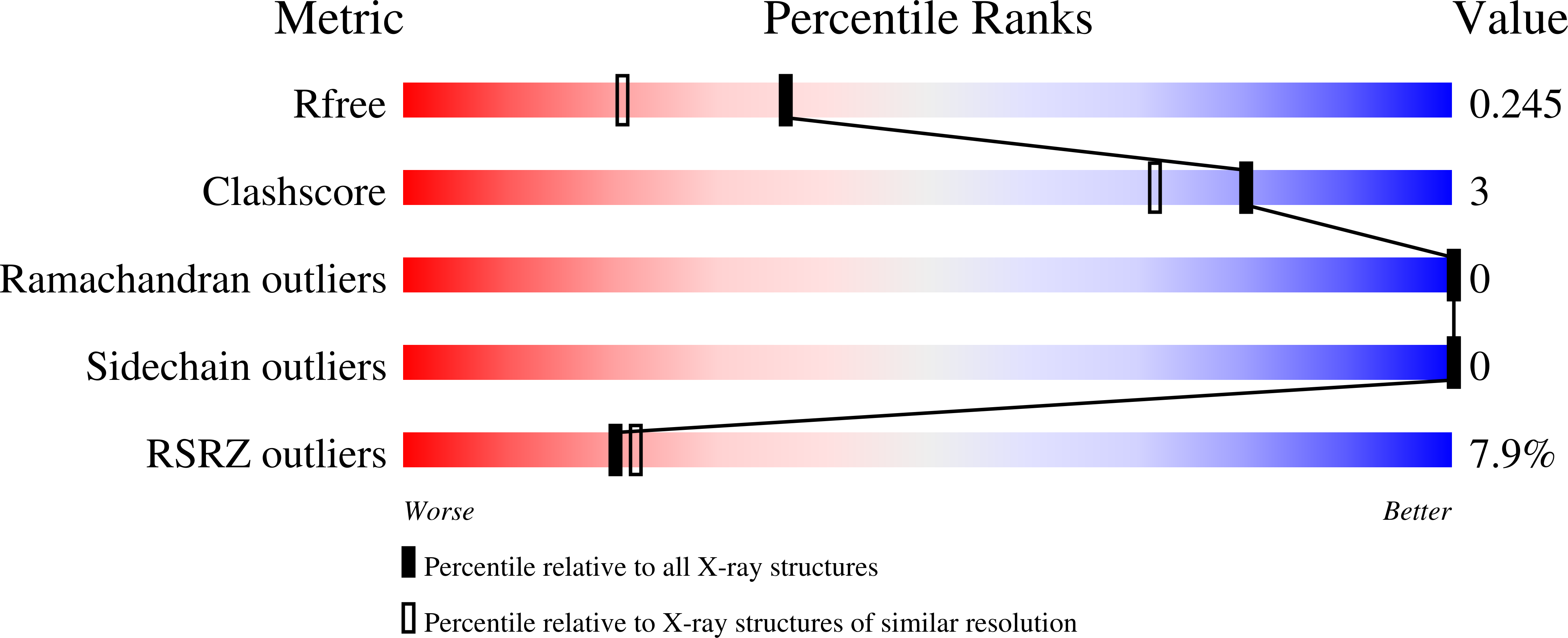
Method Details:
Experimental Method:
Resolution:
1.88 Å
R-Value Free:
0.24
R-Value Work:
0.19
R-Value Observed:
0.19
Space Group:
P 62
Macromolecular Entities
Protein Blast
Polymer Type:polypeptide(L)
Molecule:CRISPR-associated Csx15
Chain IDs:A
Chain Length:146
Number of Molecules:1
Biological Source:Pseudomonas fluorescens
Primary Citation
The CRISPR ring nuclease Csx15 oligomerises on cyclic nucleotide binding to regulate antiviral defence.
Biochem.J. 483 699 712 (2026)
PMID: 41911342 DOI: 10.1042/BCJ20260019

Abstact

Prokaryotic type III CRISPR systems signal infection by generating cyclic oligoadenylate (cOA) second messengers, which activate defence proteins allosterically, providing immunity. cOA molecules are typically degraded by extrinsic, stand-alone ring nuclease (RN) enzymes with phosphodiesterase activity or by the intrinsic RN activity of the effectors themselves. Viruses and plasmids also encode RNs, which can function as anti-CRISPRs. Eight different families of extrinsic RNs are currently known. Here, we report the structural and biochemical analysis of one of these families: Csx15. We show that Csx15 is a dimeric protein of the CRISPR-associated Rossmann fold (CARF) superfamily with the ability to bind cyclic tetra-adenylate (cA4) molecules in a shared binding site formed by the head-to-tail stacking of dimers in a filament conformation. Some family members are non-enzymatic, relying on the sequestration (sponging) of cA4 to regulate the host immune response, while others act as canonical RNs, slowly degrading cA4.

Legend

Protein

Chemical

Disease

Primary Citation of related structures
Feedback Form
Name
Email
Institute
Feedback