

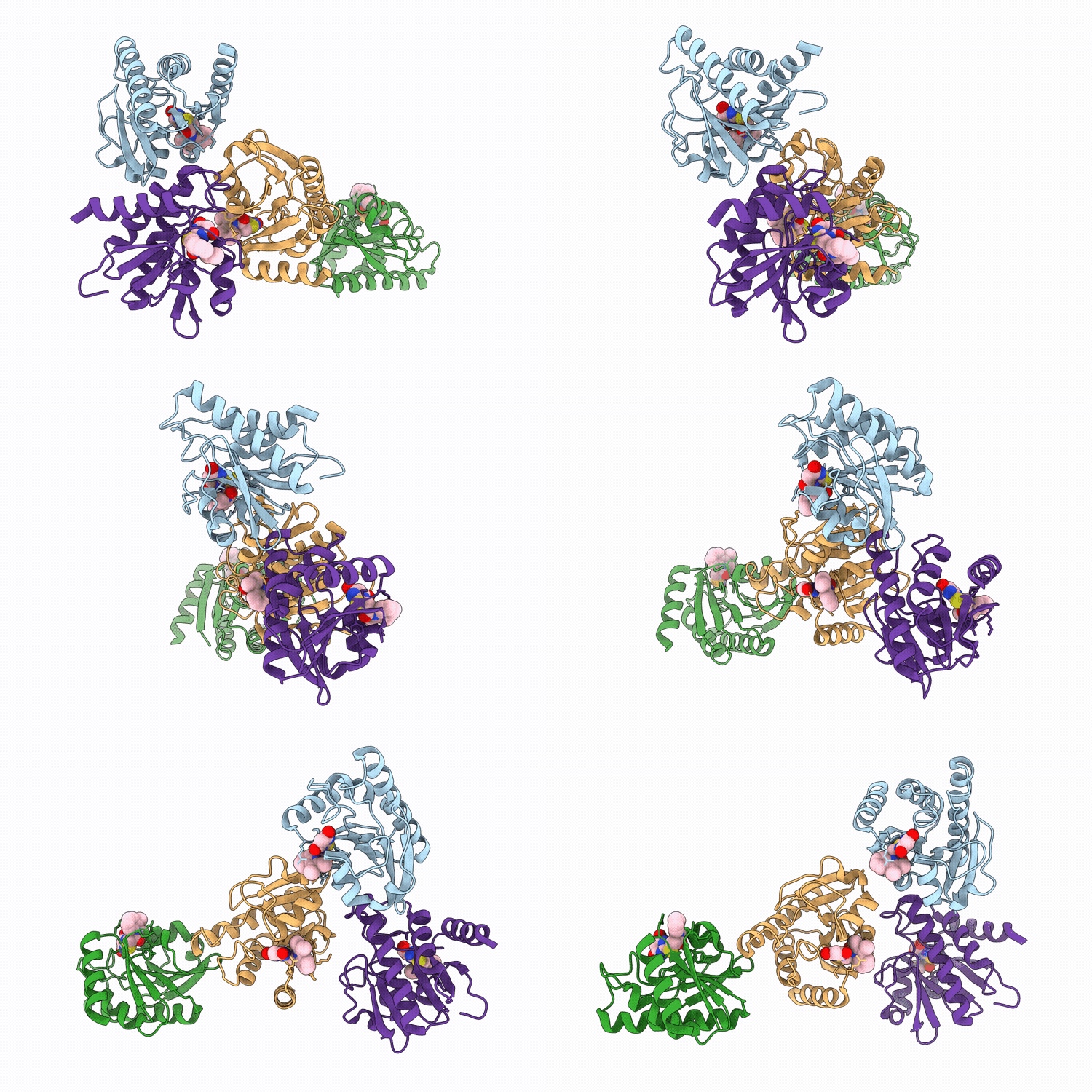
9TDQ image
Deposition Date 2025-11-24
Release Date 2026-08-12
Last Version Date 2026-08-12
Entry Detail
PDB ID:
9TDQ
Keywords:
Title:
Crystal structure of CHIKV nsp3 macrodomain with MDOLL-0273
Biological Source:
Source Organism(s):
Expression System(s):
Method Details:
Experimental Method:
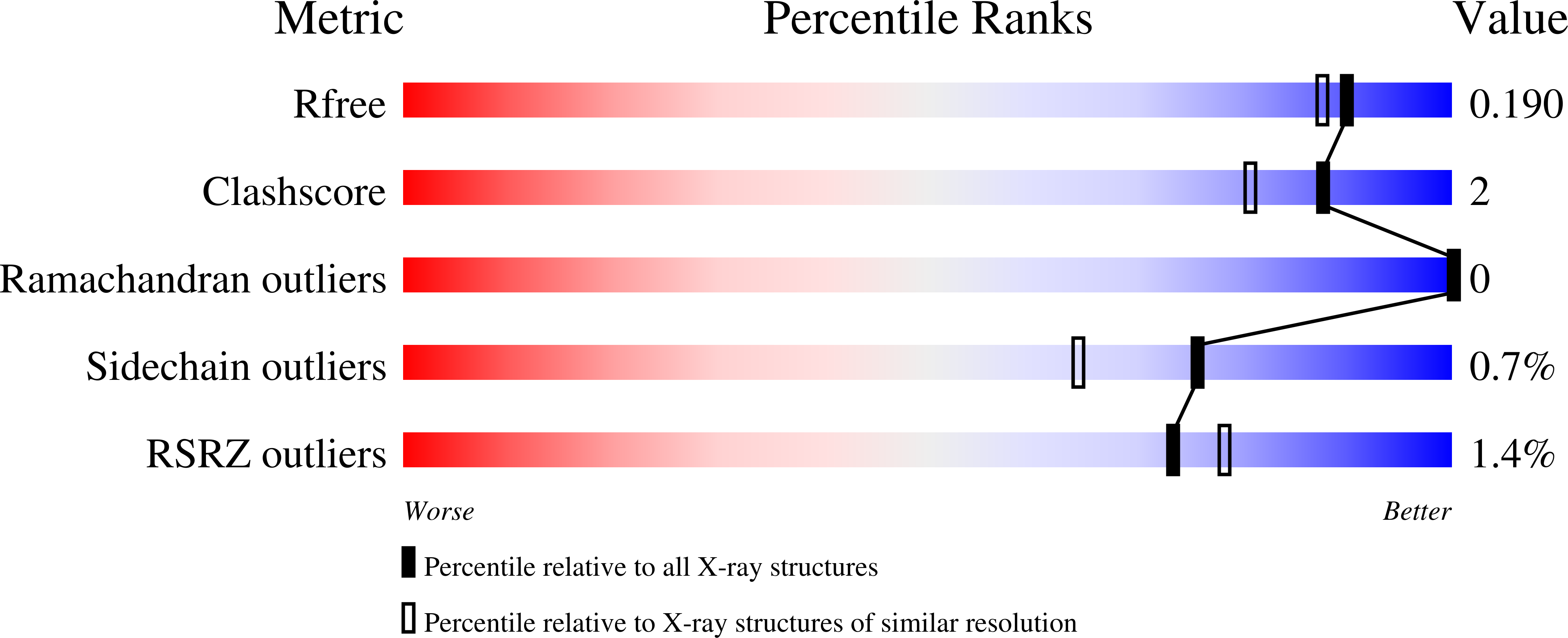
Resolution:
1.65 Å
R-Value Free:
0.18
R-Value Work:
0.14
Space Group:
P 31
Macromolecular Entities
Polymer Type:polypeptide(L)
Molecule:Non-structural protein 3
Chain IDs:A (auth: C), B (auth: A), C (auth: D), D (auth: B)
Chain Length:0
Number of Molecules:4
Biological Source:Chikungunya virus
Ligand Molecules
Primary Citation
Discovery of thiobarbiturate-indole scaffold as a selective inhibitor targeting chikungunya virus nsP3 macrodomain through a cryptic binding pocket.
Eur.J.Med.Chem. 318 119182 119182 (2026)
PMID: 42531898 DOI: 10.1016/j.ejmech.2026.119182

Abstact

Chikungunya virus (CHIKV) outbreaks impose significant burdens on healthcare systems and raise an urgent need for effective antiviral therapies. So far there are no specific drugs against CHIKV infection. CHIKV-encoded macrodomain is critical for virulence and counteracts the host immune response, representing a promising antiviral drug target. Here, we describe small molecule inhibitors targeting the CHIKV macrodomain. Compound 1 (MDOLL-0273) was identified through a high-throughput screening using a fluorescence resonance energy transfer based assay, exhibiting an IC(50) of 8.9 muM, and its inhibitory activity was validated through multiple orthogonal assays. The compound features a thiobarbiturate-indole scaffold and shows high selectivity over a panel of human and viral ADP-ribose binding and hydrolyzing proteins. X-ray crystallography revealed that the inhibitor occupies an adenine binding site of the macrodomain and extends into a novel cryptic pocket. Guided by structure-activity relationship studies, compound 11 (MDOLL-0591) of the developed series with similar IC(50) of 10 muM but with increased lipophilicity was discovered to have antiviral activity against CHIKV in cell culture, demonstrating that macrodomain could be targeted in virus infections.

Legend

Protein

Chemical

Disease

Primary Citation of related structures
Feedback Form
Name
Email
Institute
Feedback