

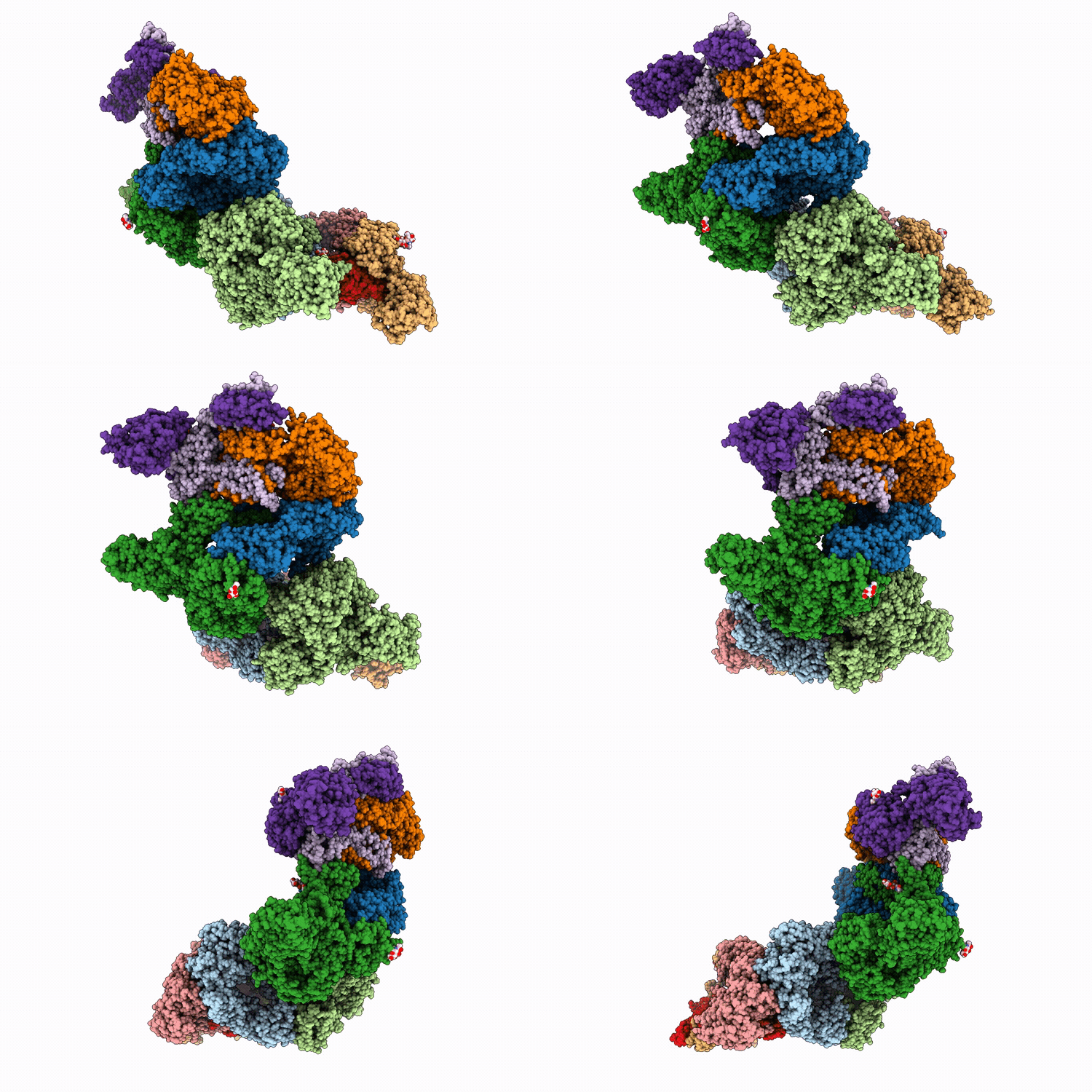
9TDL image
Deposition Date 2025-11-24
Release Date 2026-07-29
Last Version Date 2026-07-29
Entry Detail
PDB ID:
9TDL
Keywords:
Title:
Complex between complement C5 and cobra venom factor, re-refined
Biological Source:
Source Organism(s):
Homo sapiens (Taxon ID: 9606)
Naja kaouthia (Taxon ID: 8649)
Method Details:
Experimental Method:
Resolution:
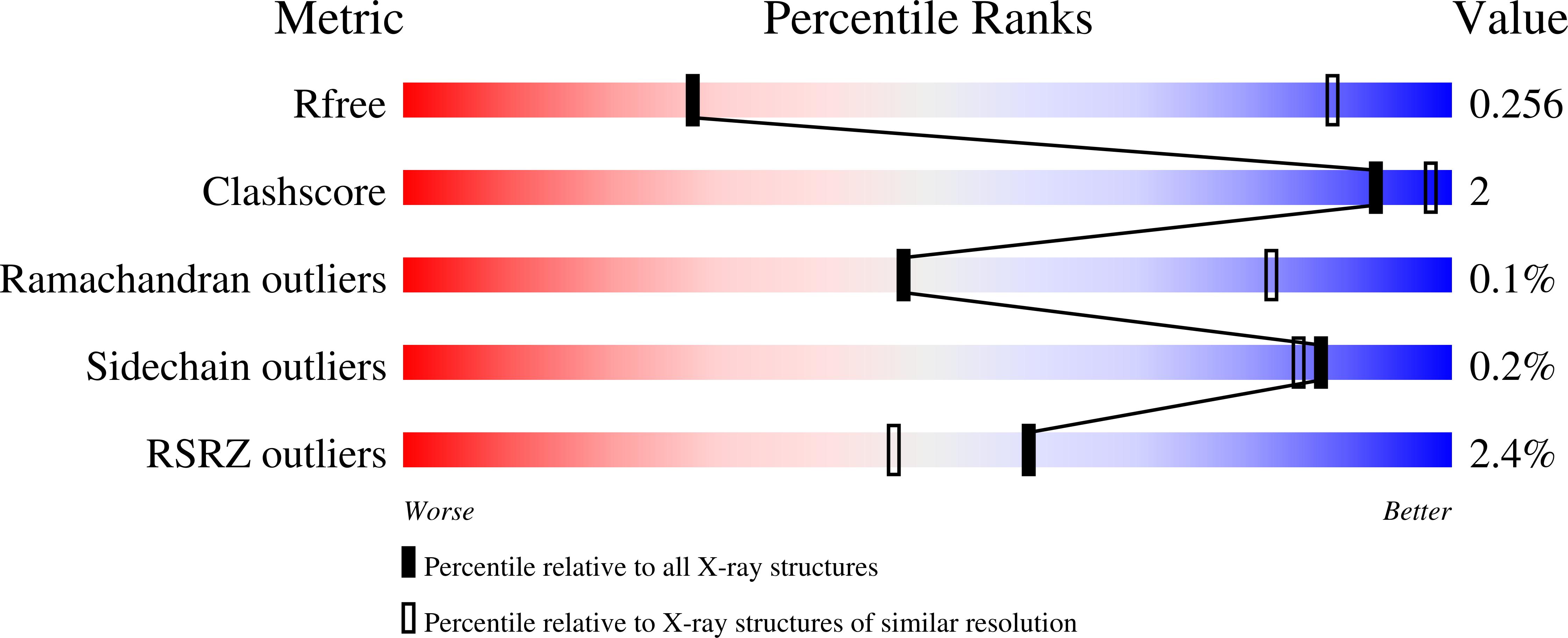
4.30 Å
R-Value Free:
0.25
R-Value Work:
0.20
R-Value Observed:
0.20
Space Group:
P 2 2 21
Macromolecular Entities
Polymer Type:polypeptide(L)
Molecule:Complement C5 beta chain
Gene (Uniprot):C5
Chain IDs:A, F (auth: B)
Chain Length:655
Number of Molecules:2
Biological Source:Homo sapiens
Polymer Type:polypeptide(L)
Molecule:Complement C5 alpha chain
Gene (Uniprot):C5
Chain IDs:B (auth: C), G (auth: D)
Chain Length:999
Number of Molecules:2
Biological Source:Homo sapiens
Polymer Type:polypeptide(L)
Molecule:Cobra venom factor alpha chai
Chain IDs:C (auth: J), H (auth: M)
Chain Length:627
Number of Molecules:2
Biological Source:Naja kaouthia
Polymer Type:polypeptide(L)
Molecule:Cobra venom factor gamma chai
Chain IDs:D (auth: K), I (auth: N)
Chain Length:252
Number of Molecules:2
Biological Source:Naja kaouthia
Polymer Type:polypeptide(L)
Molecule:Cobra venom factor beta chain
Chain IDs:E (auth: L), J (auth: O)
Chain Length:379
Number of Molecules:2
Biological Source:Naja kaouthia
Ligand Molecules
Primary Citation
Substrate recognition by complement convertases revealed in the C5-cobra venom factor complex.
EMBO J 30 606 616 (2011)
PMID: 21217642 DOI: 10.1038/emboj.2010.341

Abstact

Complement acts as a danger-sensing system in the innate immune system, and its activation initiates a strong inflammatory response and cleavage of the proteins C3 and C5 by proteolytic enzymes, the convertases. These contain a non-catalytic substrate contacting subunit (C3b or C4b) in complex with a protease subunit (Bb or C2a). We determined the crystal structures of the C3b homologue cobra venom factor (CVF) in complex with C5, and in complex with C5 and the inhibitor SSL7 at 4.3 Å resolution. The structures reveal a parallel two-point attachment between C5 and CVF, where the presence of SSL7 only slightly affects the C5-CVF interface, explaining the IgA dependence for SSL7-mediated inhibition of C5 cleavage. CVF functions as a relatively rigid binding scaffold inducing a conformational change in C5, which positions its cleavage site in proximity to the serine protease Bb. A general model for substrate recognition by the convertases is presented based on the C5-CVF and C3b-Bb-SCIN structures. Prior knowledge concerning interactions between the endogenous convertases and their substrates is rationalized by this model.

Legend

Protein

Chemical

Disease

Primary Citation of related structures
Feedback Form
Name
Email
Institute
Feedback