

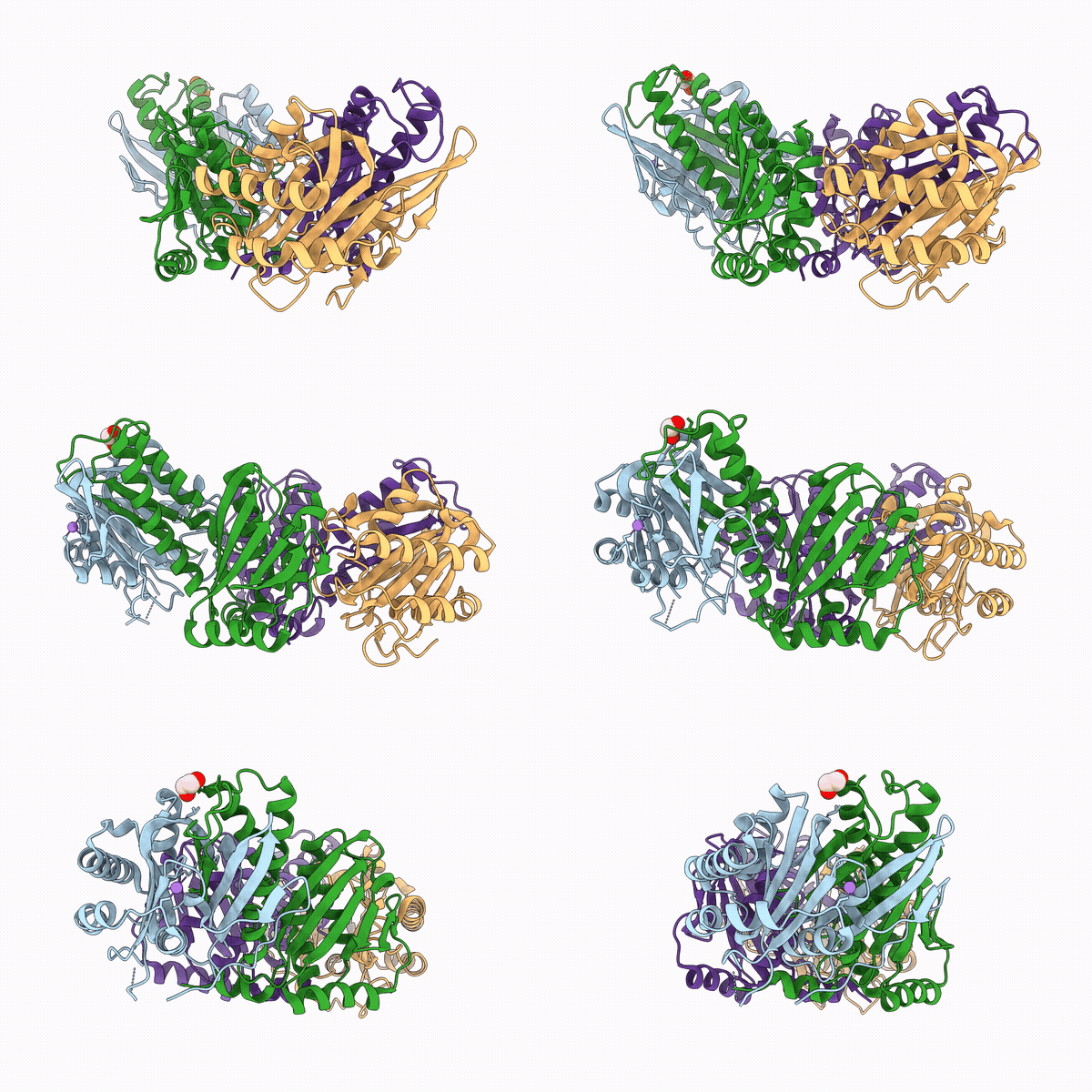
9TBO image
Deposition Date 2025-11-20
Release Date 2026-09-30
Last Version Date 2026-09-30
Entry Detail
PDB ID:
9TBO
Keywords:
Title:
Crystal structure of acetylated intermediate of N-acetylornithine glutamate acetyltransferase (ZmNAOGAT) from Zea mays (maize)
Biological Source:
Source Organism(s):
Zea mays (Taxon ID: 4577)
Method Details:
Experimental Method:
Resolution:
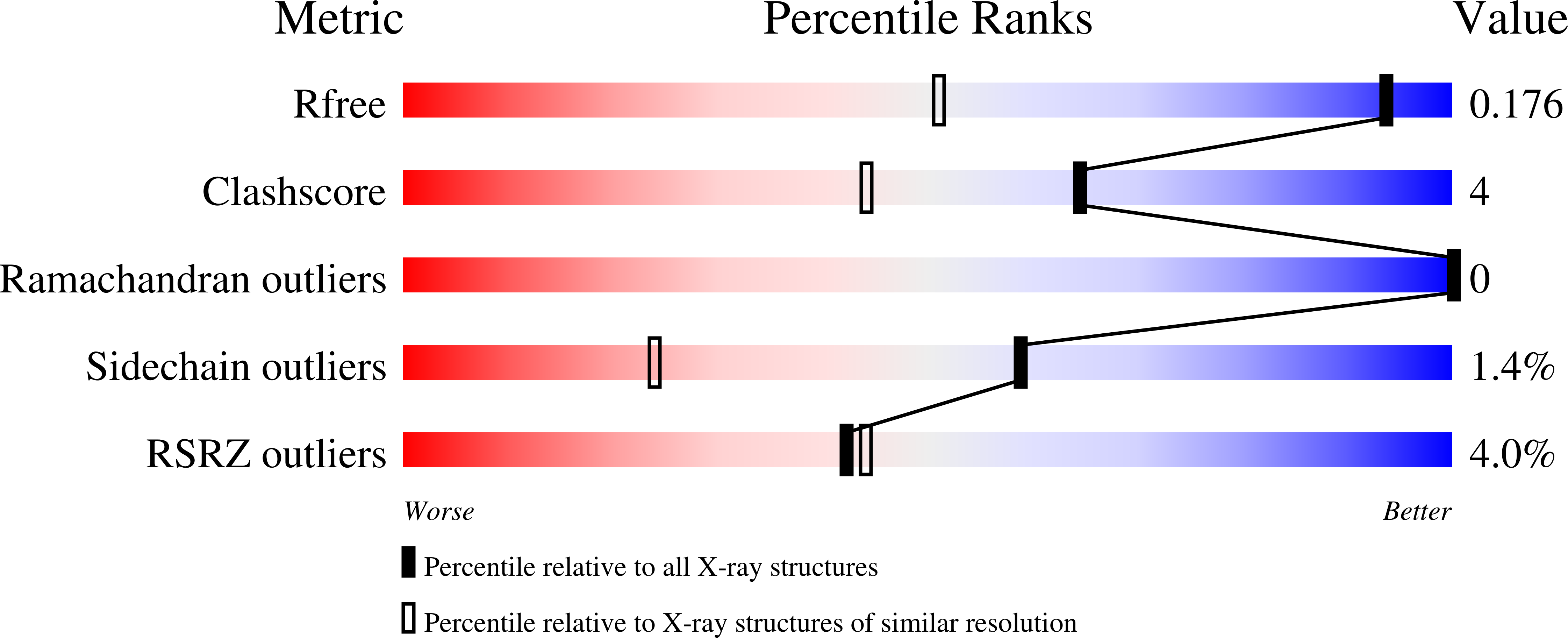
1.22 Å
R-Value Free:
0.14
R-Value Work:
0.12
R-Value Observed:
0.12
Space Group:
P 21 21 21
Macromolecular Entities
Polymer Type:polypeptide(L)
Molecule:Arginine biosynthesis bifunct
Chain IDs:A, C
Chain Length:214
Number of Molecules:2
Biological Source:Zea mays
Polymer Type:polypeptide(L)
Molecule:Arginine biosynthesis bifunct
Chain IDs:B, D
Chain Length:220
Number of Molecules:2
Biological Source:Zea mays
Modified Residue
Compound ID Chain ID Parent Comp ID Details 2D Image
TH5 B, D THR modified residue
Primary Citation
Plant NAOGAT (ArgJ) Structure Reveals Mechanism of Ornithine Biosynthesis, Preference for Acetylornithine and Susceptibility to Mangotoxin.
Plant Cell Environ ? ? ? (2026)
PMID: 42765862 DOI: 10.1111/pce.70891

Abstact

Arginine metabolism in plants is targeted by phytopathogens such as Pseudomonas syringae strains, which produce toxins that affect enzymes of plant arginine metabolism, causing devastating infections in crops. In this work, the structural and functional properties of plant N-acetylornithine glutamate acetyltransferase (NAOGAT), the key deacetylating enzyme of the cyclic ornithine pathway and the target of mangotoxin, were investigated. We determined the structures of rice and maize NAOGATs to near-atomic resolution. Plant NAOGATs demonstrate a characteristic ArgJ-like N-terminal nucleophile fold, undergoing autoproteolytic maturation into alpha and beta subunits, generating an active-site threonine nucleophile at the N-terminus of the beta-chain. The enzyme catalyses acetyl transfer via a bi-bi ping-pong mechanism in a bidirectional manner, although the acetylornithine-to-acetylglutamate conversion is preferred. NAOGAT undergoes minimal structural rearrangements during the reaction, however threonine acetylation causes pronounced changes in electrostatic potential around the active site which is also exhibited by the increased NAOGAT stability in the thermal shift assay. We did not detect clear evidence of NAOGAT acetylation by acetylCoA in our structural and biophysical data, which supports the specialisation of plant NAOGATs towards acetylornithine-glutamate transacetylation. Finally, predictive bioinformatic analysis of the P. syringae mangotoxin-producing operon, in the context of NAOGAT architecture, provided a basis for potential structural features of mangotoxin.

Legend

Protein

Chemical

Disease

Primary Citation of related structures
Feedback Form
Name
Email
Institute
Feedback